


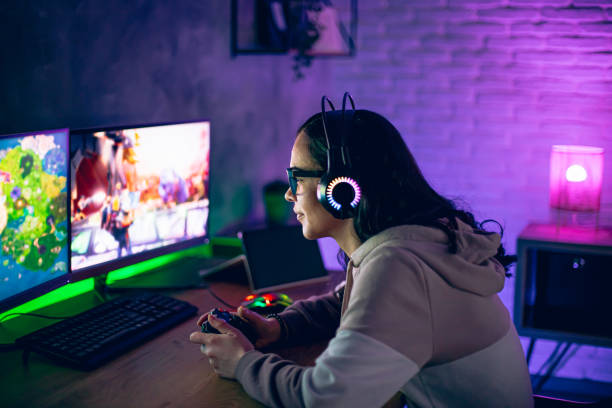
Gaming has become one of the most popular and influential forms of entertainment in today’s digital age. What was once seen as a simple hobby for children has now transformed into a global industry that attracts people of all ages. From casual mobile games to highly competitive esports tournaments, gaming has evolved into a powerful cultural, technological, and social force. Millions of people play games every day, not only for fun and relaxation but also for learning, socializing, and professional opportunities. With constant advancements in technology, gaming continues to grow and shape the future of entertainment.
The journey of gaming began in the early 1970s with simple arcade games that featured basic graphics and gameplay. One of the earliest and most popular games was Pong, which simulated table tennis using simple lines and dots. These arcade machines were placed in public areas such as shopping malls, arcades, and entertainment centers, where people gathered to play and compete for high scores.
In the late 1970s and 1980s, gaming entered homes through consoles. This was a major turning point because it allowed people to enjoy games without leaving their houses. Early consoles had limited graphics and sound, but they were revolutionary for their time. As technology improved, gaming systems became more powerful, allowing developers to create more complex and visually appealing games.
The 1990s marked another major leap in gaming with the introduction of 3D graphics. Games became more realistic, and players could explore virtual worlds in ways that were never possible before. Personal computers also became popular platforms for gaming, offering better performance and customization options. The early 2000s introduced online gaming, which allowed players to connect with others around the world. This changed gaming from a single-player activity into a social experience.
Today, gaming has reached an advanced level with realistic graphics, immersive sound effects, and detailed storylines. Modern games offer experiences that feel almost lifelike, and new technologies such as virtual reality and cloud gaming continue to push the boundaries of what is possible.
Gaming includes a wide variety of genres, each offering different experiences and challenges. Action games focus on fast-paced gameplay and require quick reflexes. These games often involve combat, shooting, or physical challenges. Adventure games focus more on storytelling and exploration, allowing players to discover new worlds and solve puzzles.
Role-playing games allow players to take on the role of characters and progress through stories by completing missions and improving their abilities. Strategy games require careful planning and decision-making, challenging players to think critically and manage resources effectively. Simulation games replicate real-life activities such as driving, flying, or managing cities, providing realistic and educational experiences.
Sports games simulate real-world sports like football, cricket, and basketball, allowing players to control teams and compete virtually. Mobile games have also become extremely popular due to their accessibility and convenience. People can play them anywhere and anytime using their smartphones.
Online multiplayer games have gained massive popularity because they allow players to interact with others globally. These games encourage teamwork, communication, and competition, making gaming a shared social experience.
Technology has played a crucial role in the growth and development of gaming. Early games had simple graphics and limited features, but modern games offer highly realistic visuals and complex gameplay. Advances in computer processing power, graphics cards, and memory have made it possible to create detailed virtual environments.
The internet has revolutionized gaming by enabling online multiplayer experiences. Players can now connect with friends and strangers from different parts of the world. This has made gaming more interactive and social. Cloud gaming is another technological advancement that allows players to stream games without needing expensive hardware. This makes gaming more accessible to a wider audience.
Virtual reality (VR) and augmented reality (AR) have introduced new levels of immersion. VR allows players to enter virtual worlds and interact with them as if they were physically present. AR combines digital elements with the real world, creating unique and interactive experiences.
Artificial intelligence has also improved gaming by making characters and environments more realistic. Non-player characters can now react intelligently to player actions, making games more challenging and engaging.
Gaming offers many benefits beyond entertainment. One of the main advantages is the development of cognitive skills. Many games require players to solve problems, make quick decisions, and think strategically. This improves critical thinking and problem-solving abilities.
Gaming also enhances hand-eye coordination and reaction time. Action games, in particular, require players to respond quickly to changing situations. This can improve reflexes and coordination.
Another important benefit of gaming is stress relief. Playing games can help people relax and escape from daily pressures. It provides a sense of achievement and enjoyment, which can improve mood and mental well-being.
Gaming also promotes social interaction. Online multiplayer games allow players to communicate and cooperate with others. This helps build friendships and teamwork skills. Many players form strong social connections through gaming communities.
Educational games can help students learn new concepts in an interactive and engaging way. These games make learning more enjoyable and effective by combining education with entertainment.
Esports, or competitive gaming, has become one of the fastest-growing sectors in the gaming industry. Professional players compete in tournaments for prize money, sponsorships, and global recognition. These tournaments attract millions of viewers online and in stadiums.
Professional gaming has created new career opportunities. Players can earn money through tournament winnings, streaming, sponsorships, and content creation. Streaming platforms allow gamers to share their gameplay with audiences and build fan communities.
Esports has also led to the creation of teams, coaches, analysts, and event organizers. This has turned gaming into a professional ecosystem similar to traditional sports.
Many universities and institutions now offer scholarships for esports players, recognizing gaming as a legitimate competitive activity.
Gaming has had a significant impact on society and culture. It has become a major form of entertainment, influencing movies, music, and art. Many games feature deep stories and characters that resonate with players emotionally.
Gaming has also brought people together. Players from different countries and cultures can interact and collaborate in virtual environments. This promotes cultural exchange and global communication.
Gaming communities provide spaces where people can share their interests and experiences. These communities can be found on forums, social media, and streaming platforms.
Gaming has also influenced education, training, and professional development. Simulation games are used to train pilots, doctors, and military personnel. This shows that gaming has practical applications beyond entertainment.
Despite its many benefits, gaming also has some challenges. One of the main concerns is excessive gaming. Spending too much time playing games can affect physical health, sleep, and academic performance. It is important to maintain a balance between gaming and other activities.
Gaming addiction is another issue that affects some individuals. This occurs when gaming becomes a priority over responsibilities and daily life. Awareness and moderation are important to prevent this problem.
Online gaming can also expose players to negative behavior such as bullying and toxic communication. However, many platforms are working to improve safety and create positive gaming environments.
Parents and guardians play an important role in guiding young gamers and ensuring healthy gaming habits.
Go to: 1xCasino
The future of gaming looks extremely promising. Advances in technology will continue to improve graphics, realism, and gameplay. Virtual reality and augmented reality will become more common, providing immersive experiences.
Cloud gaming will make games more accessible, allowing people to play without expensive hardware. Artificial intelligence will create smarter and more realistic game environments.
The gaming industry will continue to grow and create new career opportunities. More people will become professional players, developers, designers, and content creators.
Gaming will also continue to influence education, training, and social interaction. It will remain an important part of modern digital culture.
Gaming has evolved from simple arcade machines into a global industry that shapes entertainment, technology, and society. It provides fun, relaxation, and valuable skills such as problem-solving, coordination, and teamwork. Gaming has also created new social connections and professional opportunities through esports and content creation.
While gaming offers many benefits, it is important to maintain balance and avoid excessive play. Responsible gaming ensures that players can enjoy its advantages without negative effects.
As technology continues to advance, gaming will become even more immersive, accessible, and influential. It will continue to play a major role in the lives of millions of people around the world, making it one of the most important and exciting forms of entertainment in the modern era.

© 2025 Crivva - Hosted by Airy Hosting Managed Website Hosting.