A hernia is one of the most common surgical conditions encountered by medical professionals worldwide. Despite its prevalence, there remains a significant amount of mystery and apprehension surrounding the diagnosis and treatment of this condition. For many, a hernia starts as a small, painless lump that is easily ignored. However, leaving a hernia untreated can lead to a cascade of health issues, some of which can become life-threatening emergencies.
If you are navigating the complexities of a hernia diagnosis—or suspect you may have one—this comprehensive guide will walk you through the types, symptoms, modern surgical advancements, and how to find the best hernia surgeon in Delhi to ensure a safe and permanent recovery.
At its core, a hernia is a structural issue. It occurs when an internal organ, or sometimes just fatty tissue, pushes through a weak spot or a tear in the surrounding muscle or connective tissue (fascia) that is supposed to contain it. Think of the abdominal wall as a protective tire; a hernia is like the inner tube bulging through a weak spot in the outer rubber.
Hernias are usually the result of a combination of muscle weakness and strain. Depending on the cause, a hernia can develop quickly or over a long period. Common triggers include:
Congenital defects: A weakness in the abdominal wall present from birth.
Aging: Muscles naturally weaken over time.
Chronic Strain: Persistent coughing (often due to smoking), heavy lifting, or straining during bowel movements due to constipation.
Pregnancy: The physical pressure and stretching of the abdominal muscles.
Previous Surgery: Incisions from past operations can create permanent weak points.
Not all hernias are the same. Their classification depends primarily on where they occur in the body.
This is the most common type, making up about 75% of all abdominal wall hernias. It occurs in the groin area when the intestines push through a weak spot in the inguinal canal. While they can occur in women, they are far more common in men due to the way the male anatomy develops.
Located just below the groin crease, these are less common than inguinal hernias but carry a much higher risk of complications like strangulation. They are more frequently seen in women, particularly older women.
This occurs at the belly button. It is very common in infants, where the site of the umbilical cord doesn’t close perfectly. While most childhood umbilical hernias close on their own by age five, they can also develop in adults due to obesity or multiple pregnancies.
If you have had abdominal surgery in the past, the scar tissue is never as strong as the original muscle. An incisional hernia occurs when tissue pushes through the old surgical site.
Unlike the others, this happens internally. The upper part of the stomach pushes through the diaphragm (the muscle separating the chest from the abdomen) and into the chest cavity. This often leads to severe acid reflux or GERD.
Early detection is the key to avoiding emergency surgery. Many patients live with a “reducible” hernia—one that can be pushed back in or disappears when lying down. However, symptoms usually progress.
A Visible Lump: This is the most telling sign. You might notice a bulge in the groin or abdomen that becomes more obvious when you stand up, cough, or strain.
Discomfort or Pain: A dull ache or sharp pain, especially when lifting heavy objects or bending over.
A Feeling of Heaviness: A sensation of pressure or “dragging” in the abdomen.
If a hernia becomes “stuck” (incarcerated), it can lead to a strangulated hernia. This is when the blood supply to the trapped organ is cut off. This is a surgical emergency. Symptoms include:
Sudden, intensifying pain.
A hernia bulge that turns red, purple, or dark.
Nausea and vomiting.
Inability to pass gas or have a bowel movement.
Fever.
The “wait and see” approach is rarely recommended for adults because hernias do not heal on their own; they only get larger. The good news is that surgical techniques have undergone a revolution in the last decade.
In the past, surgeons would simply “stitch” the hole closed. This created tension on the muscles, leading to high recurrence rates and significant pain. Today, surgeons use a specialized medical mesh to reinforce the weak area. This “tension-free” method has drastically reduced the chances of the hernia coming back.
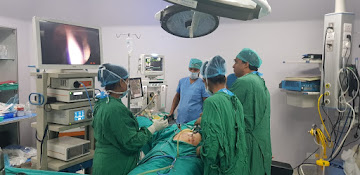
Instead of one large incision, the surgeon makes three or four tiny “keyhole” incisions. A camera (laparoscope) is inserted to guide the surgeon in placing the mesh.
Faster Recovery: Most patients return to light activities within a few days.
Less Pain: Smaller incisions mean significantly less post-operative discomfort.
Cosmetic Advantage: Minimal scarring compared to traditional open surgery.
For complex or recurrent hernias, robotic platforms allow surgeons even greater precision and 3D visualization, further improving patient outcomes.
Delhi has emerged as a global hub for medical tourism and advanced surgical care. However, the success of your surgery depends heavily on the hands that perform it. A hernia repair is a delicate procedure that requires an intimate understanding of abdominal anatomy and proficiency in laparoscopic techniques.
Specialization: Ensure the surgeon has a focus on gastrointestinal or laparoscopic surgery.
Experience: Ask how many hernia repairs they perform annually. High-volume surgeons typically have lower complication rates.
Technology: The clinic or hospital should be equipped with the latest laparoscopic towers and high-quality mesh options.
Patient-Centric Care: A good surgeon will explain the pros and cons of different meshes and surgical approaches tailored to your lifestyle (e.g., if you are an athlete vs. a sedentary office worker).
For those seeking localized, world-class expertise, finding the best hernia surgeon in Delhi is the first step toward a pain-free life. Clinics like Habilite Clinics have built a reputation for combining surgical excellence with a compassionate, patient-first approach.
Recovery is no longer the weeks-long ordeal it used to be. With modern laparoscopic techniques:
Day 1: Most patients go home the same day or the following morning.
Week 1: Walking is encouraged immediately. You can usually perform basic daily tasks.
Week 2-4: You can gradually return to work, though heavy lifting (over 5-10kg) is usually restricted for 4 to 6 weeks to allow the mesh to integrate with the tissue.
While surgery fixes the current problem, maintaining a healthy lifestyle prevents new hernias from forming:
Weight Management: Reducing abdominal pressure by maintaining a healthy BMI.
Proper Lifting: Always use your legs, not your back or abdomen, when lifting.
Fiber-Rich Diet: Prevent constipation and straining.
Quit Smoking: Chronic “smoker’s cough” is a leading cause of hernia recurrence.
A hernia is a mechanical problem that requires a mechanical solution. With the advancements in minimally invasive surgery available today, there is no reason to live in pain or fear of complications. By choosing an experienced specialist and a reputable facility, you can ensure a smooth, quick, and permanent recovery.
If you are ready to take the next step and want to learn more about advanced treatment options, specialized surgical techniques, and patient success stories:
Read More to find the expert care you deserve and consult with the best hernia surgeon in Delhi.

© 2025 Crivva - Hosted by Airy Hosting Managed Website Hosting.