


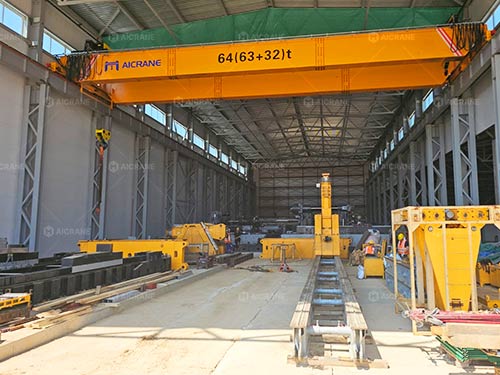
When investing in an overhead crane, many business owners start by looking at the total tonnage capacity. However, as you move from the initial quote to a technical specification, you quickly realize that the price of a crane isn’t just about how much it can lift—it’s about the engineering complexity of the parts that do the work.
In the heavy lifting industry, a “cheap” crane often results from cutting corners on high-wear components, leading to thousands of dollars in downtime later. Conversely, the most expensive components are priced high for a reason: they manage the immense physical forces of tension, torque, and friction that keep your facility safe.
Here is an in-depth look at the five most expensive components of an overhead crane and why their quality is non-negotiable.
The hoist is arguably the most complex and expensive single component of any overhead crane. It is the assembly responsible for the actual vertical movement of the load, and it contains the highest concentration of moving parts and precision engineering.
The cost of a hoist is driven by its gearbox, motor, and braking system. In high-capacity or heavy duty overhead cranes, the hoist must be able to lift several tons with millimeter precision while dissipating massive amounts of heat.
Precision Gearing: High-end hoists use case-hardened, ground gears to ensure smooth operation and longevity.
Dual-Braking Systems: For safety, many premium hoists include both a mechanical load brake and an electrical motor brake.
Wire Rope vs. Chain: Transitioning from a chain hoist to a wire rope hoist—standard for capacities over 5 tons—represents a significant price jump due to the drum size and reeving complexity required.
If the hoist fails, the crane is a multi-ton paperweight. Investing in a high-quality hoist ensures that you have consistent lifting speeds and, more importantly, a reliable “hold” on the load. A failure here is the difference between a successful shift and a catastrophic accident.
While the hoist does the lifting, the bridge girders do the carrying. This is the horizontal beam that spans the width of your workshop.
The price of the girder is primarily tied to steel volume and fabrication labor. As the span of a crane increases, the girder cannot just be longer; it must be structurally “deeper” to prevent sagging (deflection).
Box Girder Fabrication: For spans over 20 meters, manufacturers often move from standard “I-beams” to custom-fabricated box girders. These are hollow rectangular sections made by welding four separate steel plates together. The internal diaphragms and specialized welding required for box girders drive up labor costs significantly.
Cambering: To ensure the crane remains level when loaded, the girders are manufactured with a slight upward curve (camber). This requires precision engineering that adds to the factory floor time.
The girder dictates the “stiffness” of the crane. A girder that is too light will bounce or vibrate when the trolley moves, leading to premature wear on the wheels and runway rails. A solid, well-engineered girder provides the stability needed for high-precision placement.
Twenty years ago, cranes were mostly “on/off”—you pushed a button, and the crane jumped to full speed. Today, the electrical “brains” of the crane represent a massive portion of the investment.
A modern overhead crane uses Variable Frequency Drives (VFDs) for all three axes of motion (lifting, trolley travel, and bridge travel).
Electronic Complexity: VFDs are sophisticated computers that regulate power frequency to the motors. High-quality drives include “Anti-Sway” software, which uses algorithms to prevent the load from swinging like a pendulum.
Remote Radio Controls: Moving from a wired pendant to a secure, multi-channel radio remote adds several thousand dollars but offers vastly improved operator safety and mobility.
Controls are about smoothness and safety. VFDs prevent “jerking” starts and stops, which protects the mechanical components from shock loading. They also allow for “inching,” where an operator can move a 50-ton load by just a fraction of an inch—essential for mold making, assembly, and maintenance.
The end trucks are the structures at either end of the bridge that house the wheels and motors that move the crane along the runway.
The cost lies in the metallurgy and machining.
Hardened Wheels: Crane wheels are typically made from forged steel that has been heat-treated to a specific hardness (e.g., 300-400 HB). This ensures the wheel is hard enough to resist wear but not so brittle that it cracks under a shock load.
Self-Aligning Bearings: High-quality end trucks use heavy-duty spherical roller bearings to handle the immense vertical and lateral loads.
The “Bogie” System: On very heavy-duty cranes, the end trucks become complex “bogies” with 4 or 8 wheels per side to distribute the weight. Each additional wheel adds bearings, axles, and gearing costs.
End trucks determine how “true” the crane travels. If the wheels are poor quality or the motors are out of sync, the crane will “crab” or twist on the rails. This causes “rail gnawing,” which can destroy your building’s runway rails in a matter of months, leading to an incredibly expensive repair bill.
How do you get power to a machine that is constantly moving? The answer is the electrification system, which runs the length of the runway and the bridge.
For long runways, you cannot use a simple extension cord. You need Conductor Bars (busbars) or Festoon Systems.
Copper Costs: These systems use high-grade copper or galvanized steel rails. With copper prices being volatile, this is a major budget item.
Environmentally Rated Enclosures: If your crane is in a foundry (high heat) or a chemical plant (corrosive), the electrification must be housed in specialized, non-corrosive, or heat-shielded tracks.
Data Cables: In modern “smart” cranes, the festoon system must also carry fiber optic or high-speed data cables for real-time monitoring, which adds to the cable cost and complexity.
Power interruptions are a leading cause of “ghost” errors in crane operation. A high-quality electrification system ensures a steady flow of current, preventing motor burnouts and ensuring that safety sensors (like limit switches) always have the power they need to function.
When reviewing an overhead crane price quote, it is tempting to focus on the bottom line. However, by looking closely at these five components, you can see where the true value lies.
A premium hoist saves you money on spare parts.
VFD controls save you money on structural wear.
High-quality end trucks save your building’s rails.
In 2026, with the rise of AI-driven maintenance and IoT-connected cranes, these components are becoming even more specialized. Choosing a manufacturer that prioritizes high-grade components in these five areas is the most effective way to ensure a low Total Cost of Ownership (TCO) and a safe working environment for your team.

© 2025 Crivva - Hosted by Airy Hosting Managed Website Hosting.