


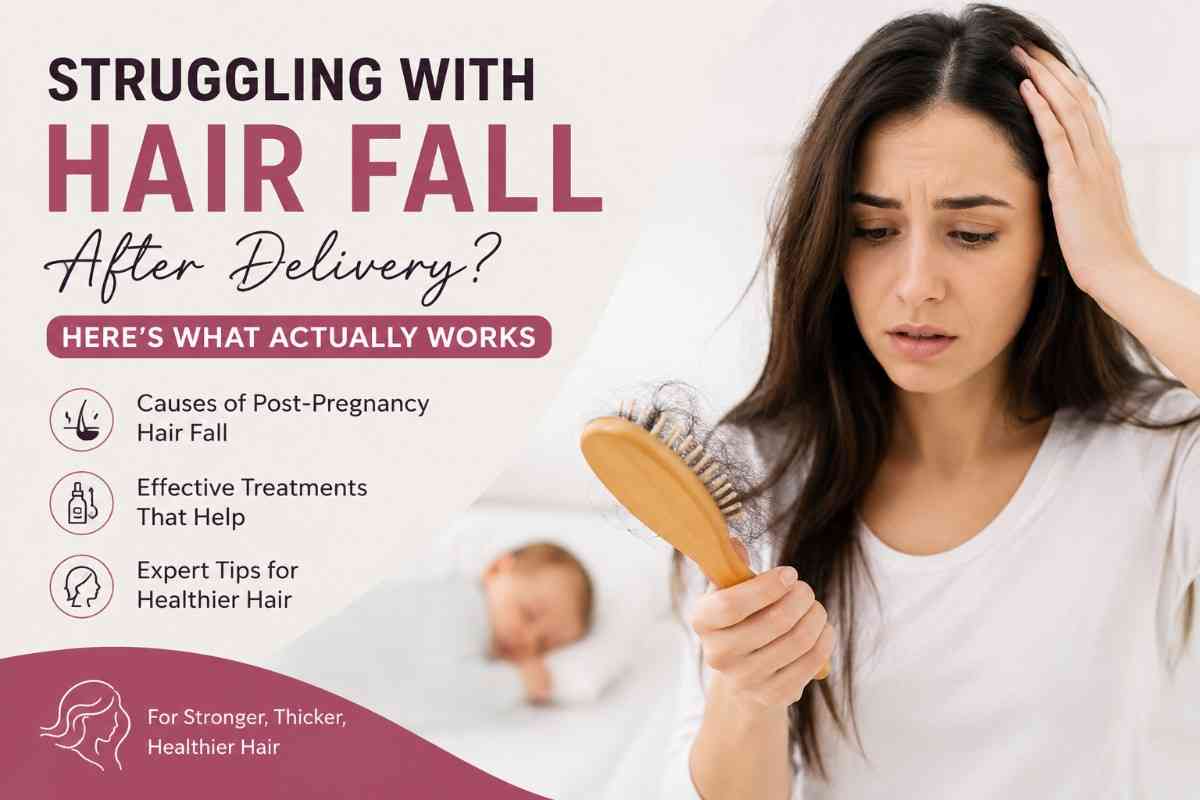
Becoming a mother is one of life’s most beautiful experiences, but many women are surprised when they start noticing excessive hair fall a few months after childbirth. If you find handfuls of hair on your pillow, in the shower, or on your hairbrush, you’re not alone. The good news is that post-pregnancy hair fall is common and, in most cases, temporary. However, understanding why it happens and knowing when to seek professional help can make a significant difference in your recovery journey.
During pregnancy, your body experiences a surge in hormones, particularly estrogen. This hormone keeps more hair follicles in the growth phase, making your hair appear thicker, fuller, and healthier. After delivery, estrogen levels gradually return to normal. As a result, many hair follicles that were previously in the growth phase enter the shedding phase at the same time. This sudden shift can lead to noticeable hair loss, usually beginning 2 to 4 months after childbirth. This condition is known as postpartum hair shedding and affects a large number of new mothers.
Yes, in most cases, post-pregnancy hair fall is completely normal. You may notice:
Most women experience improvement within 6 to 12 months after delivery as hormone levels stabilize and the natural hair growth cycle returns to normal.
While postpartum hair shedding is common, some women may experience hair loss that continues beyond a year or becomes severe. You should consider consulting a specialist if:
In such cases, underlying factors such as nutritional deficiencies, thyroid disorders, anemia, stress, or other hair conditions may be contributing to the problem.
Many new mothers try home remedies, oils, and social media trends hoping for quick results. While some may support overall hair health, the most effective approach is identifying the root cause and following evidence-based treatments.
Hair follicles need proper nutrition to grow healthy hair. Focus on foods rich in:
Good options include:
If you’re breastfeeding, maintaining a balanced diet becomes even more important.
Caring for a newborn often means sleep deprivation and increased stress levels. Unfortunately, both can contribute to hair shedding. Try to:
Even small improvements in sleep and stress management can positively impact hair health.
Avoid:
Instead:
Gentle care helps minimize additional hair breakage during recovery.
If hair fall remains excessive despite lifestyle improvements, professional treatment may be necessary. This is where consulting an experienced hair fall doctor in Delhi can help identify the exact reason behind ongoing hair loss and recommend personalized treatment options. At Influennz Clinic, treatment plans are tailored according to the patient’s scalp condition, medical history, nutritional status, and severity of hair loss.
PRP hair loss therapy is one of the most popular non-surgical treatments for hair restoration. The procedure uses growth factors from your own blood to stimulate weakened hair follicles and encourage healthier hair growth. Benefits include:
PRP is often recommended for women experiencing persistent postpartum hair thinning.
Growth Factor Concentrate therapy is another advanced treatment designed to nourish hair follicles using concentrated growth factors. Many women choose GFC because it is:
Every mother’s hair loss journey is different. Some women primarily experience hormonal shedding, while others may have nutritional deficiencies or underlying scalp conditions. This is why personalized evaluation is essential before starting any treatment. Experienced specialists like Dr. Geetika Srivastava carefully assess each patient’s condition and recommend the most suitable approach based on individual needs rather than a one-size-fits-all solution.
One of the most common questions new mothers ask is: “When will my hair grow back?” The answer varies from person to person. Generally:
Patience is important because hair growth is naturally a slow process.
In most women, postpartum hair shedding is temporary. However, pregnancy can sometimes reveal existing hair conditions such as:
If these conditions are left untreated, hair thinning may continue. This is another reason why consulting a qualified hair fall doctor in Delhi becomes important when hair fall seems excessive or prolonged.
Book a consultation if you notice:
Early intervention often leads to better results and helps preserve existing hair density.
Many women assume they simply have to wait for hair growth to return naturally. While this is true for some, others benefit greatly from professional assessment and treatment. At Influennz Clinic, Dr. Geetika Srivastava and her team focus on identifying the underlying causes of hair loss and creating personalized treatment plans that support long-term hair health. Whether you need nutritional guidance, PRP therapy, GFC treatment, or a comprehensive hair restoration plan, early evaluation can help you make informed decisions about your hair recovery journey.
Post-pregnancy hair fall can feel overwhelming, especially when you’re already adjusting to life with a newborn. The good news is that in most cases, it is a natural and temporary phase caused by hormonal changes after delivery. Maintaining a healthy diet, managing stress, and following gentle hair care practices can support recovery. However, if shedding becomes excessive, prolonged, or affects your confidence, don’t ignore it. Seeking advice from a trusted hair fall doctor in Delhi can help identify the root cause and provide effective treatment options before the problem worsens. Remember, hair recovery takes time, but with the right care and guidance, healthier and fuller-looking hair is achievable.
Yes. Most women experience postpartum hair shedding due to hormonal changes after childbirth. It usually improves within several months.
Hair shedding often peaks around 4 to 6 months after delivery and gradually improves within 6 to 12 months.
PRP therapy may help improve hair density and reduce ongoing hair fall in women experiencing persistent postpartum thinning.
Iron, Vitamin D, Vitamin B12, Zinc, and Protein play important roles in maintaining healthy hair growth.
If hair fall continues beyond a year, becomes severe, or causes noticeable thinning, consult a qualified hair specialist for evaluation.

© 2025 Crivva - Hosted by Airy Hosting Managed Website Hosting.