


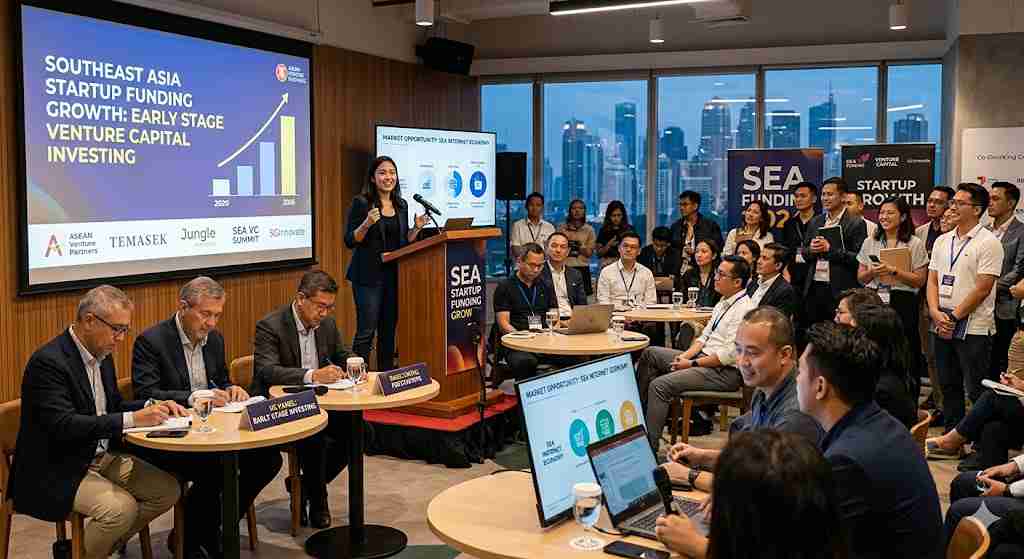
Southeast Asia has rapidly evolved into one of the most dynamic startup ecosystems in the world. Once considered an emerging market, the region is now attracting global attention from investors, founders, and technology leaders. With strong economic growth, increasing digital adoption, and a young, tech-savvy population, Southeast Asia presents a compelling opportunity for innovation and investment.
Over the past few years, startup funding in the region has seen significant growth. Investors are actively exploring opportunities across countries such as Indonesia, Vietnam, Singapore, and Thailand. This surge in activity reflects a broader shift in the global investment landscape, where capital is no longer concentrated in traditional hubs but is increasingly flowing toward high-growth regions.
For founders, this creates both opportunity and complexity. While access to funding is improving, competition is intensifying, and expectations from investors are rising.
Several structural factors are contributing to Southeast Asia’s rise as a startup hub.
The rapid adoption of smartphones and internet connectivity has enabled millions of consumers to access digital services for the first time. This has created fertile ground for startups in sectors such as fintech, e-commerce, and digital services.
The region’s growing middle class is driving demand for better products and services. As disposable incomes increase, consumers are more willing to adopt innovative solutions.
Many governments in Southeast Asia are actively promoting entrepreneurship through favorable policies, tax incentives, and startup-friendly regulations. These initiatives are encouraging both local and international investment.
International investors are increasingly entering the region, bringing with them capital, expertise, and global networks. This is strengthening venture capital investing in early stage startups and creating new opportunities for founders.
Southeast Asia is no longer just catching up with global markets—it is setting its own pace of innovation. Startups in the region are solving unique challenges with scalable solutions that can be adapted globally.
This shift is redefining how investors view the region. Instead of being seen as a secondary market, Southeast Asia is now considered a primary destination for high-growth opportunities.
Despite strong momentum, building a startup in Southeast Asia comes with its own set of challenges.
Each country in the region has its own regulatory framework. Navigating these differences can be complex and time-consuming.
Unlike single-market economies, Southeast Asia consists of multiple countries with distinct cultures, languages, and consumer behaviors. Startups must tailor their strategies accordingly.
While the region has a growing talent pool, there is still a shortage of specialized skills in areas such as advanced technology and data science.
In some markets, infrastructure limitations can affect scalability and operational efficiency.
These challenges highlight the importance of careful planning, especially for founders looking to Raise Capital for Startups in this region.
To succeed in this competitive environment, founders must adopt a strategic approach to fundraising.
Investors expect startups to understand the nuances of different markets. A one-size-fits-all approach is unlikely to succeed.
Startups that can expand into multiple countries have a significant advantage. Founders should clearly outline their expansion strategy.
Collaborating with local businesses and stakeholders can help startups navigate regulatory and cultural challenges.
Investors are increasingly focused on sustainability. Startups must demonstrate that their business model is financially viable.
Strong execution is often the deciding factor in securing funding. Founders must show that they can deliver on their plans.
These strategies can significantly improve a startup’s ability to engage with a venture capital firm and secure funding.
Investors are playing a more active role in Southeast Asia’s startup ecosystem. Beyond providing capital, they are contributing to strategic decision-making, market expansion, and operational improvements.
A modern venture capital firm evaluates:
At Evolve Venture Capital, the focus is on supporting startups that demonstrate adaptability, scalability, and disciplined growth. The emphasis is on building long-term value rather than pursuing short-term gains.
In a region as diverse as Southeast Asia, adaptability is essential. Startups must be flexible in their approach, continuously refining their strategies based on market feedback.
Those that succeed are often the ones that can:
Adaptability is not just a skill—it is a core requirement for survival and growth.
Several sectors are driving startup growth in the region:
With a large unbanked population, fintech startups are addressing financial inclusion and digital payments.
The rise of online shopping continues to create opportunities for innovative platforms and logistics solutions.
As e-commerce grows, efficient logistics solutions are becoming increasingly important.
Businesses are adopting digital tools to improve efficiency, creating demand for SaaS solutions.
These sectors offer strong opportunities for both founders and investors.
While rapid growth is often a goal for startups, sustainability is equally important. Investors are increasingly favoring companies that can achieve long-term stability.
Founders should focus on:
This balanced approach is critical for success in venture capital investing in early stage startups.
Southeast Asia has firmly established itself as a key player in the global startup ecosystem. Its combination of economic growth, digital adoption, and investor interest makes it a highly attractive region for innovation.
However, success in this market requires more than just opportunity. Founders must navigate complexity, adapt to diverse markets, and execute with precision.
For investors, the region offers significant potential. For founders, it presents a platform to build scalable and impactful businesses.
From a financial advisory perspective, founders should focus on phased expansion and capital discipline. Entering multiple markets simultaneously can strain resources and reduce efficiency. Instead, prioritize one or two key markets, establish a strong foundation, and then scale strategically. This approach builds investor confidence and ensures sustainable long-term growth.

© 2025 Crivva - Hosted by Airy Hosting Managed Website Hosting.