


Walk through any operating chemical or pharmaceutical facility and you’ll notice a pattern. The most important systems are rarely the most visible ones. They don’t get the attention that reactors or production lines do, yet they quietly determine whether a plant runs profitably, safely, and within regulatory limits.
Solvent handling and separation fall squarely into this category. Most engineers and plant managers understand their importance, but fewer step back to look at how these systems shape operating costs, environmental exposure, and long-term reliability across the plant.
This article takes a closer look at the role solvent recovery and distillation practices play in modern processing environments, not from a sales or equipment angle, but from an operational and strategic perspective.
Solvents remain essential across industries such as pharmaceuticals, specialty chemicals, coatings, agrochemicals, and polymers. Despite decades of process refinement, solvent loss continues to be a hidden drain on margins.
Losses show up in several ways:
Many facilities treat solvent loss as an unavoidable byproduct of production. In reality, most losses stem from legacy process assumptions rather than technical limitations. Older setups were designed around throughput and reaction yield, not recovery efficiency.
As raw material prices fluctuate and environmental norms tighten, those assumptions no longer hold.
In well-run plants, recovery infrastructure is viewed as part of process hygiene. It sits alongside quality control, preventive maintenance, and energy management rather than being treated as a standalone utility.
When solvent recovery is integrated properly:
Plants that take this view often see secondary benefits that go beyond solvent reuse. Operators become more aware of losses elsewhere in the process, leading to broader efficiency gains.
This shift in mindset is often what differentiates facilities that merely comply with standards from those that stay ahead of them.
Separation inefficiency doesn’t stop at solvent loss. It tends to ripple outward into other parts of the operation.
For example:
Over time, these issues erode trust in recovery loops. Teams begin bypassing them, reverting to fresh solvent use because it feels simpler and more reliable.
The irony is that these problems usually point to tuning or configuration issues rather than fundamental design flaws.
Distillation is often discussed in academic terms: equilibrium stages, reflux ratios, theoretical plates. On the plant floor, it’s far more pragmatic.
Operators care about:
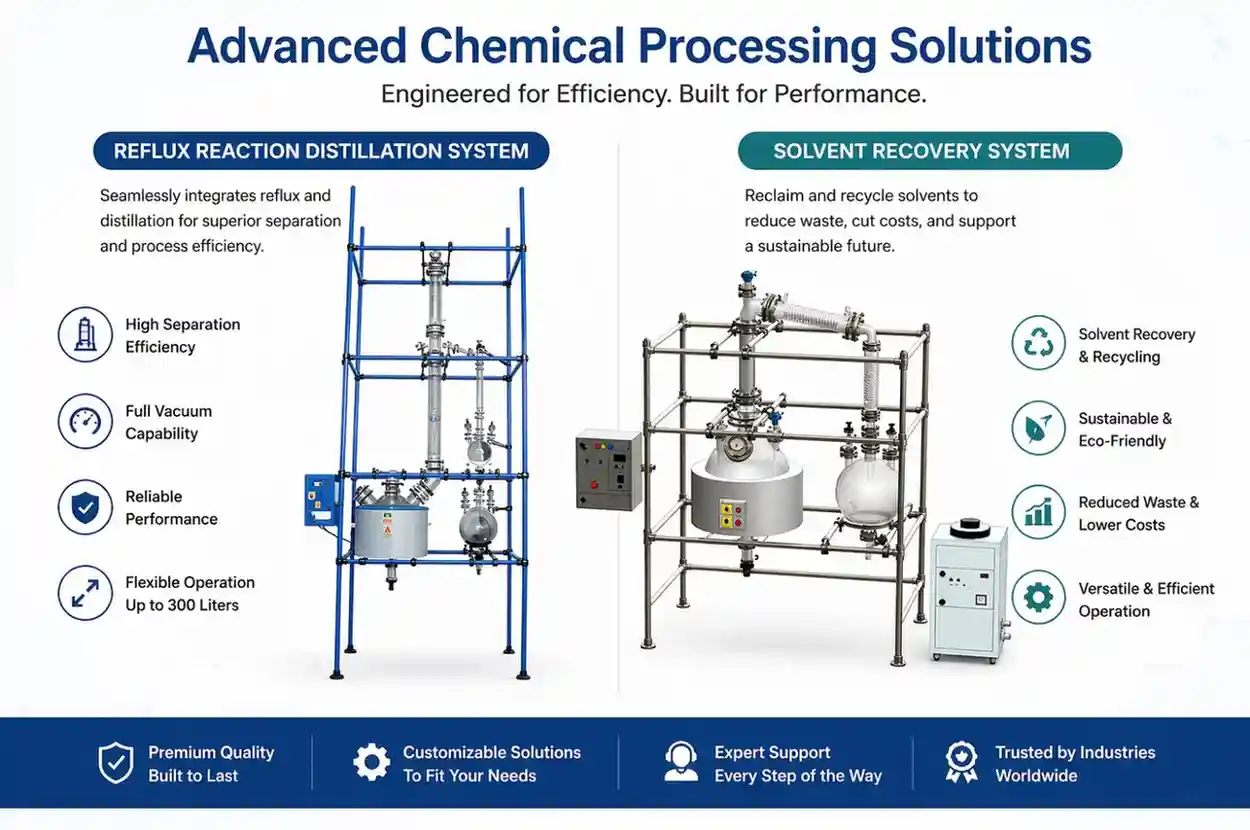
This is where practices such as reflux distillation play a role in maintaining control rather than chasing ideal separation models. Used thoughtfully, reflux helps smooth fluctuations and maintain separation performance under real-world conditions, where feed composition is rarely constant.
Plants that understand this tend to treat distillation settings as living parameters rather than fixed design values.
Environmental expectations have shifted noticeably over the past decade. Authorities are less tolerant of high solvent emissions, even when plants meet legacy permit limits.
Audits increasingly focus on:
In this context, systems such as a solvent recovery unit are no longer seen as optional efficiency upgrades. They become part of the plant’s environmental narrative, demonstrating intent as well as compliance.
Facilities that proactively document recovery performance often find inspections smoother and discussions more constructive.
One underappreciated aspect of poor recovery performance is how people respond. Operators are practical. If a system causes delays or inconsistent output, they’ll find workarounds.
These can include:
While understandable, these habits introduce safety and quality risks. They also mask underlying problems, making long-term improvement harder.
Well-performing recovery and distillation systems remove the need for such improvisation. They make the right action the easy action.
Plants that manage solvents well tend to measure them well. This doesn’t always mean sophisticated analytics platforms. Often it starts with basic tracking:
Even simple trend charts can reveal patterns: gradual fouling, seasonal variability, or changes linked to raw material suppliers.
Once these patterns are visible, teams can act before problems escalate into shutdowns or compliance issues.
There’s a tendency to equate recovery performance with equipment scale. Bigger columns, higher capacities, more stages. In practice, integration matters more than sheer size.
Key integration points include:
Plants that overlook these links often underutilize capable systems or overload smaller ones, creating avoidable inefficiencies.
Several broader trends are influencing how plants think about recovery and distillation:
Stricter solvent classification
Compounds once considered low-risk are being reclassified, increasing handling and disposal costs.
Energy accountability
Recovery systems are now scrutinized for energy intensity, not just recovery rate.
Shorter product life cycles
Frequent product changeovers demand flexible, easy-to-clean separation systems.
Workforce experience gaps
With fewer veteran operators, systems must be easier to run consistently.
These pressures push plants toward solutions that are robust, forgiving, and well-documented rather than theoretically perfect.
Facilities with strong solvent management practices tend to share a few traits:
They don’t treat recovery as a background utility. It’s part of production discipline.
In many cases, these plants view external technical resources as references rather than prescriptions, using them to validate decisions rather than replace internal judgment.
As markets tighten and scrutiny increases, resilience becomes a practical concern. Plants need systems that absorb variation without constant intervention.
Effective solvent recovery and distillation contribute to this resilience by:
These benefits rarely show up overnight. They accumulate quietly, much like the systems that deliver them.
The plants that recognize this early tend to be the ones still running smoothly when conditions become less forgiving.

© 2025 Crivva - Hosted by Airy Hosting Managed Website Hosting.