



When you leave a job — especially after a layoff or termination — you’re often asked to sign a severance agreement quickly. It may look simple at first glance, but the details inside can significantly affect your money, rights, and even your future job opportunities.
A Severance Agreement Review in the USA is the process where a legal professional carefully checks the terms before you sign. The goal is to make sure the compensation is fair, there are no hidden restrictions, and you are not unknowingly giving up important legal rights.
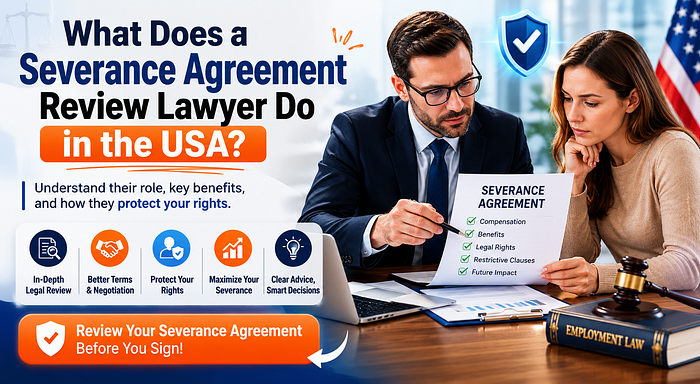
Many employees accept the first offer without realizing it can often be improved through negotiation. A proper review can uncover overlooked clauses, strengthen your position, and sometimes even increase your final payout or benefits.
The key is timing — once you sign, your ability to negotiate is usually gone. That’s why getting the document checked early can make a real difference in what you walk away with.
A severance agreement often arrives at a stressful moment — right after job loss — when decisions feel rushed and clarity is limited. While the offer may seem straightforward, it is usually written to protect the employer first, not the employee.
Taking a closer look before signing is important because these documents can include clauses that limit your ability to take legal action, affect your future employment, or restrict what you can say about your workplace experience. Some terms may also reduce the total compensation or leave out benefits you could potentially negotiate.
Having a professional review helps you understand exactly what you are agreeing to and whether the terms are fair based on your role, tenure, and situation. In many cases, what initially appears final can still be improved with the right approach.
Once the agreement is signed, the opportunity to make changes is usually gone — so a careful review before commitment can have a direct impact on your financial outcome and future options.
When a severance offer is placed on the table, it often contains more than just the final payout amount. A detailed review focuses on understanding the full picture — not just what you’re getting, but what you might be giving up.
A legal professional carefully examines the compensation structure, including whether the payout is fair based on your position, tenure, and circumstances of departure. They also look for clauses that may limit your rights, such as broad release terms that prevent you from taking future legal action.
Another key area is restrictive conditions — things like non-disparagement rules, confidentiality obligations, or restrictions that could impact your next job. In some cases, these terms can quietly create long-term limitations if not properly addressed.
The review also includes checking whether you’re being asked to waive claims that could be connected to unfair treatment or termination concerns. If there is room for improvement, it is often identified during this stage, giving you the chance to renegotiate before anything is finalized.
A severance offer is rarely set in stone, even if it may be presented that way. In many situations, there is room to adjust the terms once they are properly reviewed and discussed.
Negotiation typically focuses on improving the overall value of the package rather than just the base payout. This can include extending salary continuation, adding unpaid bonuses, securing extended health coverage, or adjusting other post-employment benefits that may not have been fully included at first, especially in cases involving Small Business Legal Services where agreements are often more flexible but still require careful attention.
It’s also common to revisit restrictive clauses that could limit future job opportunities or personal freedom after leaving the company. In some cases, simply identifying weaknesses in the agreement can lead to a stronger settlement without escalating conflict.
The process is not about confrontation — it’s about ensuring the terms reflect your role, contributions, and circumstances fairly. With the right approach, what initially feels fixed can often be improved in meaningful ways before anything is finalized.
Not every job exit is straightforward, and sometimes the circumstances behind a departure raise legal concerns. In such cases, the review process may go beyond standard severance terms and touch on whether the termination itself was handled fairly.
A legal professional may step in to assess if there are signs of improper dismissal, such as discrimination, retaliation, or violation of employment agreements. When these factors are present, they can significantly influence the strength of your position during discussions about compensation.
This type of evaluation often changes the direction of negotiations. Instead of focusing only on the offered package, attention may shift toward what you may be entitled to based on how the separation occurred.
The goal is not to escalate conflict unnecessarily, but to ensure that your situation is assessed correctly. When potential legal issues exist, they can become an important factor in achieving a more balanced and fair outcome.
Many employees accept the first offer simply because it arrives during a stressful transition. One of the most common mistakes is assuming the initial package is final, when in reality there is often room for discussion and improvement.
Another frequent error is focusing only on the immediate payout while overlooking long-term impacts. Certain clauses can affect future employment, legal rights, or financial benefits, which may carry more weight than the upfront amount itself.
Some people also rush to sign without fully understanding the conditions attached. Once the agreement is signed, opportunities to revisit or adjust terms are usually very limited, which can lead to missed benefits or avoidable restrictions.
A careful approach, supported by proper evaluation, helps avoid these pitfalls and ensures decisions are made with a clear understanding of both present and future implications.
Signing a severance agreement without fully understanding it can feel like closing a door you didn’t realize was still open. Once the document is finalized, your ability to challenge or change its terms is usually very limited.
In many cases, employees later discover that they waived important rights without realizing it. This can include the right to pursue certain legal claims, question the circumstances of termination, or seek additional compensation that might have been negotiable earlier.
There’s also the possibility of accepting less favorable financial terms than what could have been achieved through discussion. Benefits like extended coverage, bonus payouts, or improved separation terms may no longer be available once the agreement is signed.
The most important impact is finality — after signing, the agreement becomes binding. That’s why reviewing it beforehand is not just a formality, but a step that can directly influence your financial outcome and future options.
Getting a professional review before finalizing a severance agreement can make a real difference in both immediate outcomes and long-term stability. It brings clarity to complex terms that are often written in legal language and easy to overlook during a stressful transition.
One of the biggest advantages is identifying whether the compensation truly reflects your role, experience, and situation. In many cases, there is room to improve the package through proper discussion, especially when certain benefits or payments are missing, similar to how legal considerations like Cease And Desist Letter Cost can vary depending on the complexity of a situation and the approach taken.
It also helps you understand the impact of clauses that may affect your future work opportunities or legal rights. What seems like standard wording can sometimes carry long-term consequences if not carefully assessed.
Beyond financial value, this step provides confidence. Instead of signing under pressure or uncertainty, you move forward knowing the terms have been properly evaluated and aligned with your best interests.
The review process usually begins with a careful reading of the entire document to understand the overall structure of the offer. This includes looking at payment terms, benefits, timelines, and any conditions tied to accepting the package.
Next comes a detailed breakdown of each clause. Special attention is given to sections that may limit your rights, affect future employment, or require you to give up potential claims. This step helps uncover anything that may not be immediately obvious at first glance.
After the analysis, potential improvements are identified. This may involve adjusting compensation, revising restrictive terms, or adding missing benefits that are reasonable based on your position and circumstances.
If needed, the next stage involves communication with the employer to discuss changes. The goal is to reach a fair and balanced agreement before anything is signed. Once both sides are aligned, the final version is reviewed again to ensure everything is clear and accurately reflects what was agreed upon.
Timing plays a critical role when dealing with a severance offer. These documents are often presented with a deadline, creating pressure to respond quickly. However, decisions made in haste can lead to long-term consequences that are difficult to reverse.
A thoughtful approach at this stage helps ensure you are not just accepting an offer, but making an informed decision that reflects your value and protects your interests moving forward.

© 2025 Crivva - Hosted by Airy Hosting Managed Website Hosting.