


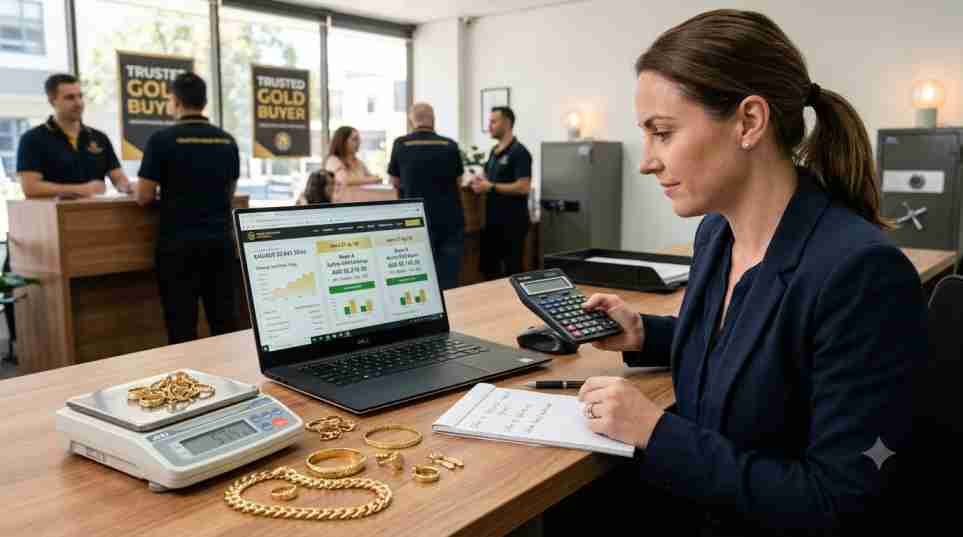
If you want to sell gold in Australia, accepting the first offer you receive can be a costly mistake. Many people rush into a sale without comparing prices, checking the current gold market, or understanding how buyers calculate value. As a result, they often receive much less money than their gold is worth.
The good news is that a little research can make a big difference. Even a small difference in the offer price can add hundreds of dollars to your final payout. This guide explains how to compare multiple offers, evaluate gold buyers, and negotiate confidently to get the best possible price for your gold.
Before you contact any gold buyer, you should understand the value of what you own. This knowledge gives you confidence and helps you avoid low offers.
Gold jewellery usually contains a hallmark that shows its purity level. Common markings include:
Higher karat gold contains more pure gold and is generally worth more.
It is also important to understand the difference between purity and weight. A heavy piece of low-purity gold may be worth less than a lighter piece with higher purity.
You can use a small digital jewellery scale at home to get a rough idea of the weight. This gives you useful baseline information before visiting a buyer.
The gold spot price is the current market value of pure gold. It changes throughout the day based on global supply and demand.
Many financial websites and precious metal dealers publish live Australian gold prices per gram. Checking the spot price before selling helps you understand whether an offer is fair.
It is important to know the difference between:
Spot Price
Retail Price
Market conditions in 2026 continue to influence gold prices. If prices are rising, waiting a short time may increase your payout. If prices are falling, selling sooner could be a better option.
A simple formula can help estimate your gold’s value:
(Weight × Purity) × Current Spot Price
For example:
Calculation:
10 × 0.75 × $160 = $1,200
This gives an estimated gold value.
Keep in mind that buyers may pay slightly less than the spot price because they need to cover refining, testing, and operating costs.
You may also hear terms such as:
Melt Value
Resale Value
Understanding these terms helps you compare offers more accurately.
Not all gold buyers operate in the same way. Understanding the different options can help you choose the right buyer.
Pawn shops are often the fastest option when you need money quickly.
A person selling a gold bracelet may receive:
The difference can be significant, especially for larger quantities of gold.
While pawn shops offer convenience, they may not always provide the highest return.
Refineries and bullion dealers usually offer prices closer to the current market value.
Refineries often pay more because they process the gold directly. This is especially beneficial when selling:
For many sellers, this option provides the best balance between security and value.
Online gold buyers have become increasingly popular.
Before using an online service, verify:
Always read the company’s policies before sending valuable items.
Comparing offers properly is the key to maximizing your payout.
Many sellers make the mistake of comparing only the final payout amount.
Instead, ask every buyer:
“What is your price per gram for this purity level?”
This creates a fair comparison.
A simple table can help:
| Buyer | Rate Per Gram | Fees | Final Offer |
|---|---|---|---|
| Buyer A | $118 | $0 | $1,180 |
| Buyer B | $122 | $30 | $1,190 |
| Buyer C | $120 | $0 | $1,200 |
This approach quickly reveals which offer provides the most value.
Always ask about:
Hidden costs can reduce what appears to be a strong offer.
Not every buyer operates transparently.
Watch for warning signs such as:
No reputable buyer can accurately quote the highest price without examining the item.
Statements such as:
are often used to pressure sellers.
Take your time and compare offers.
A trustworthy buyer should:
If the process feels secretive, consider another buyer.
Reputation matters when selling valuable items.
Check:
Look for consistent comments about:
You should also ensure the business follows Australian Consumer Law requirements and provides clear documentation for transactions.
A dealer spread is the difference between the spot price and the amount paid to sellers.
A reasonable spread helps cover:
Extremely large spreads may indicate an unfair offer. Comparing several buyers helps identify whether a spread is reasonable.
Many sellers do not realize that gold offers are often negotiable.
Once you have multiple offers, use them strategically.
You can politely say:
“I’ve received a higher offer elsewhere. Can you improve your price?”
Many buyers are willing to increase their offer to win your business.
You can also ask:
“Can you beat this offer by a small percentage?”
Even a small increase can result in significant extra money.
If a buyer refuses to provide a fair offer, be prepared to walk away.
A reputable buyer will respect your decision.
Security should be a priority when selling gold.
Common payment methods include:
Benefits:
Benefits:
However, carrying large amounts of cash may create security concerns.
For high-value transactions, many sellers prefer bank transfers.
Always request:
These documents provide protection if questions arise later.
For face-to-face transactions, choose safe and professional business locations.
Before completing the sale, confirm:
✅ Final weight of all items
✅ Purity of each item
✅ Current agreed rate
✅ Any fees deducted
✅ Final payout amount
✅ Receipt provided
Taking a few extra minutes to review everything can prevent costly mistakes.
When you decide to sell gold in Australia, preparation is your biggest advantage. Start by understanding your gold’s purity, weight, and current market value. Research the live spot price and gather quotes from multiple buyers.
Compare offers using the price-per-gram method, watch for hidden fees, and verify each buyer’s reputation. Don’t be afraid to negotiate using competitor quotes and always ensure the transaction is secure.
The smartest approach is simple: start with the spot price, get at least three quotes, and compare every detail before making a decision.
Remember, your gold is a valuable asset. Treat the sale like a business deal, and you will have a much better chance of getting the highest possible payout.
Q1. How can I get the best price when I sell gold in Australia?
Compare at least three offers, check the live gold spot price, and ask for the rate per gram before accepting any offer.
Q2. Is it better to sell gold to a refinery or a pawn shop?
In most cases, refineries offer higher payouts because they process the gold directly and have lower resale risk.
Q3. What documents do I need to sell gold in Australia?
Most buyers require a valid government-issued photo ID to comply with Australian regulations.
Q4. Should I clean my gold jewellery before selling it?
Light cleaning is fine, but avoid harsh chemicals. Buyers focus on gold content, not appearance.
Q5. How many offers should I get before selling gold?
Getting at least three quotes is recommended to ensure you receive a fair market price.

© 2025 Crivva - Hosted by Airy Hosting Managed Website Hosting.