


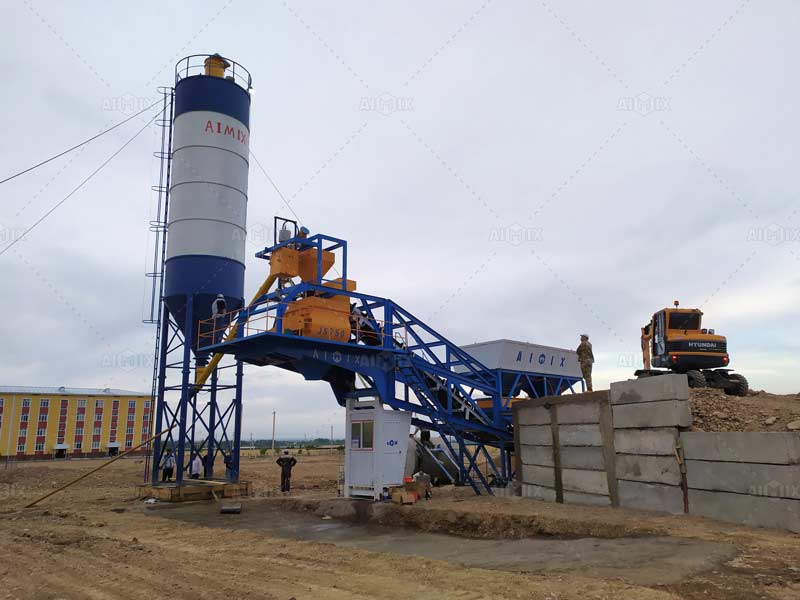
Operating a concrete mixing plant in Latin America comes with unique challenges—from varying regional safety regulations to language barriers on site. Construction firms entering markets like Peru, Colombia, or Chile must prioritize worker protection and operational discipline. Without a structured safety framework, a single accident can halt production for weeks, trigger fines, and damage your reputation. Below, we outline seven essential safety lines and personnel training points specifically designed for concrete batching plant sites across the region, with practical insights drawn from concrete plant Peru operations.
Unlike North America or Europe, where safety standards are uniform and strictly enforced, Latin America presents a patchwork of local enforcement levels. A concrete mixing plant(planta concretera) in Santiago might follow Chilean regulations closely, while a site in rural Bolivia may have minimal oversight. This inconsistency makes internal safety protocols even more critical. Furthermore, high staff turnover rates—common in the region’s construction sector—mean that continuous training is not optional. For any concrete plant Peru operator, the key is to build systems that work regardless of external inspection frequency.
These seven safety lines form a complete perimeter of protection. Implement each one systematically at your concrete mixing plant.
Every concrete mixing plant must have clearly demarcated zones: red for high-risk areas (mixer drums, aggregate conveyors), yellow for caution zones (loading areas), and green for safe passage. In Latin American sites, where temporary workers often join mid-project, color-coded ground markings reduce confusion. For a concrete plant Peru(planta concretera Perú) site in high-altitude Cusco, we recommended painting walkways and adding reflective tape on all moving parts. This simple line costs little but prevents countless close calls.
Unexpected startups kill. Whether your concrete mixing plant runs on grid electricity or a diesel generator, implement LOTO procedures. Each energy isolation point needs a physical lock and a visible tag in Spanish (or Portuguese in Brazil). Train every maintenance worker to carry their own padlock. A concrete plant Peru manager recently shared how LOTO prevented a major injury when a worker inside a mixer drum was saved because the power source had been locked out—not just switched off.
Silica dust from cement and aggregates is a long-term hazard often overlooked in fast-paced Latin American sites. Install water sprays at transfer points and ensure all enclosed cabs have positive pressure filtration. Provide N95 or better respirators, but don’t just hand them out—fit-test each worker. In dry coastal regions where a concrete plant Peru operates near Lima, dust can become airborne for miles. Weekly cleaning schedules and dust collection systems are non-negotiable.
Batching plants have silos, catwalks, and maintenance platforms that can reach 15–20 meters high. In many Latin American countries, guardrails are not always standard on older equipment. Inspect every platform at your concrete mixing plant: require mid-rails, toe boards, and self-closing gates. For any concrete plant Peru site built on uneven Andean terrain, also check that ladder bases are stable. Use full-body harnesses with shock-absorbing lanyards for any work above two meters.
Every conveyor, mixer, and bucket elevator must have accessible emergency pull-cords or buttons. Test them weekly. Additionally, install a plant-wide audible alarm that sounds automatically when any e-stop is triggered. In noisy environments—typical for any concrete mixing plant—visual strobe lights are equally important. A concrete plant Peru operator in Arequipa added backup battery-powered alarms after a grid failure left their e-stops silent during an actual emergency.
Fuel, oil, cement dust, and admixture chemicals all pose environmental and slip hazards. Build secondary containment berms around diesel tanks and chemical drums. Keep Safety Data Sheets (SDS) posted in Spanish at each storage location. For a concrete plant Peru located near agricultural areas, spill prevention is not just about safety—it’s about avoiding community lawsuits. Train staff to use absorbent pads and spill kits, and conduct quarterly mock spill drills.
Concrete mixer trucks, front-end loaders, and service vehicles share tight spaces at any concrete mixing plant. The most common fatal accidents involve pedestrians being struck. Enforce a strict “no walk” policy in loading zones: all personnel must be inside vehicles or behind barriers. Use convex mirrors at blind corners and install speed bumps. A concrete plant Peru site near a school zone in Huancayo added a flagger during shift changes, reducing near-misses by 80% in three months.
Safety lines are useless if workers don’t understand them. These training points are tailored for Latin American crews.
Before each shift, gather all crew for a short safety talk. Focus on one specific hazard of the day—for example, “dust control” or “LOTO verification.” Keep it interactive: ask workers to point out risks they see. In a concrete plant Peru with a mix of Spanish and Quechua speakers, use simple drawings and demonstrate actions. These charlas build a safety culture far more effectively than annual classroom sessions.
Book learning is not enough. Run monthly drills for fire, medical emergency, and entrapment scenarios. Time how long it takes to shut down the concrete mixing plant and evacuate the control room. For any concrete plant Peru located more than 30 minutes from a hospital, also train designated first-aid responders. Record drill results and discuss improvements openly—no blame, only learning.
Many Latin American workers hesitate to report close calls, fearing punishment. Change that. Create an anonymous reporting system (a simple suggestion box works) and reward employees who identify hazards. One concrete plant Peru manager started a “safety coin” program: workers who report a near miss get a token redeemable for small prizes. In six months, reported near misses increased tenfold, and actual accidents dropped to zero.
LOTO is so critical that it deserves dedicated simulation training. Use a de-energized section of the concrete mixing plant and have each worker physically place their lock on a hasp. Verify that no one can remove another person’s lock. In a concrete plant Peru with high turnover, run this simulation for every new hire within their first three days.
Rather than a generic conclusion, consider this your starting checklist. The seven safety lines and four training points above are proven in real Latin American sites—from sea-level concrete mixing plants in Ecuador to high-altitude concrete plant Peru installations. Start by auditing your current site against each line. Then schedule your next weekly charla. Safety is not a one-time investment; it is a daily discipline. And when every worker returns home unharmed, your concrete mixing plant’s productivity will rise as a natural byproduct. Build safe, produce smart.

© 2025 Crivva - Hosted by Airy Hosting Managed Website Hosting.