


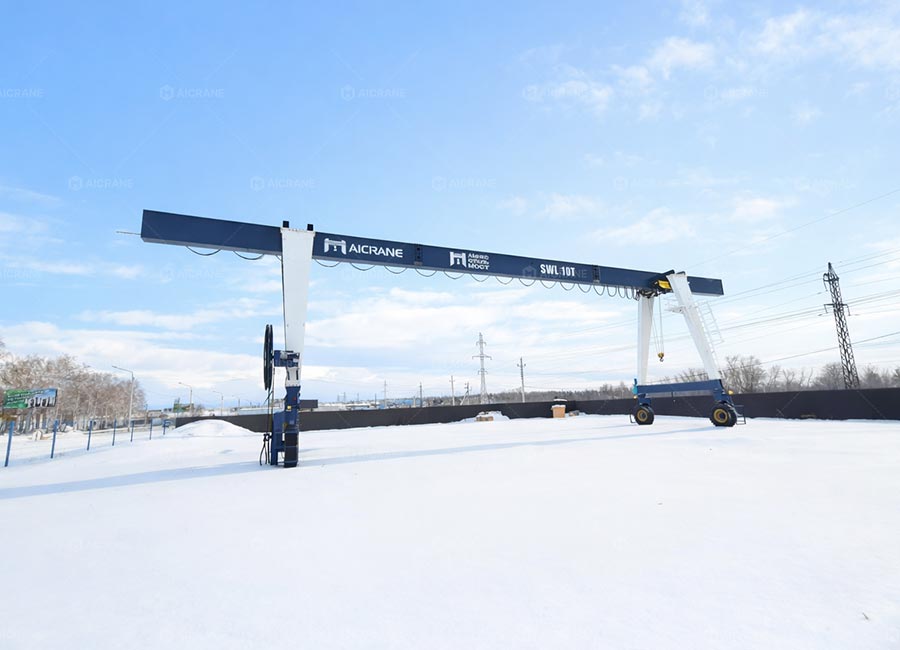
Rubber‑Tired Gantry (RTG) cranes are vital in container terminals, intermodal yards, and bulk material handling operations due to their mobility, versatility, and high stacking capacity. However, operating RTG cranes in extreme cold climates (below –20°C / –4°F) introduces a unique set of engineering challenges that standard RTG designs are not built to withstand. This article explores how RTG cranes must be modified, ruggedized, and specified to perform reliably, safely, and efficiently in sub‑arctic and polar conditions.
Before defining rubber tyred gantry crane specifications, it is important to understand how extreme cold affects machinery:
At temperatures below –20°C, many common structural steels and alloys lose toughness and become brittle. Impact loads, shock events, and even routine movements can cause sudden cracking if materials are not selected with cold‑temperature ductility.
Lubricants thicken or even solidify at low temperatures. This increases friction and wear in bearings, gears, and sliding interfaces, leading to premature failure or stalled motion if not properly addressed.
Electronic components — especially those with LCD displays, batteries, and relays — may fail or behave unpredictably at extreme cold. Moisture condensation and freezing cycles also threaten corrosion and short circuits.
Standard hydraulic fluids immobilize in low temperatures, slowing actuator response and reducing force transmission. This is critical for RTG systems that rely on hydraulics for steering, braking, and spreader functions.
RTG tires and rubber components (e.g., seals, hoses) lose elasticity at low temperatures, becoming prone to cracking, deformation, and leakage.
Ice buildup on rails, wheel paths, ladder rungs, and structural members adds weight, creates slip hazards, and can physically block moving parts.
RTG crane structures for frigid conditions should use high‑strength, low‑temperature steel alloys such as:
ASTM A709 Grade 50W/50WT
EN 10025 S355K2+N
Specialized low‑temperature steels
These steels maintain toughness and ductility down to –40°C or lower. Heat treatment to enhance impact resistance is recommended.
Welding procedures must ensure minimal embrittlement. Pre‑heat and post‑weld heat treatment (PWHT) are commonly required to avoid cracks. Weld consumables (electrode/filler) must match low‑temperature performance levels.
Designs often incorporate higher safety factors to compensate for potential stress concentrations caused by cold‑induced shrinkage or distortion.
RTG cranes often use diesel generators. In frigid climates:
Block heaters keep engine blocks above freezing.
Fuel heaters prevent gelling of diesel.
Battery warmers and high‑capacity batteries ensure reliable cranking power.
For electric RTGs:
Traction motors and inverters must be rated for low temperatures.
Cable insulation must resist cracking.
Cooling systems should be bypassed or adapted to cold (anti‑freeze coolants, thermostatically controlled warming circuits).
Hybrid RTG configurations (battery + diesel genset) are well suited to cold climates when battery chemistry is optimized for low temperatures (e.g., Lithium Iron Phosphate with integrated thermal management).
RTG gears, wire rope sheaves, slewing rings, and bearings require greases and oils that remain fluid at –40°C or below, such as:
Polyalphaolefin (PAO) oil bases
Esters with pour points below –45°C
Synthetic grease with extreme low‑temperature NLGI grades
Use low‑viscosity hydraulic fluids formulated for cold climates.
Incorporate line heaters and insulated hoses.
Install pressure compensated flow control valves to maintain responsiveness.
Cables must use insulation like silicone or fluoropolymer jackets that stay flexible at low temperatures. Connectors should be sealed to prevent condensation.
Control cabinets should be thermostatically heated and sealed.
Displays and battery systems rated to –40°C are recommended.
Redundant sensors mitigate failure risk due to temperature swings.
Cold climates often limit maintenance visits. RTG systems should integrate:
Remote telemetry
Predictive maintenance alerts
Real‑time operational diagnostics
This reduces unplanned downtime in challenging weather.
RTG tires must be designed for low‑temperature elasticity or use compounds that resist cracking and chipping. Frequent tire pressure monitoring is critical, as pressure drops with cold.
All rubber seals, gaskets, and hoses must use silicone or fluorocarbon elastomers that remain pliable and resist embrittlement.
Some facilities use tire warming blankets or store tires in heated areas to minimize strain.
Cabin heaters with defrost capabilities are essential to maintain visibility, prevent frost buildup, and ensure operator comfort.
RTG access ladders, platforms and walkways must have heated grating or abrasive surfaces to minimize ice formation.
Low‑sun, snow glare, and fog are common in polar regions. Thus, RTG mobile gantry cranes require:
High‑intensity LED floodlights
Anti‑fog and heated windows
Clear sightlines aided by cameras and sensors
Crane fabrics and beams benefit from coatings such as:
Ice‑phobic paints
Smooth surfaces with heat trace elements
These reduce accumulation.
To maintain mobility:
Heated driving paths or snow melting mats may be embedded.
RTG wheel paths must be cleared of ice to prevent slippage and wheel hop.
Scheduled manual or mechanical de‑icing is crucial around pivotal components such as:
Spreaders
Cable sheaves
Rail guides (if stacker assistance systems use rails)
RTG cranes designed for extreme cold must undergo extensive verification:
Before delivery, whole machines or critical components are tested in controlled chambers to simulate:
Hydraulic response at –30°C or lower
Electrical system behavior across temperature cycles
Material performance under brittleness stresses
Certifying bodies often require on‑site load testing under real cold conditions to ensure rated capacity is sustainable when components stiffen and fluids thicken.
Standards relevant for cold‑climate RTGs include:
ISO 12482 – Port handling RTG cranes
IEC 60068 – Environmental testing for electrical components
API and ASTM cold‑temperature steel standards
Compliance ensures both safety and long‑term reliability.
Even the best‑designed RTG crane requires adapted operational practices:
Daily warm‑ups — idling engines and circulating heated fluids — reduce mechanical shock and strain.
Extreme cold accelerates certain wear. Therefore:
Inspect tires daily for cracks
Check hydraulic lines for stiffness
Test electrical systems often
Operators must understand:
Cold‑weather handling limits
Signs of fluid‑related malfunctions
De‑icing and ice hazards
This reduces avoidable downtime and accidents.
When engineered correctly, extreme‑cold RTG cranes deliver:
Higher uptime compared to unmodified units
Longer component life and lower maintenance costs
Enhanced safety for personnel and equipment
Reliable operations in Arctic ports, northern terminals, and winter seasons
While initial investment in cold‑specific specifications increases upfront cost, the return in uptime, safety, and durability is tangible.
Designing and specifying RTG gantry cranes for extreme cold environments (below –20°C) requires a holistic approach that integrates material science, fluid mechanics, electrical engineering, human factors, and preventive operational strategies. Engineers must address not just cold but secondary effects such as ice accumulation, brittle materials, and fluid thickening.
With the right materials, low‑temperature fluids, protected electronics, heated systems, maintenance regimes, and thorough testing, RTGs can operate reliably even in some of the harshest climates on Earth. These adaptations aren’t optional — they are critical to sustaining container handling operations in northern ports, Arctic logistics hubs, and seasonal cold‑region facilities where standard RTG cranes would otherwise fail.

© 2025 Crivva - Hosted by Airy Hosting Managed Website Hosting.