

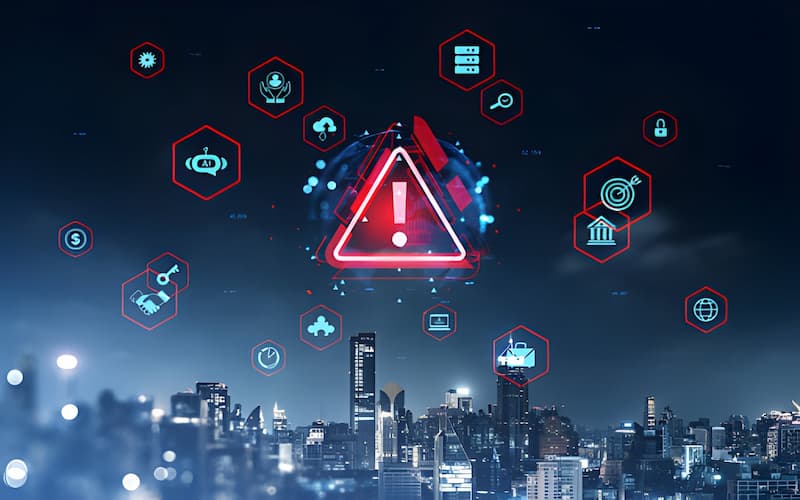
Cyber threats are increasingly becoming more sophisticated and impactful, which is why risk-aligned security programs are becoming a strategic priority of the energy industry. The digital transformation of oil, gas and power processes has not only increased attack surfaces, but also increased the reliance of these systems through interdependence. The energy organizations need to make sure that cybersecurity activities are in correspondence with operational priorities and actual risk exposure instead of depending on generic control frameworks. Structured assurance of cybersecurity alignment with the Saudi Aramco Cybersecurity Certificate (CCC), as well as with risk-based strategies to enhance resilience, facilitate compliance, and safeguard mission-critical activities, are increasingly adopted by companies.
Risk-aligned security program is aimed at knowing what matters to the business and implementing security controls. This way leads to a situation where energy leaders can balance between safety, availability, and protection as well as make long-term operationally sustainable.

The energy industry is in a very special risk environment. Scattered resources, like geographically distributed resources, critical infrastructure and operational technology, bring about challenges that are not present in the traditional IT setting. The cyber attacks in the energy activities may interfere with the production, endanger the safety, and result in serious financial and reputational losses.
The factors that contribute to risk in this sector include, use of legacy systems, the need to have remote access, dependency on third parties and regulatory requirements. An effective security program that is risk-aligned starts with the identification of sensitive assets, procedures, and data that have a direct impact on sustaining operations. This basis is used as a way of making sure that the security resources are targeted at protecting the areas that can cause the greatest impact.
Conventional security models tend to focus on homogenous control application and lack contextual risk. As much as controls are essential, applying controls without prioritization may result into inefficiency and security loopholes.
Risk-based security implies the change of the focus on the assessment of threats, vulnerabilities, and business impact. Energy organizations evaluate the threats that should be considered as the most appropriate to the working environment and distribute the resources. This technique will enhance decision making, minimize unwarranted complexity and also provide security investment to yield quantifiable value.
Asset identification is a foundational step in any risk-aligned program. The energy organizations have to keep proper records of the running systems, networks and data streams. Knowledge of the criticality of assets enables security teams to direct control priorities with regard to operational significance.
Such prioritization allows protecting high-impact systems in a more sophisticated way, and lower-risk assets are handled correspondingly. This kind of alignment decreases the exposure and helps to use the security resources effectively.
Risk alignment should be done through continuous threat modeling. The threats targeting energy organizations continue to change based on ransomware and insider abuse, to the supply chain attacks. Threat modeling approves the manner in which these threats can affect the business and also the possible attack vectors.
Periodic risk assessments make organisations change in line with technological changes, operational changes, and threats in the external environment. This proactive stance helps to find and address the weaknesses at the earliest stage and helps to implement the mitigation plans on time.
There is no energy operation that is not associated with third-party relations, and such relations add another risk to the process. Vendors, contractors and service providers usually need to have access to sensitive data and critical systems.
Risk-aligned programs evaluate the third parties on the basis of their degree of access and the possible impact on operations. Ongoing monitoring, proportionate security requirements as well as clear contractual obligations can be used to mitigate the exposure of the supply chain and at the same time ensure operational efficiency.
Risk priorities should be facilitated by security technologies instead of working independently. Using monitoring, analytics, and automation tools can offer an overview of complicated environments in the setting where the tools are set accordingly.
Risk alignment of technology deployment lowers the level of alert fatigue and enhances incident responses. When high-impact threat detention tools are implemented, organizations have a better understanding of their security stance and business risk.
Individuals are a very important component of the risk-aligned security initiatives. The daily interactions of employees, engineers and operators with systems determine the security outcomes based on their behavior.
Recommended training initiatives increase awareness of the cyber risk that is applicable to operational positions. By being educated on the impact of cybersecurity on safety and reliability, the personnel will be more willing to adhere to safe practices as well as report anomalies in time.
Risk-aligned security programs can only be maintained through measurement. Measures must capture reduction of risks, effectiveness of controls and trends of incidents and not activity only.
Frequent reporting allows the leadership to evaluate the progress and change the strategies where necessary. Constant upgrades will keep security programs viable as the operational environments and threat environments change.
Security programs based on risk alignment will help the energy organizations to deal with the cybersecurity issues with focus, consistency and operational significance. Through concentrating on vital resources, rational threat risk, and business driven risk priorities, security programs go beyond checkbox compliance and provide business relevance. Good governance, consistent risk testing, and proportional controls can assist establishments to secure safety, availability and reliability and enable effective functioning in intricate industrial settings.
Following the ongoing development of cyber threats, risk alignment as part of cybersecurity strategy becomes a necessary overhead to the long-term resilience and confidence. Organizations with implemented structured assurance models, such as compliance with the Saudi Aramco Cybersecurity Certificate (CCC), portray maturity, responsibility, and willingness to conduct business safely in the challenging energy ecosystems. A risk-based stance can not only enhance a secure stance but also develop sustainable expansion and trust among stakeholders and chain of supply.

© 2025 Crivva - Hosted by Airy Hosting Managed Website Hosting.