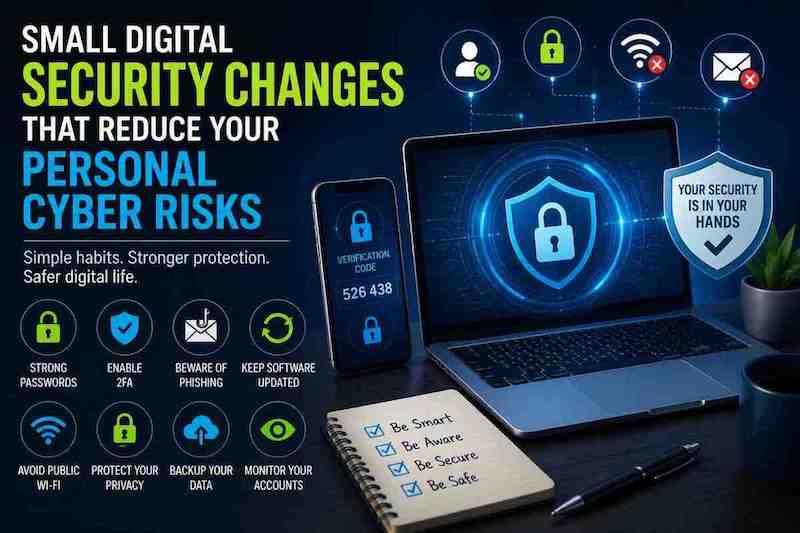
In today’s digital world, almost every part of our lives is connected to the internet. From online banking and shopping to social media and cloud storage, people rely heavily on digital platforms every day. While technology has made life more convenient, it has also increased personal cyber risks. Cybercriminals are constantly searching for ways to steal personal information, hack online accounts, spread malware, and commit digital fraud.
Many people believe cyberattacks only target large companies or wealthy individuals, but that is no longer true. Everyday internet users are becoming common targets because personal accounts often have weaker security protections. A single hacked email account or stolen password can lead to financial loss, identity theft, privacy issues, and even emotional stress.
The good news is that reducing cyber risks does not always require expensive tools or advanced technical knowledge. Small digital security changes and smarter online habits can significantly improve personal cybersecurity and help protect sensitive information from cyber threats.
Most people now store valuable personal information online, including:
If cybercriminals gain access to this information, the consequences can be serious. Stolen credentials are often sold on the dark web or used for fraud, phishing attacks, and account takeovers.
As digital threats continue to evolve, individuals must take personal cybersecurity seriously instead of depending only on apps or platforms for protection.
One of the simplest but most effective cybersecurity habits is using strong passwords. Weak passwords remain one of the biggest reasons personal accounts get hacked.
Avoid using passwords such as:
A strong password should:
Using the same password across multiple accounts increases the risk because if one account is compromised, hackers can access other platforms as well.
Password managers can also help by generating and securely storing complex passwords.
Two-factor authentication adds an extra layer of protection to online accounts. Even if someone steals your password, they still need a second verification code to log in.
Most major platforms now support 2FA, including:
Enabling this feature significantly reduces the risk of unauthorized account access.
Phishing attacks are becoming more advanced and realistic. Cybercriminals create fake emails, websites, or messages that look genuine to trick users into sharing passwords, OTPs, or financial information.
Common phishing scams include:
Before clicking any link or downloading attachments:
A few seconds of caution can prevent major cyber incidents.
Software updates are essential for cybersecurity. Many updates contain important security patches that fix vulnerabilities hackers may exploit.
Outdated systems become easy targets for attackers. Make sure to regularly update:
Automatic updates can help keep devices protected against new threats.
Downloading software, movies, games, or applications from unknown websites can expose devices to malware, spyware, and ransomware attacks.
Cybercriminals often hide malicious programs inside fake downloads or pirated files. Once installed, malware can steal personal information, monitor online activities, or damage devices.
Always:
Being careful about downloads can greatly reduce personal cyber risks.
Public Wi-Fi networks in cafes, airports, hotels, and public places are often less secure. Cybercriminals can sometimes intercept information shared over unsecured connections.
Avoid:
while connected to public Wi-Fi.
Using a Virtual Private Network (VPN) can improve online privacy and encrypt internet traffic for safer browsing.
Many people unknowingly share too much personal information on social media. Details like birthdays, phone numbers, travel plans, and locations can help cybercriminals target individuals.
To improve social media security:
Cybercriminals often use social engineering tactics through social media platforms to manipulate users or steal information.
Data loss can happen due to:
Keeping backups ensures important files remain safe even if something goes wrong.
Backup options include:
Regular backups reduce stress and help users recover important information quickly.
Regularly checking online accounts can help detect suspicious activity before it becomes a serious problem.
Watch for:
Early detection allows users to secure accounts quickly and prevent larger damage.
Many cybercriminals collect publicly available information to target individuals. Oversharing online can make phishing attacks and identity theft easier.
Avoid sharing:
The less personal information available online, the harder it becomes for attackers to misuse it.
Many cyberattacks happen because of simple mistakes such as weak passwords, clicking fake links, or ignoring software updates.
Small cybersecurity improvements may seem minor individually, but together they create strong protection against digital threats.
Cybersecurity is not only about advanced tools — it is also about awareness, habits, and prevention.
As cyber threats continue to grow, personal cybersecurity is becoming more important for everyone. Small digital security changes can go a long way in protecting sensitive information, reducing online risks, and preventing cybercrime.
Simple habits like enabling two-factor authentication, updating devices, avoiding suspicious links, and using strong passwords can significantly improve online safety and digital privacy.
For individuals and businesses looking to strengthen their cybersecurity, Drona Cyber Solutions provides advanced cybersecurity services including threat monitoring, digital forensics, ransomware response, incident response, and cyber threat intelligence. Their expert-driven security solutions help organizations and users stay protected against evolving cyber threats while building stronger digital security practices for the future.

© 2025 Crivva - Hosted by Airy Hosting Managed Website Hosting.