

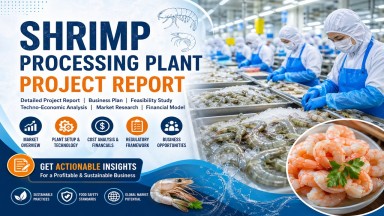
Setting up a shrimp processing plant involves a series of carefully controlled processes such as raw material receiving and inspection, washing, sorting and grading, de-heading, peeling, deveining, cooking or blanching (optional), individually quick freezing (IQF) or block freezing, glazing, and packaging. Key equipment includes sorting and grading machines, de-heading and peeling units, deveining machines, washing tanks, cooking and blanching units, IQF systems or freezing tunnels, glazing machines, packaging systems, and cold storage and blast freezers. As this is a food-processing and export-oriented facility, maintaining stringent quality control systems, food safety standards, and compliance with international regulatory certifications is critical. Additionally, evaluating the shrimp processing plant cost is essential for understanding capital investment, machinery requirements, operational efficiency, and long-term profitability in this rapidly growing seafood processing market.
The shrimp processing industry is expected to witness steady growth through 2034, driven by rising global seafood consumption, growing preference for high-protein diets, expansion of aquaculture farming, increasing exports from Asia-Pacific countries, and advancements in cold-chain logistics. As consumers worldwide increasingly opt for convenient and ready-to-cook seafood products with longer shelf life and high nutritional value, processed shrimp remains a critical product in meeting protein demand, while also offering manufacturers opportunities for value addition and export expansion.
IMARC Group’s report, titled “Shrimp Processing Plant Project Report 2026: Industry Trends, Plant Setup, Machinery, Raw Materials, Investment Opportunities, Cost and Revenue,” provides a complete roadmap for setting up a shrimp processing plant. It covers a comprehensive market overview to micro-level information such as unit operations involved, raw material requirements, utility requirements, infrastructure requirements, machinery and technology requirements, manpower requirements, packaging requirements, transportation requirements, etc.
Request for a Sample Report: https://www.imarcgroup.com/shrimp-processing-plant-project-report/requestsample
Shrimp Processing Industry Outlook 2026
The shrimp market is primarily driven by rising global seafood consumption supported by increasing awareness of the health benefits of lean protein and omega-3 fatty acids. Rapid growth in aquaculture has enabled consistent supply compared to wild catch fisheries. Expanding international trade, supported by improving freezing and cold-chain logistics, has enhanced shrimp availability across regions. Moreover, technological advancements in aquaculture farming, disease management, and processing automation are improving yields and operational efficiency.
Government initiatives promoting seafood exports, including fisheries development programs, aquaculture subsidies, export incentives, and investments in cold chain and port infrastructures, are further contributing to market expansion. Beyond traditional applications in frozen seafood products, growing usage in ready-to-cook meals, canned seafood, restaurant and catering supplies, and value-added variants such as breaded and marinated products are broadening the industry’s scope. Technological advancements in IQF freezing, automated peeling and deveining lines, and advanced glazing systems are shaping the future of shrimp processing facilities. Additionally, increasing focus on sustainable sourcing, traceability, and food safety is enhancing product quality and expanding market access.
The global shrimp market size was valued at USD 74.672 Billion in 2025. According to IMARC Group estimates, the market is expected to reach USD 105.37 Billion by 2034, exhibiting a CAGR of 3.9% from 2026 to 2034. The Asia-Pacific region remains the largest producer and exporter of shrimp, led by countries such as India, Vietnam, Indonesia, and China, benefiting from favorable climatic conditions and cost-effective labor. India’s shrimp export segment continues to gain momentum, supported by strong international demand and expanding market access in key importing countries. As per the Press Information Bureau (PIB), frozen shrimp continued to dominate India’s seafood exports in both volume and value, with the US and China emerging as the largest destination markets. In FY 2023–2024, export volumes increased by 2.67%. During FY 2022–2023, India shipped 1.74 million tonnes of seafood valued at ₹63,969.14 crore (USD 8.09 billion). The steady rise in export volumes and sustained dominance of shrimp in India’s seafood basket underscore the sector’s robust growth trajectory and strengthening global competitiveness.
However, challenges such as price volatility of fresh/frozen shrimp used as the primary raw material, high initial capital investment for specialized processing and freezing machinery, energy and water consumption during manufacturing, and evolving food safety and certification requirements may influence production costs and strategic investment decisions for new plant setups.
Key Insights for Setting up a Shrimp Processing Plant
Detailed Process Flow
Project Details, Requirements and Costs Involved
Capital Expenditure (CapEx) and Operational Expenditure (OpEx) Analysis
Project Economics
Profitability Analysis
Key Cost Components
Economic Trends Influencing Shrimp Processing Plant Setup Costs 2026
Shrimp Price Volatility: As fresh/frozen shrimp is the primary raw material for shrimp processing, accounting for approximately 75–85% of total operating expenses, fluctuating global seafood prices directly impact both capital and operating costs. Higher raw material prices raise production expenses, making supply chain optimization and supplier diversification more critical.
Global Seafood Consumption and Export Demand: Rising global seafood consumption supported by increasing awareness of the health benefits of lean protein and omega-3 fatty acids is creating consistent demand for processed shrimp products. Strong export potential enables several countries to leverage significant export demand, huge foreign exchange earnings, and secure long-term contracts with global buyers and distributors. Such trends can influence both demand patterns and the scale of investment required for new plant setups.
Inflation and Interest Rates: Rising inflation inflates the cost of building materials, civil construction, labor, and machinery, while higher interest rates increase the cost of loans and financing needed for plant construction, equipment procurement, and commissioning of processing lines.
Government Subsidies and Stimulus: Policies supporting domestic seafood processing and exports, including fisheries development programs, aquaculture subsidies, export incentives, and investments in cold chain and port infrastructures, can reduce setup costs through grants, low-interest loans, or tax incentives aimed at shrimp processing plant investments.
Technological Advancements: Innovations in automated peeling and deveining systems, high-efficiency IQF freezers, advanced glazing technologies, and integrated packaging lines can increase upfront CapEx but offer significant productivity gains, improved product quality, and lower per-unit costs, enhancing long-term ROI.
Supply Chain and Raw Material Sourcing: Securing reliable suppliers for fresh/frozen shrimp, water, ice, and packaging materials is essential for consistent production quality. Long-term contracts should be negotiated to stabilize pricing and ensure a steady supply.
Cold-Chain Logistics: Improvements in freezing and cold-chain logistics have enhanced shrimp availability across regions. However, transporting frozen shrimp products requires reliable cold-chain infrastructure and careful handling to prevent spoilage. Poor logistics can lead to distribution bottlenecks, product damage, and increased delivery costs.
Labor Market Considerations: Shortages in skilled labor for operating precision peeling, deveining, and freezing equipment can drive up wages or necessitate investment in operator training and retention programs, raising both initial setup and ongoing operational expenses.
Challenges and Considerations for Investors
About Us
IMARC Group is a global management consulting firm that helps the world’s most ambitious changemakers to create a lasting impact. The company excels in understanding its client’s business priorities and delivering tailored solutions that drive meaningful outcomes. We provide a comprehensive suite of market entry and expansion services. Our offerings include thorough market assessment, feasibility studies, company incorporation assistance, factory setup support, regulatory approvals and licensing navigation, branding, marketing and sales strategies, competitive landscape, and benchmarking analyses, pricing and cost research, and procurement research.
Contact Us
IMARC Group
134 N 4th St. Brooklyn, NY 11249, USA
Email: [email protected]
Tel No: (D) +91 120 433 0800
United States: (+1-201-971-6302)

© 2025 Crivva - Hosted by Airy Hosting Managed Website Hosting.