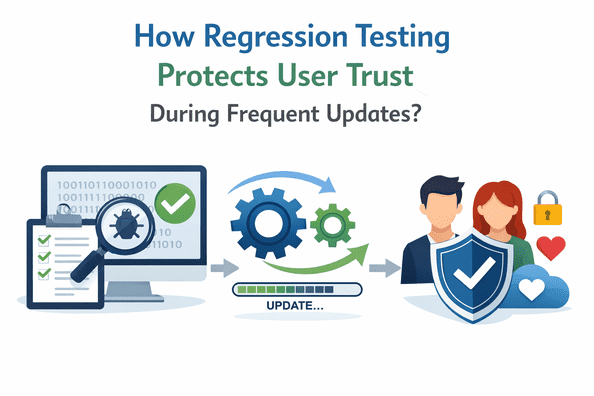
As software development continues to accelerate, Agile methodologies have become the foundation of modern engineering teams. Shorter sprints, continuous feedback loops, and rapid feature releases allow organizations to respond quickly to changing business requirements. However, this speed introduces a significant challenge: ensuring that new changes do not disrupt existing functionality. In this dynamic landscape, regression testing plays a strategic role in maintaining software stability while enabling innovation.
Regression testing is the process of verifying that recent code changes have not adversely affected previously working features. Every enhancement, bug fix, refactor, or integration carries the potential to unintentionally break other parts of the system. Without a structured approach to validating these changes, Agile teams risk introducing instability with each iteration.
Why Regression Testing Is Critical in Agile Environments
Agile development emphasizes incremental delivery. Instead of large, infrequent releases, teams ship updates in smaller, more frequent cycles. While this approach increases flexibility and responsiveness, it also increases the number of times code is modified and deployed.
Each sprint introduces new functionality alongside modifications to existing components. Over time, the complexity of interdependencies grows. Even a minor change in one module can have ripple effects across the system. Regression testing provides a safety net that ensures previously validated features continue to perform as expected.
Without systematic regression testing, teams often rely on assumptions that “small changes won’t cause major issues.” In reality, modern applications consist of interconnected APIs, services, databases, and user interfaces. A seemingly isolated change can impact workflows that are not immediately visible during development.
By embedding regression testing into every sprint, Agile teams can confidently iterate without compromising quality.
Supporting Continuous Integration and Continuous Delivery
Continuous Integration and Continuous Delivery pipelines have become standard in modern software engineering. Developers merge code frequently, and automated pipelines build, test, and deploy applications rapidly. In such environments, manual verification is neither practical nor scalable.
Regression testing integrates seamlessly into CI/CD pipelines. Automated regression suites run whenever new code is committed, providing immediate feedback on whether recent changes have introduced defects. This early detection reduces the cost and effort required to fix issues.
Instead of discovering problems during late-stage testing or after production release, teams can identify regressions within minutes of code submission. This rapid feedback loop strengthens quality assurance and accelerates delivery timelines.
When regression testing is automated and consistently executed, it transforms from a reactive process into a proactive quality strategy.
Reducing Production Risks
One of the primary goals of regression testing is to prevent production failures. Bugs that escape into production can damage user trust, disrupt operations, and increase support costs. Agile teams must balance speed with reliability, and regression testing helps maintain that balance.
Frequent releases mean more opportunities for defects to slip through unnoticed. By maintaining a comprehensive regression test suite, organizations can validate core workflows before every release. This reduces the likelihood of critical functionality breaking in live environments.
In addition, regression testing supports safer refactoring. As systems evolve, developers often restructure code to improve maintainability or performance. Without regression testing, such changes would carry high risk. With a reliable safety net, teams can modernize their architecture confidently.
Enhancing Collaboration Across Teams
Agile practices promote cross-functional collaboration between developers, testers, product owners, and operations teams. Regression testing contributes to this collaborative culture by providing shared visibility into system stability.
Automated test reports offer clear insights into application health. When regressions are detected, teams can quickly identify the affected components and work together to resolve issues. This transparency reduces friction between development and quality assurance teams.
Furthermore, regression testing helps align technical decisions with business objectives. Product stakeholders gain confidence that new features are being delivered without jeopardizing existing capabilities. This trust is essential in high-velocity environments.
The Shift Toward Automated Regression Testing
In traditional development models, regression testing was often manual and time-consuming. Testers would execute predefined test cases before major releases, sometimes requiring days or weeks of effort. In Agile environments, such delays are unacceptable.
Automation has fundamentally reshaped regression testing. Automated tools can execute thousands of test cases within minutes, making it feasible to run full regression suites during every sprint. This shift allows teams to maintain high coverage without slowing development cycles.
Modern automation frameworks also support selective regression testing, where only relevant test cases are executed based on code changes. This targeted approach improves efficiency while preserving reliability.
By investing in automated regression testing, organizations can scale their quality processes alongside growing application complexity.
Real-World Traffic and Intelligent Test Creation
One of the challenges in regression testing is creating and maintaining accurate test cases. As applications evolve, manually updating test scripts becomes labor-intensive. Inconsistent or outdated test cases can reduce effectiveness.
Innovative platforms such as Keploy address this challenge by generating test cases from real application traffic. Instead of relying solely on manually written scripts, Keploy captures actual API interactions and converts them into automated test scenarios. This approach ensures that regression testing reflects real-world usage patterns.
By baselining application behavior and replaying real requests during testing, teams can validate that changes do not alter expected outcomes. This reduces blind spots in coverage and increases confidence in release quality.
Integrating tools like Keploy into Agile workflows strengthens regression testing by combining automation with practical, real-user insights. As development teams strive for both speed and stability, such intelligent solutions enhance overall testing efficiency.
Long-Term Benefits for Agile Organizations
Regression testing is not merely a tactical activity performed before releases. It is a long-term investment in software quality. Over time, a well-maintained regression suite becomes a valuable asset that protects the integrity of the application.
As teams scale and projects grow more complex, regression testing ensures continuity. New developers joining a project can rely on automated tests to understand expected system behavior. Architectural improvements can be implemented with reduced fear of unintended side effects.
Moreover, regression testing supports compliance and reliability standards in industries where system stability is critical. Financial platforms, healthcare systems, and enterprise applications depend on consistent performance across updates.
In Agile environments where change is constant, regression testing provides the stability needed to sustain innovation.
Conclusion
The strategic role of regression testing in Agile development environments cannot be overstated. As organizations embrace continuous integration, rapid deployments, and iterative development, the risk of unintended disruptions increases. Regression testing acts as a safeguard, ensuring that innovation does not compromise reliability.
By integrating automated regression testing into CI/CD pipelines, leveraging intelligent tools, and maintaining comprehensive coverage, teams can deliver updates with confidence. Solutions like Keploy further enhance this process by generating realistic test cases from actual traffic, strengthening validation efforts.
Ultimately, regression testing enables Agile teams to achieve what modern software delivery demands: faster releases, consistent performance, and dependable user experiences. As development cycles continue to accelerate, organizations that prioritize regression testing will be better positioned to maintain stability while driving continuous improvement.