

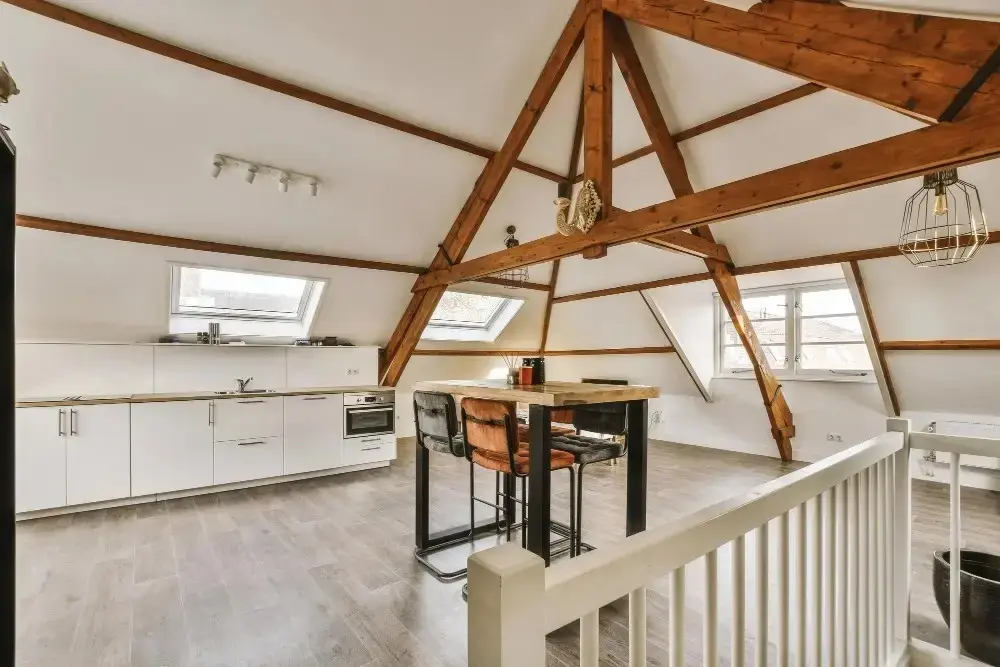
An L-shaped dormer loft conversion is one of the most effective and space-enhancing ways to transform unused roof space into a bright, functional living area. Popular with Victorian and Edwardian terraced properties, this type of loft conversion extends over both the main rear roof and the rear outrigger, creating an ‘L’ shape that delivers exceptional floor space and flexibility.
In this in-depth guide, we explore what an L-shaped dormer loft conversion is, its benefits, planning considerations, and how it compares with other popular options such as a flat roof loft conversion, gable loft conversion, and roof space conversion. Whether you are planning an extra bedroom, home office, or full master suite, this guide will help you make an informed decision.
An L-shaped dormer loft conversion consists of two connected dormers built at the rear of the property—one over the main roof and one over the rear extension. When viewed from above, the structure forms an ‘L’ shape, which allows for significantly more internal space compared to a standard rear dormer.
This design is especially suitable for period homes with rear outrigger extensions, where it can effectively utilize previously awkward or unused areas of the roof. The result is a large, open, and highly adaptable loft area.
The biggest advantage of an L-shaped dormer loft conversion is the sheer amount of floor space it creates. Many homeowners can fit two bedrooms and a bathroom, or a spacious master suite with storage and en-suite facilities.
By extending vertically from the rear roof slope, dormers dramatically increase head height, making the loft feel like a natural extension of the home rather than a cramped attic.
Dormers allow for larger windows or even Juliet balconies, flooding the space with natural light and improving ventilation.
An L-shaped dormer loft conversion can significantly increase property value, making it one of the most cost-effective home improvements available.
In many cases, an L-shaped dormer loft conversion falls under permitted development rights, meaning full planning permission may not be required. However, this depends on factors such as:
Regardless of planning permission, all loft conversions must comply with building regulations, covering:
Working with experienced loft specialists ensures compliance at every stage.
A flat roof loft conversion is often used as part of dormer designs, including L-shaped dormers. Flat roofs allow for maximum internal height and usable space, making them ideal for modern layouts.
Key differences:
When combined, a flat roof design within an L-shaped dormer loft conversion delivers outstanding space efficiency.
A roof space conversion is the umbrella term for converting unused loft areas into habitable rooms. An L-shaped dormer loft conversion is one of the most comprehensive roof space conversion options available.
By extending both sections of the roof, this type of conversion ensures:
If you’re planning a roof space conversion and want the maximum return on investment, an L-shaped dormer is often the best choice.
Many L-shaped dormer loft conversions fall under permitted development rights, meaning planning permission may not be required. However, this depends on:
Building regulations approval is always required and ensures structural safety, fire protection, insulation, and soundproofing.
A gable loft conversion involves extending the sloping side of the roof into a vertical gable wall. This option is ideal for semi-detached or detached homes.
Comparison highlights:
For terraced properties, an L-shaped dormer loft conversion is often the more practical and spacious option.
A roof space conversion aims to turn underused attic areas into functional living spaces. An L-shaped dormer loft conversion is one of the most effective roof space conversion solutions available, as it eliminates sloping ceilings and awkward layouts.
By reshaping the roof structure, homeowners gain:
This makes L-shaped dormers ideal for families planning to stay in their homes for years to come.
Popular design uses include:
With careful planning, the layout can be tailored to match your lifestyle and future needs.
The cost of an L-shaped dormer loft conversion varies depending on size, finish, and structural complexity. While it is typically more expensive than a standard rear dormer, it offers greater space and value.
Factors affecting cost include:
Despite the higher initial investment, the added space and property value often justify the expense.
If you want maximum space without extending your footprint, an L-shaped dormer loft conversion is hard to beat. It offers flexibility, comfort, and excellent long-term value, particularly for period homes.
No, it is most suitable for terraced or period properties with a rear outrigger. A professional assessment is recommended.
Often no, but restrictions apply depending on location and design. Always check local regulations.
Typically between 8 and 12 weeks, depending on complexity and weather conditions.
An L-shaped dormer loft conversion is one of the smartest ways to unlock the true potential of your home. By combining generous space, modern design, and strong investment value, it stands out among flat roof loft conversions, gable loft conversions, and roof space conversion options.
At The Loft Worm, we specialize in creating bespoke loft conversions that maximize space, light, and comfort while guiding you through every step of the process. If you’re ready to transform your loft into a beautiful living space, an L-shaped dormer could be the perfect solution.

© 2025 Crivva - Hosted by Airy Hosting Managed Website Hosting.