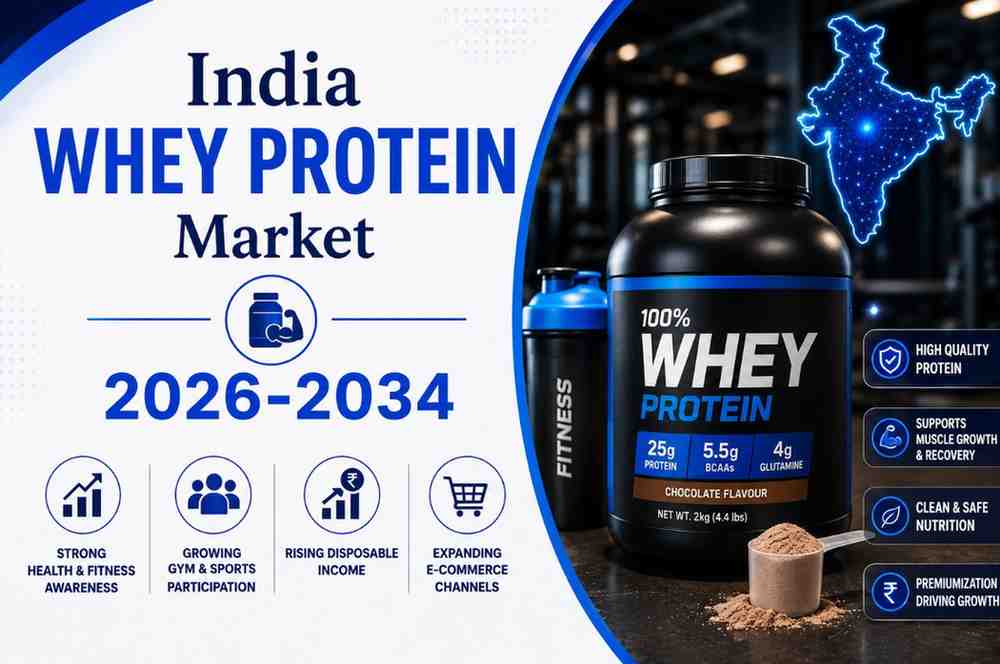
India Whey Protein Market Outlook
The India whey protein market size is growing driven by rising health consciousness, increasing disposable income, growing fitness trends, expanding e-commerce, booming sports nutrition sector, widespread awareness of protein benefits, and surging demand for clean-label products. The expansion of e-commerce platforms and direct-to-consumer (DTC) channels is radically transforming distribution, aiming to reach premium and specialized formulations.
Digital retail development and growing smartphone adoption are leading consumers toward online shopping platforms because they offer better pricing and wider product selection, along with shopping convenience. Government initiatives supporting the food processing sector are further expanding the India whey protein market size.
Market-At-A-Glance
Why the India Whey Protein Market Is Growing?
The surge in demand for clean-label and natural whey protein is encouraging consumers to focus on health and wellness, which is driving market growth. Fitness enthusiasts and health-conscious consumers seek products that contain no artificial substances, preservatives, or sweeteners. Moreover, people prioritize food safety alongside their preference for high-quality protein products that are minimally processed.
The market now features whey protein products made from organic and grass-fed sources, and non-GMO ingredients, which include digestive enzymes and probiotics for better nutrient uptake. For instance, in February 2025, The Whole Truth, a brand committed to transparency and clean ingredients, raised $25 million to innovate and expand into new product categories, including clean-label whey protein. This investment underscores the growing consumer demand for products free from artificial additives and preservatives.
The advent of e-commerce platforms and DTC channels is radically transforming whey protein distribution in India, aiming to reach premium and specialized formulations. Digital retail development and growing smartphone adoption are leading consumers toward online shopping platforms because they offer them better pricing and wider product selection, along with shopping convenience.
Different brands across domestic and international markets are leveraging this market shift by building their online presence through platforms such as Amazon and Flipkart along with health-oriented platforms including HealthKart and MyProtein. For example, in 2024, Parag Milk Foods invested ₹300 crore to expand its Avvatar whey protein line, targeting a 20-25% market share by FY28. With one-third of sales already from e-commerce, the company is leveraging digital platforms to drive growth and reach a wider audience.
The booming sports nutrition sector and widespread awareness of protein benefits are driving market growth. The Indian regulatory support for natural and organic labeling also encourages manufacturers to improve their products into clean-label versions. Customers who examine product ingredients prefer businesses that show clear ingredient details while embracing sustainable and naturally sourced ingredients. As a result, the whey protein segment is experiencing product innovation, along with marketing strategy development.
In June 2024, Amul introduced a high-protein milk containing 35 grams of protein per 250 ml and a chocolate-flavored whey protein concentrate with 25 grams of protein per scoop, catering to the increasing consumer demand for high-protein dietary options. In August 2024, Zydus Lifesciences formed a joint venture with Perfect Day by taking a 50% share in Sterling Biotech to open a production unit for protein products, solving the increasing demand for alternative proteins.
What Are the Key Trends Shaping the India Whey Protein Market?
Whey protein concentrate leads the market, driven by its cost-effectiveness and versatile applications. However, clean-label and natural whey protein products are gaining significant traction as consumers demand transparency and products free from artificial additives. The Indian regulatory support for natural and organic labeling encourages manufacturers to develop clean-label versions.
The expansion of e-commerce and DTC channels is radically transforming distribution dynamics. Digital retail development and growing smartphone adoption are leading consumers toward online shopping platforms. Subscription models that combine products through bundled options are emerging as successful strategies that brands use to increase customer loyalty.
Sports and performance nutrition leads the application segment, driven by rising fitness trends, gym-going culture, and increasing awareness of protein benefits among young consumers.
Manufacturers are introducing fortified whey protein products with digestive enzymes, probiotics, and organic certifications. Amul’s launch of high-protein milk and whey protein concentrate demonstrates the industry’s focus on product innovation to cater to evolving consumer preferences.
Government Support Driving Market Expansion
Regulatory Support for Natural and Organic Labeling:
Food Processing Sector Initiatives:
Investment in Domestic Manufacturing:
Segment Insights
Product Type Insights:
Application Insights:
Regional Insights:
Competitive Landscape
The report offers an in-depth examination of the competitive landscape, including market structure, key player positioning, leading strategies for success, a competitive dashboard, and a company evaluation quadrant.
Key Opportunities for Businesses and Investors
High-Growth Areas:
Strategic Opportunities:
Frequently Asked Questions (FAQ)
The whey protein market in India was valued at USD 185.9 Million in 2025.
The market is expected to grow at a CAGR of 3.27% during 2026–2034, reaching USD 248.4 Million by 2034 — driven by rising health consciousness and fitness trends.
Whey protein concentrate dominates the market due to its cost-effectiveness and versatile applications, appealing to both fitness enthusiasts and casual consumers.
Key challenges include high cost of premium whey protein products, limited awareness in tier-2/3 cities, intense competition from alternative protein sources, and regulatory compliance for clean-label claims.
Consumers increasingly seek products free from artificial substances, preservatives, or sweeteners. The Indian regulatory support for natural and organic labeling encourages manufacturers to develop clean-label versions. In February 2025, The Whole Truth raised $25 million to expand into clean-label whey protein.
Conclusion
India’s whey protein market is positioned for steady growth through 2034, underpinned by rising health consciousness, expanding fitness culture, and surging demand for clean-label products.
Three transformational forces will reshape the market through 2034: the clean-label trend driving product innovation and transparency; e-commerce and DTC channels transforming distribution dynamics; and rising fitness awareness expanding the consumer base beyond major metropolitan areas.
Organizations that invest early in clean-label product development, digital commerce capabilities, and strategic partnerships will capture the largest share of this evolving health and wellness market.
Source: IMARC Group

© 2025 Crivva - Hosted by Airy Hosting Managed Website Hosting.