


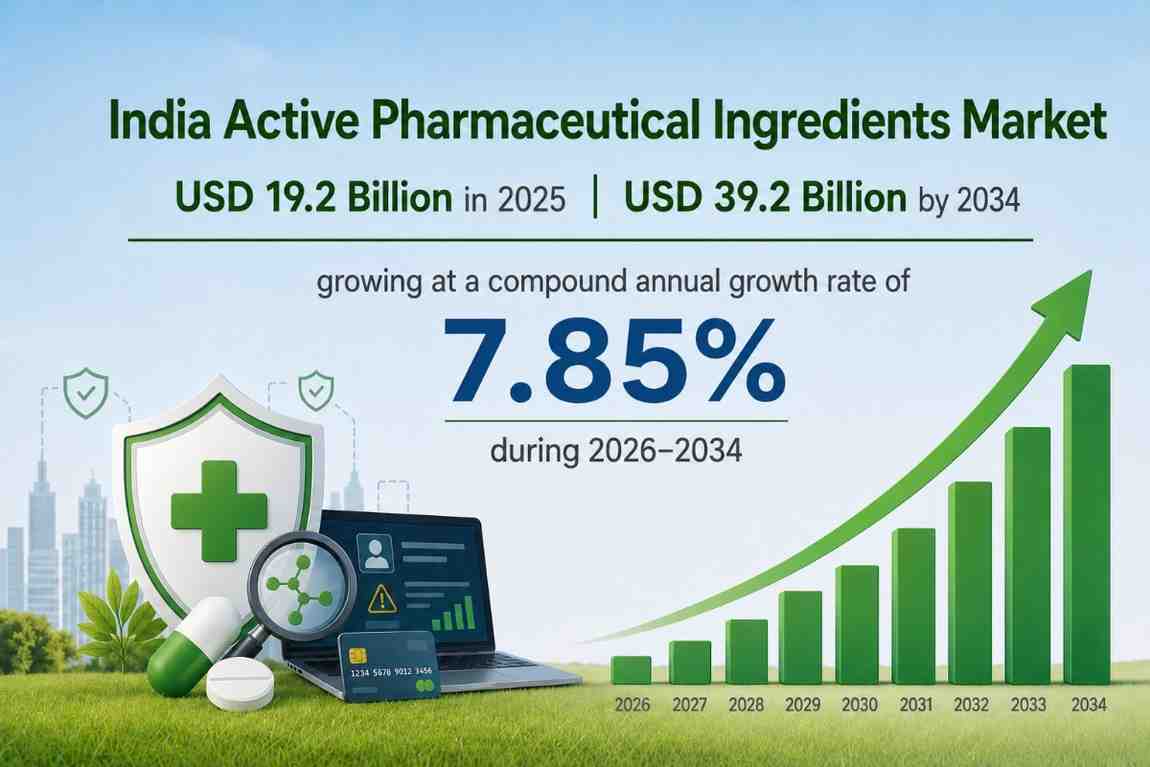
India Active Pharmaceutical Ingredients Market Outlook
The active pharmaceutical ingredients (API) market in India is driven by rising generic drug demand, government incentives, API self-reliance initiatives, patent expirations, increasing chronic diseases, biologics expansion, cost advantages, foreign investments, export growth, R&D advancements, regulatory support, contract manufacturing, biosimilars adoption, and pharma sector expansion.
The market is shifting from import-dependent API sourcing toward self-reliant domestic manufacturing, collectively reshaping how India’s pharmaceutical industry accesses the essential ingredients for drug production.
As the government actively promotes domestic API manufacturing through policy initiatives and incentives, the market is evolving into a sophisticated, technology-enabled manufacturing industry, positively influencing the India active pharmaceutical ingredients market outlook across all segments.
Market Snapshot
Key Market Drivers
In an effort to reduce reliance on imports and encourage self-reliance within the pharmaceutical sector, the Indian government has launched a number of initiatives to enhance domestic production of active pharmaceutical ingredients (APIs). A significant initiative is the approval of the Production Linked Incentive (PLI) scheme, allocating INR 6,940 crore to boost domestic manufacturing of essential APIs, pharmaceutical intermediates, and Key Starting Materials (KSM).
This policy project aims to build a robust local API manufacturing ecosystem in response to the vulnerabilities exposed during global supply chain disruptions. Significant investments are being made in the PLI project, including the expansion of current manufacturing facilities and the establishment of new ones. Furthermore, the government’s ‘Pharmaceuticals Vision 2020’ initiative, with a budget of Rs.15,000 crore, aims to make India one of the world’s leading manufacturing pharma centers by encouraging innovation and investment in the industry.
The growing number of chronic diseases like cardiovascular disease (CVDs), diabetes, and cancer in India has a direct bearing on the pharmaceutical sector, which is propelling the API market forward. A study conducted by the Thought Arbitrage Research Institute (TARI), indicated that the prevalence of chronic diseases in India in 2021 was 116 per 1,000 population, and out of these, two-thirds are between 26 and 59 years.
The increasing disease burden of chronic diseases demands an uninterrupted and assured supply of APIs for the manufacturing of effective curative drugs. By 2030, NCDs are expected to contribute about 67% of India’s disease burden, meaning that there will be a health emergency in the forecasted period. These increased cases of chronic diseases have urged the pharmaceutical sector to concentrate on manufacturing and producing APIs that target these prevalent health ailments.
India’s API manufacturing benefits from significant cost advantages compared to Western counterparts, including lower labor costs, affordable infrastructure, and competitive utility charges. These cost benefits, combined with established manufacturing capabilities and regulatory compliance, have positioned India as a preferred partner for global pharmaceutical companies seeking reliable API suppliers.
Patent expirations of blockbuster drugs are creating opportunities for generic API manufacturing, while the expansion of biologics and biosimilars is driving demand for specialized API capabilities. The growing adoption of biosimilars is creating new avenues for India’s API industry to capture value in the complex biologics segment.
Evaluate Market Opportunity with the Business Sample Report
Emerging Trends
The Indian government’s push for API self-reliance through policy initiatives, including the PLI scheme with INR 6,940 crore allocation, is driving domestic manufacturing capacity expansion. Significant investments are being made in the expansion of current manufacturing facilities and the establishment of new ones.
As the pharmaceutical industry evolves, there is growing demand for complex APIs, including those for oncology, diabetes, and cardiovascular therapies. The rising chronic disease burden in India, with NCDs expected to contribute about 67% of the disease burden by 2030, is driving this demand.
The biologics expansion and biosimilars adoption are creating new opportunities for India’s API industry. Indian manufacturers are investing in specialized capabilities for large molecule API production to capture value in the growing biologics market.
Regulatory support and alignment with international quality standards are strengthening India’s position in the global API market. The country’s extensive USFDA-approved manufacturing facilities and adherence to stringent quality standards enhance export competitiveness.
Market Challenges
Despite robust momentum, the India active pharmaceutical ingredients market faces persistent structural headwinds:
Segment Insights
Drug Type Insights:
Manufacturer Type Insights:
Synthesis Type Insights:
Therapeutic Application Insights:
Regional Insights:
Competitive Landscape
The India active pharmaceutical ingredients market features a mix of large integrated pharmaceutical companies, specialized API manufacturers, and emerging biotech players. Key players are differentiating through complex molecule capabilities, regulatory compliance excellence, cost competitiveness, and strategic partnerships with global pharmaceutical companies.
Recent Developments
Conclusion
India’s active pharmaceutical ingredients market presents compelling growth opportunities, underpinned by structural generic drug demand, government policy support for self-reliance, and increasing chronic disease burden.
Three transformational forces will reshape the market through 2034: domestic manufacturing expansion under the PLI scheme reducing import dependence; complex and high-value API development capturing patent expiration opportunities; and biologics and biosimilars API manufacturing opening new growth avenues.
Organizations that invest in PLI-aligned capacity expansion, complex molecule capabilities, and regulatory compliance excellence will be best positioned to capture value as India pursues API self-reliance and global pharmaceutical leadership.
Source: IMARC Group

© 2025 Crivva - Hosted by Airy Hosting Managed Website Hosting.