Seeing blood after a bowel movement is unsettling. For most people in India, that first spot of red on the tissue or in the toilet bowl triggers immediate concern. If you have been diagnosed with piles, also known as hemorrhoids, bleeding is one of the most common symptoms you will experience. A reassuring fact is that bleeding from piles rarely poses a life-threatening threat. With the right information and treatment, it is manageable. This article covers what causes piles to bleed, when to take it seriously, and how to stop bleeding piles naturally and medically.
The rectum and anus are affected by piles, which are swollen veins around these regions. When these veins are suddenly pressed, usually during bowel movements, delicate tissue tears and bleeds. Several specific triggers make piles bleeding worse or more frequent.
Straining during bowel movements is the biggest reason. As a result of chronic constipation, you are forced to push hard each time you visit the restroom, which aggravates the inflamed tissue. A diet low in fiber, inadequate water intake, prolonged sitting, and a sedentary lifestyle all increase pressure on the rectal veins over time. A woman’s abdominal pressure increases during pregnancy, which can result in both internal and external hemorrhoids. Obesity and heavy lifting can also be contributing factors that most people overlook.
The type of bleeding you experience can assist you in determining whether it is piles or something more serious. Bleeding piles are almost always bright red. You will see it on toilet paper, sometimes in the toilet bowl, or on the outer surface of the stool. It rarely mixes into the stool itself.
It is most likely hemorrhoids that are causing this bright red blood, as it comes from the lower rectum or the anus. If you notice dark red or maroon blood, or if blood appears to be mixed inside the stool rather than on the surface, that could point to a different condition higher up in the digestive tract. In that case, you should consult a doctor promptly for a proper evaluation.
Most piles bleeding are mild and episodic. It comes and goes with each difficult bowel movement. However, certain situations require you to see a doctor immediately.
If you lose blood regularly for many weeks, it can lead to iron deficiency anemia. Persistent fatigue, dizziness, and unexplained weakness alongside rectal bleeding are signs that blood loss has crossed a safe threshold. In the event that bleeding persists after bowel movement is complete, or in the event that you notice blood without any bowel activity, you should not wait it out. If you are above 40 and experiencing rectal bleeding for the first time, a proper diagnosis is essential. Colorectal cancer can also present as rectal bleeding and must be ruled out with appropriate screening.
The most effective first step to reducing bleeding piles naturally is to soften your stools. Make sure you consume high-fiber foods on a daily basis. Fruits like guava, papaya, and pear are excellent choices for regular bowel movements. Vegetables like spinach, bottle gourd, and carrots support smooth digestion. One teaspoon of isabgol mixed in a glass of warm water before bed is a simple, doctor-recommended habit that most proctologists suggest as the starting point of piles care at home.
Keep your body hydrated by drinking 8 to 10 glasses of water every day. When the stools are soft and easy to pass, there is no need to strain, and that alone significantly reduces bleeding episodes.
Cold water rinses offer quick external relief from bleeding and swelling. A warm sitz bath for 10 to 15 minutes after bowel movements reduces inflammation around the anal area and soothes irritated tissue. Avoid sitting on the toilet for more than 5 minutes at a stretch. As you sit for an extended period of time, more pressure is placed on your veins. By walking every day, you will improve your blood circulation and reduce the frequency of flare-ups.
Rough wiping or harsh toilet paper can worsen piles and increase bleeding. Use a gentle wipe or rinse with water after each bowel movement. It is important to keep the anal area clean and dry throughout the day. Wearing breathable cotton undergarments reduces moisture and friction, both of which irritate inflamed tissue. Medical treatment cannot be replaced by these habits, but they facilitate faster healing by creating the right conditions.
Natural steps work well for early-stage or Grade 1 piles. But if your bleeding has been happening for weeks, if it occurs after every bowel movement, or if it is accompanied by pain, itching, swelling, or prolapse, you need a structured medical treatment plan alongside dietary changes.
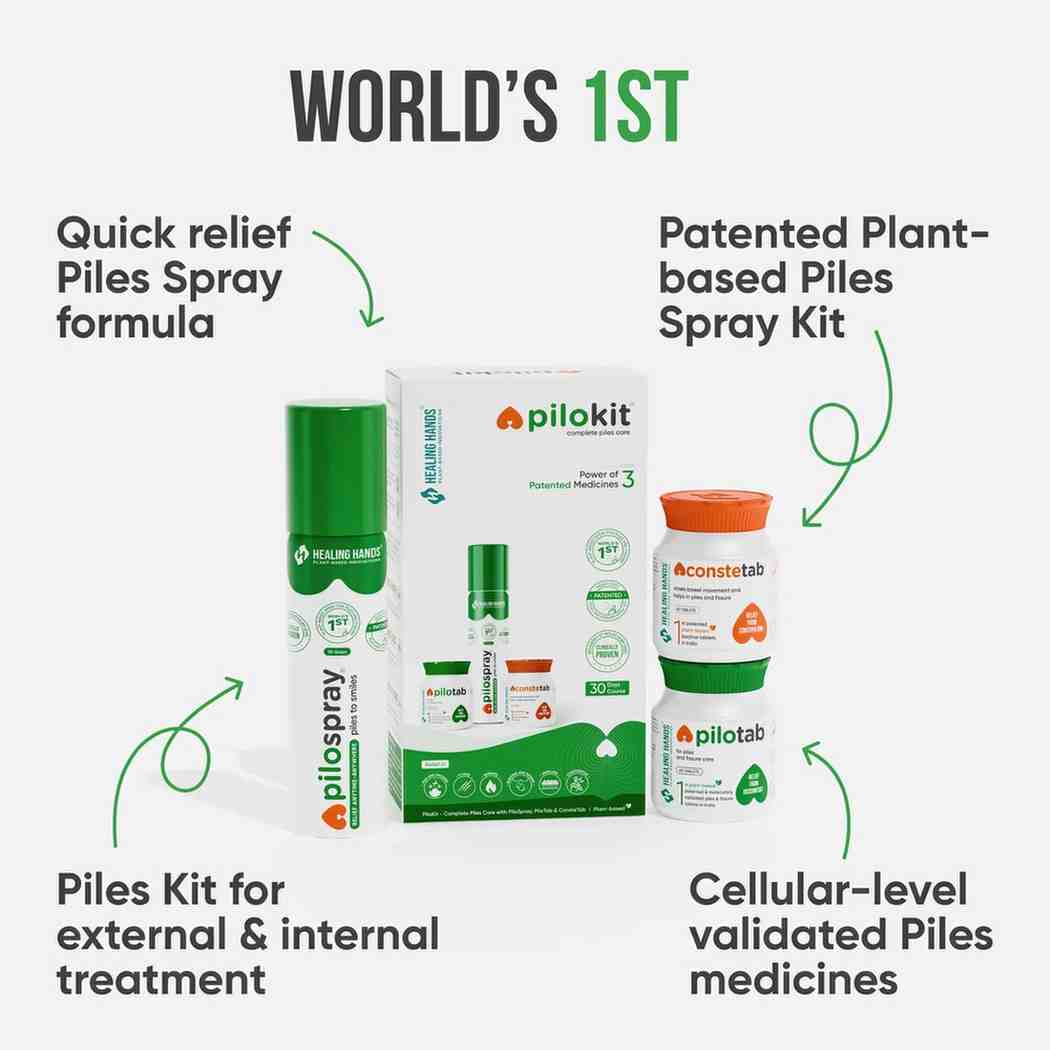
Healing Hands is one of India’s most trusted anorectal care brands, founded by leading proctologists with over 16 years’ clinical experience. Their flagship product, PiloKit, is India’s first patented plant-based piles treatment kit. A complete kit containing three drugs – PiloSpray, PiloTab, and ConsteTab – is included.
PiloSpray is a world-first patented hemorrhoids spray designed for touch-free external application. This product provides fast relief from bleeding, burning, and itching while simultaneously promoting wound healing in the affected area. Because it requires no direct contact, it also reduces the risk of injury or infection during application.
PiloTab addresses internal healing by reducing swelling and inflammation within the body. It targets the root cause of internal piles, helping the swollen veins shrink and recover over the course of treatment.
ConsteTab is a plant-based laxative tablet that softens stools and relieves constipation, which directly removes the trigger for straining that causes bleeding in the first place.
PiloKit has been validated at the molecular level at NCCS, India’s leading cellular science institute. Clinical research on PiloKit has been published in the Journal of Herbal Medicine. Trusted by over 10 lakh patients across India, it provides 3x faster relief from pile symptoms than conventional approaches. It is safe, entirely plant-based, and requires no surgical intervention.
Piles are bleeding is your body signaling that the lower digestive system needs attention. In most cases, it responds well to a combination of dietary improvements, lifestyle changes, and the right piles of medicine. The earlier you start, the better your chances of avoiding surgery. Whether you begin with fiber-rich foods and hydration or opt for a complete treatment protocol like Healing Hands Pillow Kit, the key is not to ignore the symptoms and not to wait until they become severe. A consistent, structured approach delivers lasting results.

© 2025 Crivva - Hosted by Airy Hosting Managed Website Hosting.