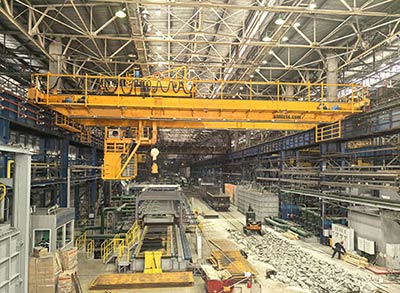
Overhead cranes are indispensable pieces of equipment in steel mills and metal processing plants. From handling molten steel and red-hot slabs to transporting heavy coils, billets, and fabricated components, overhead cranes operate at the heart of some of the most demanding industrial environments in the world. Unlike general manufacturing workshops, steel and metal processing facilities expose cranes to extreme heat, heavy loads, dust, corrosive atmospheres, continuous duty cycles, and strict safety requirements.
Understanding the unique working environments of overhead cranes in steel mills and metal processing plants is essential for proper crane design, selection, operation, and maintenance. This article explores the key environmental characteristics, operational challenges, and design considerations that define overhead crane applications in these industries.
Steel mills and metal processing plants encompass a wide range of production areas, including:
Raw material yards
Blast furnaces and converters
Continuous casting workshops
Rolling mills
Heat treatment shops
Coil storage and finishing lines
Scrap handling and charging areas
Each zone presents different environmental conditions, but they all share one common trait: high-intensity industrial operations. Overhead cranes in these environments are expected to work reliably under continuous or near-continuous operation, often in harsh physical conditions that go far beyond standard industrial settings.
One of the most defining features of steel mill crane environments is high temperature. In areas such as:
Ladle handling bays
Furnace charging zones
Continuous casting shops
Ambient temperatures can far exceed normal factory conditions. Radiant heat from molten steel, hot slabs, or reheating furnaces significantly affects crane structures, mechanical components, and electrical systems.
High temperatures influence many aspects of heavy duty overhead crane design, including:
Use of heat-resistant steel for structural components
Special high-temperature cables and insulation
Heat-shielded motors, brakes, and control panels
Enhanced ventilation or cooling for electrical cabinets
Without proper thermal protection, crane components may suffer from accelerated wear, insulation breakdown, or loss of mechanical strength.
Steel and metal processing plants handle extremely heavy materials such as:
Molten steel ladles
Steel slabs and blooms
Coils weighing tens of tons
Forged or cast components
These loads are not only heavy but also dense, requiring precise control and robust structural strength.
Unlike cranes in warehouses or light manufacturing plants, overhead cranes in steel mills often operate under high duty classifications (A6 to A8 or equivalent). This means:
Frequent starts and stops
Long daily operating hours
Repetitive lifting cycles with near-rated loads
Such conditions demand reinforced crane girders, high-performance hoisting mechanisms, and premium-grade components to ensure long-term reliability.
Steel production and metal processing generate large amounts of dust and airborne particles, especially in:
Raw material handling areas
Rolling mills
Grinding and surface treatment workshops
Scrap processing zones
Dust can penetrate crane motors, brakes, bearings, and electrical systems if not properly sealed.
Processes such as smelting, pickling, and heat treatment release fumes and corrosive gases. These substances can attack metal surfaces, electrical contacts, and insulation materials over time.
To cope with dusty and corrosive environments, overhead cranes often incorporate:
Enclosed or pressurized electrical cabinets
Dust-proof motors and brakes
Corrosion-resistant coatings and finishes
Sealed bearings and lubrication systems
These measures help extend service life and reduce unplanned downtime.
Steel mill operations frequently involve:
Sudden load pickups
Impact loading during material placement
Crane travel over long spans with heavy loads
In rolling mills, cranes may also be affected by vibrations transmitted from large machinery.
To withstand vibration and shock loads, cranes must feature:
Reinforced end trucks and wheel assemblies
Robust gearboxes and couplings
High-strength rails and runway beams
Poor vibration resistance can lead to fatigue cracking, misalignment, and premature component failure.
Some metal processing plants, especially those with cooling systems, outdoor material yards, or coastal locations, expose cranes to high humidity and moisture. Condensation can form inside electrical enclosures when temperature differences are significant.
Processes such as galvanizing, acid pickling, or chemical surface treatment create corrosive atmospheres. Over time, corrosion can weaken crane structures and compromise safety.
Common solutions include:
Heavy-duty industrial paint systems
Galvanized or stainless-steel components where necessary
Moisture-resistant control systems
Regular inspection and surface maintenance programs
Handling molten metal or heavy steel products introduces serious safety risks. A crane failure in such an environment can result in severe injury, equipment damage, or production shutdowns.
Overhead cranes in steel mills typically require advanced safety systems, such as:
Redundant braking systems
Overload protection and load monitoring
Emergency stop systems
Limit switches and anti-collision devices
Heat-resistant operator cabins (where applicable)
In many plants, cranes are classified as safety-critical equipment, subject to stricter inspection and maintenance standards.
Modern steel and metal processing plants increasingly rely on automation to improve efficiency, consistency, and safety. Overhead cranes may be integrated with:
Production management systems
Automated storage and retrieval systems
PLC and SCADA control networks
Harsh environments require automation systems that can withstand heat, dust, and electromagnetic interference. Sensors, encoders, and communication devices must be industrial-grade and properly protected to ensure reliable operation.
The demanding working environment leads to faster degradation of:
Wire ropes and hooks
Brake linings
Electrical components
Wheels and rails
To support efficient maintenance, cranes in steel mills often include:
Easy-access platforms and walkways
Centralized lubrication systems
Modular electrical components
Remote diagnostics and condition monitoring
A well-designed crane reduces maintenance downtime and improves overall plant productivity.
Selecting an overhead crane for steel mills and metal processing plants is not a one-size-fits-all decision. Environmental factors such as temperature, dust, load characteristics, and duty cycle directly influence crane configuration, component selection, and safety systems.
A crane designed for light industrial use will not survive long in a steel mill. Conversely, a crane engineered specifically for harsh metallurgical environments delivers higher reliability, better safety performance, and lower life-cycle costs.
Overhead crane working environments in steel mills and metal processing plants are among the most challenging in the industrial world. Extreme heat, heavy loads, dust, vibration, corrosive atmospheres, and continuous operation place enormous demands on crane structures, mechanical systems, and electrical components.
Understanding these environmental conditions is essential for designing, selecting, and maintaining overhead cranes that can operate safely and efficiently over the long term. By aligning crane specifications with real working conditions, steel producers and metal processors can ensure reliable material handling, improved safety, and sustained production performance in even the harshest environments.

© 2025 Crivva - Hosted by Airy Hosting Managed Website Hosting.