


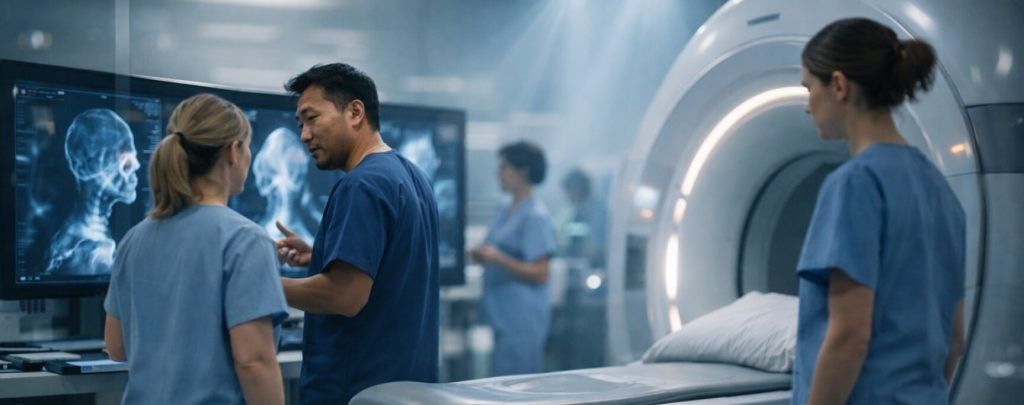
Medical imaging plays a critical role in modern diagnosis. Today, clinicians have access to advanced tools such as CT, MRI, and sophisticated image processing technologies that deliver clearer and faster insights than ever before. As a result, diagnostic imaging has become central to clinical decision-making across healthcare settings.
However, the reality inside many hospitals and imaging centers often tells a different story. While imaging technology continues to advance, radiology teams are under growing pressure. Imaging volumes keep increasing, staffing levels remain tight, and expectations for faster reporting continue to rise. At the same time, radiologists are expected to do more administrative work, not less. In many cases, the systems designed to support them such as PACS, RIS, and EHR platforms do not communicate effectively, creating friction rather than efficiency.
Radiology plays a critical role in modern healthcare, serving as the backbone of diagnostic decision-making. From emergency trauma scans to routine imaging, radiologists are expected to deliver accurate interpretations quickly and consistently. However, as imaging volumes grow and healthcare systems become more complex, traditional radiology workflows are struggling to keep pace.
Many radiology departments still rely on fragmented systems, manual processes, and disconnected communication channels. These inefficiencies not only slow down report turnaround times but also contribute to clinician burnout and operational bottlenecks. Modern radiology workflows are transforming medical imaging by integrating technology, automating processes, and improving collaboration across the care continuum.
The Challenges of Traditional Radiology Workflows
Historically, radiology operations have been built around separate systems such as PACS (Picture Archiving and Communication Systems), RIS (Radiology Information Systems), and EHR (Electronic Health Records). While each system serves a specific purpose, they often do not communicate seamlessly with one another.
This lack of integration creates several challenges:
Additionally, the growing demand for imaging services has intensified the pressure on radiologists. With higher case volumes and expectations for rapid reporting, even small inefficiencies can significantly impact performance and patient outcomes.
What Defines a Modern Radiology Workflow?
A modern radiology workflow goes beyond simply upgrading equipment or adopting new software. It focuses on creating a connected, intelligent ecosystem where data flows seamlessly and processes are optimized for speed and accuracy.
Key elements include:
Connecting PACS, RIS, and EHR platforms eliminates silos and ensures radiologists have immediate access to complete patient data. Integrated systems reduce duplicate documentation and minimize errors caused by fragmented information.
Automated worklists and AI-assisted triage tools help prioritize urgent cases. This ensures critical findings are addressed quickly while maintaining balanced workloads across teams.
Automation reduces repetitive administrative tasks such as report formatting, documentation, and notifications. Structured reporting templates also improve consistency and reduce variability in interpretation.
Modern dashboards provide insights into turnaround times, case volumes, and operational bottlenecks. Leaders can make data-driven decisions to improve staffing models and performance metrics.
Cloud-enabled systems support teleradiology and multi-location collaboration. Radiologists can securely access imaging data from anywhere, ensuring continuity of care across facilities.
Operational Benefits of Workflow Optimization
When radiology workflows are streamlined, the operational benefits are substantial.
Faster Turnaround Times
Automated routing and integrated systems eliminate delays caused by manual handoffs. Radiologists can access complete patient records instantly, allowing for quicker interpretation and reporting.
Reduced Burnout
Administrative overload is a major contributor to burnout in radiology. Automation and improved system design allow radiologists to focus more on clinical interpretation rather than paperwork.
Improved Resource Utilization
Real-time workflow analytics help departments balance workloads efficiently. Managers can identify bottlenecks and redistribute cases accordingly.
Scalability
As imaging demand grows, optimized workflows allow organizations to scale operations without proportionally increasing staffing costs.
Clinical Impact on Patient Care
The transformation of radiology workflows does not only benefit operations—it directly improves patient outcomes.
Enhanced Diagnostic Accuracy
Access to comprehensive patient data and structured reporting reduces variability and improves interpretation quality.
Faster Clinical Decision-Making
Reduced turnaround times enable physicians to make timely treatment decisions, particularly in emergency settings.
Better Care Coordination
Integrated communication tools allow seamless collaboration between radiologists and referring physicians, ensuring alignment in patient management plans.
Improved Patient Experience
Shorter wait times for imaging results and faster treatment pathways contribute to higher patient satisfaction and trust.
The Role of AI in Modern Radiology Workflows
Artificial Intelligence (AI) is increasingly embedded into radiology workflows, not as a replacement for radiologists but as a support tool. AI can assist with image analysis, anomaly detection, and case prioritization. When integrated properly, AI enhances efficiency while preserving clinical oversight.
AI-powered triage systems can flag urgent cases, reducing the risk of delayed diagnosis. Automated measurement tools and structured reporting features also reduce manual effort and increase consistency.
However, the true value of AI lies in its integration within a broader workflow strategy. Technology alone is not transformative—its impact depends on how well it aligns with clinical and operational processes.
Overcoming Implementation Barriers
Despite clear benefits, transitioning to modern workflows can present challenges.
Integration Complexity
Legacy systems may require customization or middleware to achieve seamless connectivity.
Change Management
Clinicians and staff must adapt to new processes and tools. Training and stakeholder engagement are critical for successful adoption.
Data Security and Compliance
Healthcare organizations must ensure new systems meet regulatory requirements and protect sensitive patient information.
With proper planning, these challenges can be addressed through phased implementation strategies and collaboration between clinical and IT teams.
The Future of Radiology Workflow Innovation
The future of radiology lies in continuous workflow optimization. As healthcare systems increasingly prioritize value-based care, imaging departments must demonstrate both clinical excellence and operational efficiency.
Emerging trends include:
Organizations that invest in workflow transformation today position themselves to meet tomorrow’s demands with agility and resilience.
Conclusion
Modern radiology workflows are transforming medical imaging by replacing fragmented processes with integrated, intelligent systems. Through automation, system connectivity, and real-time analytics, healthcare organizations can reduce inefficiencies, improve turnaround times, and enhance collaboration across care teams.
The impact extends beyond operational gains. Optimized workflows improve diagnostic accuracy, accelerate clinical decisions, and elevate patient experiences. In an era where imaging volumes continue to grow, adopting streamlined radiology workflows is not merely an operational upgrade—it is a strategic necessity for delivering high-quality, patient-centered care.
Read the original article here:
https://dashtechinc.com/blog/how-radiology-workflows-are-transforming-medical-imaging/

© 2025 Crivva - Hosted by Airy Hosting Managed Website Hosting.







