


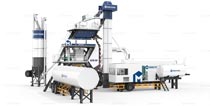
For contractors across Latin America, delivering infrastructure projects is a constant balancing act between two formidable pressures: securing and managing tight funding while adhering to aggressive, often inflexible, project schedules. Delays and cost overruns can quickly erode profitability and damage reputations. In this high-stakes environment, strategic equipment selection becomes a primary lever for risk mitigation. Increasingly, the mini asphalt plant is emerging as a pivotal solution, offering a blend of flexibility, efficiency, and cost-control that directly addresses these dual challenges. This compact yet powerful equipment is transforming how contractors approach road projects, from remote mountain passes to urban bypasses, by providing greater control over the two most critical variables: time and money.
The financial landscape for infrastructure in Latin America is often characterized by public budgets with limited contingency funds and private projects with stringent ROI expectations. Simultaneously, project schedules are compressed due to political imperatives, community demand for rapid connectivity, and the desire to complete work within dry seasonal windows. This creates a vicious cycle: rushing to meet schedules can inflate costs through overtime and expedited material shipping, while budgetary constraints can force work stoppages that blow timelines. Traditional reliance on large, centralized batch plants often exacerbates this pressure, locking contractors into long, costly logistics chains and high overhead before a single ton of asphalt is laid.
The fundamental advantage of a mini asphalt plant is its ability to decentralize production. This shift from a centralized supply model to on-site or near-site mixing delivers direct and substantial financial benefits that alleviate funding pressure.
Transporting hot mix asphalt is exceptionally costly. Fuel, truck maintenance, and driver wages for long-haul journeys from a fixed plant to a distant job site consume a massive portion of project funds. More critically, this cost is variable and highly sensitive to fuel price fluctuations and road conditions. By deploying a mini asphalt plant closer to the paving site, contractors can virtually eliminate these long-distance hauling expenses. The savings are not marginal; they often represent one of the most significant line-item reductions in the project budget, freeing capital for other critical areas.
The acquisition and operational costs of a large stationary plant are prohibitive for many mid-sized contractors and create heavy financial burden. A mini asphalt plant requires a substantially lower initial investment, improving cash flow and reducing financing costs. Its operational overhead is also smaller, requiring less permanent infrastructure, a smaller crew, and lower energy consumption per ton produced in a localized setting. This leaner financial model allows contractors to bid more competitively and undertake projects without over-leveraging, making the mini asphalt plant a tool for both project execution and business growth.
Beyond financial relief, the true power of a mobile mini asphalt plant lies in the control it returns to the contractor over the project timeline. It transforms the schedule from a fragile chain of dependencies into a more resilient and manageable process.
When relying on an external commercial plant, a contractor’s schedule is at the mercy of that plant’s availability, queue, and reliability. Any disruption—a breakdown at the commercial plant, a priority given to another client, or a delay in trucking—immediately stalls the entire paving operation. Owning and operating a mini asphalt plant internalizes this critical link in the supply chain. The contractor controls production timing, mix design, and output, ensuring that the paving crew has material when and where they need it. This autonomy is invaluable for hitting daily production targets and maintaining pace.
Large projects, such as highway rehabilitation or long rural road connections, often benefit from phased construction. A mini asphalt plant can be easily relocated along the project corridor as work progresses. This mobility eliminates the need for a single, central plant location that may become logistically inefficient as the job advances. Contractors can sequence work based on terrain, weather, or funding disbursements without being tethered to a fixed production point. This agility allows for smarter scheduling around weather events or unforeseen site challenges, preventing days of full-site inactivity.
To fully harness the financial and scheduling advantages, contractors must integrate the mini asphalt plant into a broader strategy of proactive project management.
Adopting Just-in-Time Production Philosophy. The plant enables a lean approach to material inventory. Instead of producing and storing large quantities of mix with associated cost and quality degradation risk, production can closely follow the daily paving plan. This minimizes waste, ensures fresh mix quality, and reduces working capital tied up in on-site inventory.
Leveraging Data for Predictive Maintenance. Unscheduled downtime is the enemy of both budget and schedule. Modern mini asphalt plant(mini planta asfalto) models often come equipped with basic operational data tracking. Using this to implement a strict, predictive maintenance regimen—addressing wear parts before they fail—ensures higher plant availability and prevents costly emergency repairs and project delays.
Strategic Deployment for Multi-Project Portfolios. For contractors managing several smaller projects simultaneously, a single mini asphalt plant can be rotated between sites. This maximizes asset utilization, spreads the capital cost across multiple contracts, and provides scheduling flexibility company-wide. It allows a firm to accept a new, urgent project without needing to secure a new mixing source, providing a competitive edge.
In conclusion, the value proposition of the mini asphalt plant extends far beyond being merely a smaller mixing apparatus. It is a strategic tool for business resilience. By directly attacking the core cost drivers of logistics and overhead, it provides a buffer against funding shortfalls and inflationary pressures. By returning control of production and logistics to the contractor, it acts as a powerful antidote to the schedule volatility that plagues the industry. For Latin American contractors navigating an environment of tight margins and high expectations, investing in this mobility and flexibility is not just an operational decision—it is a financial and strategic one. It empowers them to deliver projects on time and within budget, building a reputation for reliability that secures future work in a competitive market.

© 2025 Crivva - Hosted by Airy Hosting Managed Website Hosting.








