


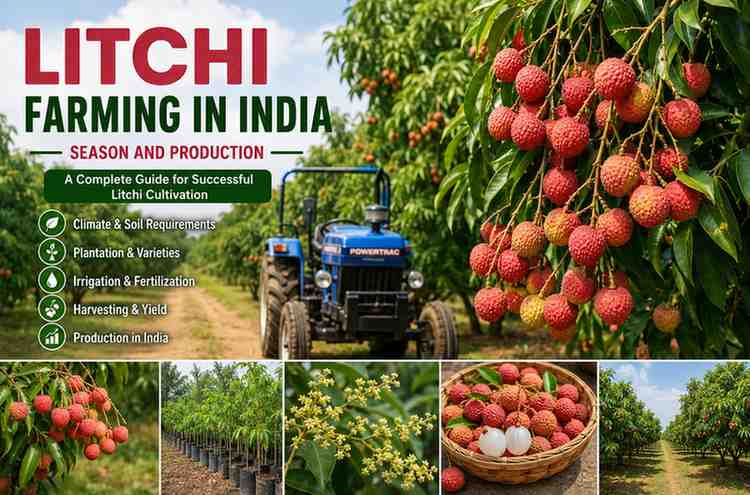
The fruit is rich in Vitamin C, antioxidants, minerals, and natural sugars. It is commonly used in fresh consumption, juices, desserts, ice creams, jams, and beverages. India is currently the second-largest producer of litchi in the world after China. The crop is mainly cultivated in subtropical regions where climatic conditions support healthy flowering and fruit development. Apart from traditional farming practices, modern agricultural machinery is also helping orchard owners improve productivity and reduce labour costs. Many farmers prefer using a Powertrac Tractor for orchard management activities such as spraying, transportation, fertilizer application, and orchard cleaning. Compact and fuel-efficient tractors are suitable for working between tree rows without damaging plants. As orchard farming is expanding rapidly, mechanization is becoming an important part of successful litchi cultivation.
Litchi cultivation requires proper planning, suitable climate, fertile soil, timely irrigation, and effective orchard management. Farmers who follow scientific cultivation methods can achieve better fruit quality and higher production. The following sections explain the complete process of litchi farming in India along with the role of agricultural machinery in orchard operations.
Litchi grows best in warm and humid climatic conditions. The crop is highly suitable for subtropical regions where winters are mild and summers are not extremely hot. Excessive frost, dry winds, and heavy rainfall during flowering can negatively affect fruit setting and production. The ideal temperature range for litchi cultivation is between 20°C to 35°C. Cool weather during winter helps induce flowering, while warm temperatures during fruit development improve sweetness and fruit size. High humidity is also beneficial during the growth period. Rainfall plays an important role in litchi cultivation, but unseasonal rain during flowering and fruit setting can damage the crop. Strong winds may also lead to fruit drop and branch damage. Therefore, farmers need to select locations with stable climatic conditions.
The planting season for litchi mainly begins during the monsoon months. Farmers usually plant litchi saplings between July and September because sufficient moisture during this period helps young plants establish properly in the soil. The flowering stage generally starts from February to March. Fruit development takes place during April and May when temperatures gradually increase. Harvesting usually begins from May and continues till June depending on the variety, climate, and region. Different states experience slight variations in harvesting periods. In Bihar, harvesting starts earlier due to favourable climatic conditions, while in hilly and cooler regions, harvesting may continue slightly longer.
Proper land preparation is essential for successful litchi cultivation. Farmers should plough the field thoroughly and remove weeds, stones, and unwanted materials before plantation. Well-levelled land improves irrigation management and water distribution. Litchi plants are generally propagated through air layering because this method ensures uniform growth and early fruit bearing. Air-layered plants start fruit production earlier compared to seed-grown plants. Pits of about 1 meter length, width, and depth are prepared before plantation. These pits are filled with topsoil mixed with organic manure and fertilizers. Adding farmyard manure improves soil fertility and moisture retention capacity. The spacing between plants should be around 8 to 10 meters to ensure proper sunlight penetration and air circulation. Adequate spacing also makes intercultural activities easier and reduces disease spread between plants. Young plants require regular watering during the initial growth stage. Mulching around the plants helps conserve soil moisture and control weed growth. Farmers often use tractors and orchard implements for transportation of manure, pit preparation, and cleaning operations.
Proper irrigation management is one of the most important factors in litchi cultivation. The crop requires regular moisture during flowering and fruit development stages. Lack of water during this period may lead to fruit cracking, poor fruit size, and reduced production. Young plants need frequent irrigation for healthy establishment, while mature trees require irrigation at critical growth stages. Drip irrigation is becoming popular among orchard growers because it saves water and provides moisture directly to the root zone. Farmers should avoid excessive irrigation because waterlogging can damage roots and increase fungal diseases. During the rainy season, proper drainage arrangements should be maintained to prevent standing water in orchards. Modern orchard farmers also use tractor-operated water tankers and irrigation equipment for efficient water management. Mechanization reduces labour requirements and improves operational efficiency in large orchards.
Weed management is necessary for healthy plant growth and higher productivity. Weeds compete with plants for nutrients, moisture, and sunlight, which can reduce orchard performance. Farmers usually carry out manual weeding or use intercultural implements for weed control. Mulching is another effective method for reducing weed growth and conserving soil moisture. Pruning and orchard cleaning are also important management practices in litchi farming. Dry and diseased branches should be removed regularly to improve air circulation and reduce pest infestation. Sprayers and orchard machinery help farmers apply pesticides and fungicides efficiently. Many growers compare the Powertrac Tractor price with other tractor models before investing in orchard machinery. Affordable and fuel-efficient tractors are beneficial because they reduce operational costs in long-term horticulture farming.
Litchi plants require balanced nutrition for proper growth, flowering, and fruit development. Fertilizer application depends on soil fertility, plant age, and orchard condition. Organic manure such as farmyard manure and compost should be applied regularly to maintain soil health. Chemical fertilizers containing nitrogen, phosphorus, and potash are also essential for better fruit production. Nitrogen promotes vegetative growth, phosphorus improves root development and flowering, while potash enhances fruit quality and sweetness. Farmers should apply fertilizers in split doses according to plant requirements. Micronutrients like zinc and boron are also important for preventing nutrient deficiencies in litchi orchards. Soil testing helps farmers determine the exact fertilizer requirement and avoid unnecessary input costs. Nowadays, orchard owners are increasingly using tractors for transporting fertilizers, manure, and spraying equipment. Mechanized farming operations save time and improve work efficiency in commercial orchards.
India produces several high-quality litchi varieties suitable for different climatic conditions and market preferences. Farmers select varieties based on yield potential, fruit quality, harvesting period, and regional adaptability.
Shahi is one of the most famous litchi varieties grown in Bihar. It is known for its excellent pulp quality, sweetness, attractive color, and strong market demand.
China variety produces medium to large-sized fruits with good sweetness. It is widely cultivated in North Indian states and is highly preferred by commercial growers.
This variety is popular for its unique aroma, attractive appearance, and juicy pulp. It has good consumer demand in fresh fruit markets.
Dehradun litchi is mainly cultivated in Uttarakhand and nearby regions. The fruits are juicy, flavorful, and highly appreciated for premium quality.
Bombai is an early-maturing variety with good market demand. Farmers prefer this variety because it reaches markets earlier and often fetches better prices.
India produces a large quantity of litchi every year. Bihar is the leading producer and contributes more than 40% of the country’s total production. Muzaffarpur district in Bihar is especially famous for high-quality Shahi litchi. Other major litchi-producing states include:
These states have favourable climatic conditions for healthy flowering and fruit development. Improved farming practices and better orchard management are helping increase productivity in these regions.
Litchi fruits are harvested when they develop full color, sweetness, and proper size. Harvesting should be done carefully because the fruit skin is delicate and can easily get damaged. Fruits are usually harvested in bunches along with small branches and leaves to improve shelf life and maintain freshness during transportation. Proper post-harvest handling helps farmers obtain better market prices. A healthy mature litchi tree can produce around 80 to 100 kg of fruits annually depending on the variety, age of the tree, climatic conditions, and management practices. Good orchard management significantly improves yield and fruit quality. After harvesting, fruits should be packed carefully to avoid bruising. Cold storage and proper transportation are important for maintaining fruit freshness in distant markets.
Modern agricultural machinery is playing an important role in orchard farming across India. Tractors and farm implements help farmers reduce labour dependency and complete operations efficiently. Compact tractors are especially useful in litchi orchards because they can easily move between tree rows. Farmers use tractors for:
Many orchard growers prefer fuel-efficient tractors because they reduce operational expenses and improve profitability over time.
Litchi farming in India is a profitable horticulture business with excellent domestic and export market demand. The crop performs well in subtropical climatic conditions and provides good income opportunities to farmers. States like Bihar, West Bengal, Jharkhand, and Uttar Pradesh are major producers of high-quality litchi in the country. Proper soil preparation, irrigation management, balanced fertilization, pest control, and timely harvesting are essential for achieving better yield and fruit quality. Scientific orchard management practices can significantly improve productivity and long-term profitability. Modern farm machinery and efficient tractors are also supporting orchard farmers by reducing labour costs and improving operational efficiency. With rising consumer demand and improved cultivation practices, litchi farming is becoming a strong commercial opportunity for Indian farmers looking to increase their agricultural income.

© 2025 Crivva - Hosted by Airy Hosting Managed Website Hosting.