Homeowners across the state are rethinking what a beautiful kitchen actually needs. Kitchen remodeling in MD has taken a clear turn toward smarter, more intentional design choices, especially in homes where square footage is limited. The good news is that a smaller kitchen does not have to feel small. With the right layout, materials, and a bit of creative planning, even a compact kitchen can look and feel genuinely high-end. More homeowners are moving away from the idea that bigger always means better, and instead focusing on how every inch of their kitchen can serve a real purpose.
A few years ago, big open kitchens were the dream. Now, people are more focused on how a kitchen actually works day to day. Families want storage that makes sense, counters that stay clear, and a flow that does not feel cramped, even in a modest-sized room. The shift is partly practical and partly about lifestyle. More people are cooking at home regularly, and they want the space to function well, not just look good in photos. A kitchen that works efficiently tends to feel more comfortable to be in, which is exactly what most homeowners are after right now.
One of the biggest changes showing up in Maryland kitchens is how cabinets are being designed and used. Floor-to-ceiling cabinetry is becoming more common because it draws the eye upward and adds a significant amount of storage without taking up any extra floor space. Pull-out shelves, deep drawer organizers, and corner cabinet solutions like lazy Susans or pull-out trays are replacing the old approach of just stacking things and hoping for the best.
Flat-front cabinet doors in muted tones like sage green, navy, or warm white give the space a clean, modern look without feeling cold or sterile. Handleless cabinets are also growing in popularity because they make the kitchen look seamless and uncluttered, which visually opens the room up. When every surface looks intentional, the entire kitchen feels more polished and put-together.
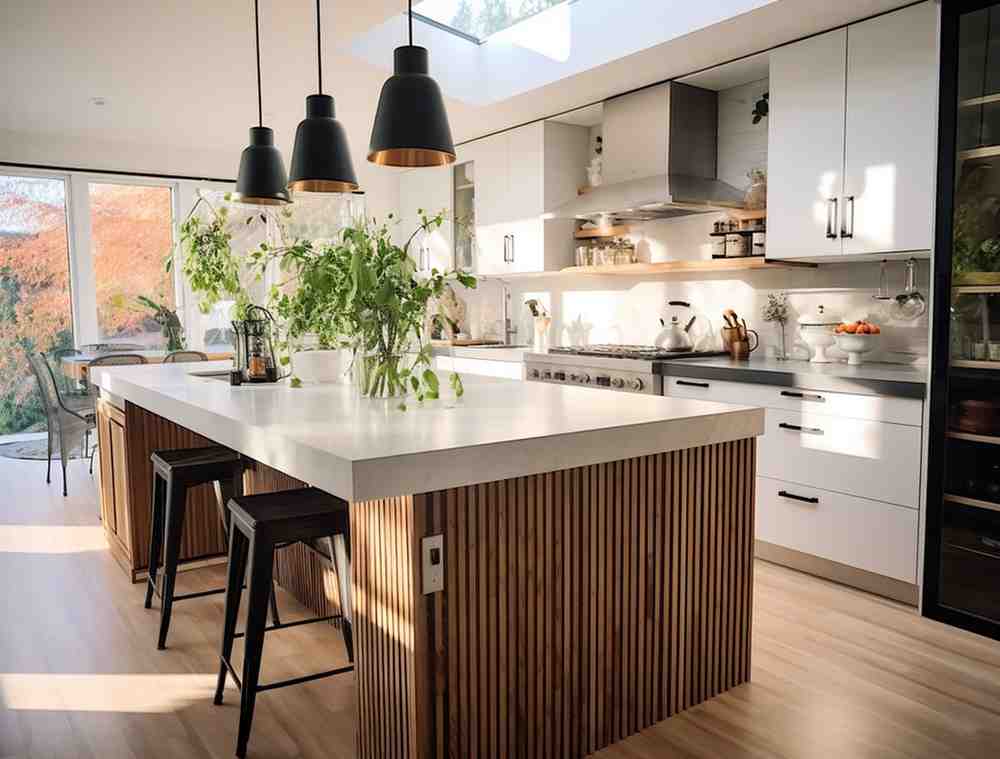
In smaller kitchens, a traditional large island is not always practical. Instead, many homeowners are choosing narrow waterfall islands or peninsula layouts that offer useful counter space and casual seating without blocking the natural flow of movement through the kitchen. Some are also opting for fold-down counters or pull-out prep surfaces that tuck away neatly when they are not being used.
For materials, quartz remains a top choice because it is durable, low-maintenance, and available in a wide range of looks, including ones that closely mimic natural stone. Butcher block sections are being used alongside stone counters to add warmth and give different zones of the kitchen a distinct character and purpose. Mixing materials thoughtfully is one of the easiest ways to add a premium feel to a space without going overboard on the budget.
Good lighting is one of the most underrated parts of any kitchen remodel. Layered lighting, which means combining overhead fixtures, under-cabinet lighting, and pendant lights, can make a kitchen feel much larger and significantly more polished. Under-cabinet LED strips are especially useful because they illuminate the work surface directly and reduce the shadowy, closed-in feeling that smaller kitchens can sometimes have during evening hours.
Pendants over a counter or island add a strong design element without taking up any physical space in the room. Choosing a fixture with a clean, simple shape in a matte black or brushed brass finish can tie the whole room together without overwhelming it. Even a modest lighting upgrade tends to have an outsized impact on how a finished kitchen looks and feels.
The best space-saving kitchens do not look like they are trying too hard. The trick is to build storage into the design so it looks natural and intentional rather than added on as an afterthought. Toe-kick drawers at the base of cabinets, built-in spice racks positioned beside the stove, and magnetic knife strips mounted directly on the wall all free up valuable drawer and counter space while keeping the kitchen looking neat.
Carefully arranged open shelving along one wall can enhance both style and functionality in the space. It gives the kitchen visual depth and provides a spot for items that are used regularly, keeping them easy to reach without contributing to counter clutter. The key is keeping open shelves organized so they enhance the look rather than add visual noise.
Appliance choices play a bigger role in modern kitchen design than many people initially realize. Integrated appliances, such as refrigerators and dishwashers finished with cabinet-front panels, help the kitchen look more cohesive and visually calm. Counter-depth refrigerators take up less room and align better with surrounding cabinetry, which makes a noticeable difference in how spacious the kitchen feels.
Drawer-style dishwashers or compact models are being chosen more frequently in smaller kitchens because they save space while still performing well. Induction cooktops are another growing trend worth considering. They are sleek, flat, and much easier to clean than traditional gas or electric ranges. They also blend into the counter surface in a way that makes the overall kitchen look less busy and more refined.
The direction of kitchen design today is clear: less clutter, more function, and a premium feel that does not require a large footprint or an unlimited budget. Maryland homeowners are proving every day that smart planning and thoughtful material choices often make a far greater impact than simply knocking down walls or adding square footage. A well-executed space-saving kitchen can genuinely rival the look and comfort of a much larger one. If you are thinking about starting a remodel, partnering with experienced kitchen remodeling companies in Maryland can help you identify which design strategies make the most sense for your specific home layout, lifestyle, and budget, so that the final result feels exactly right.
Q 1. How much does a kitchen remodel typically cost in Maryland?
The cost varies depending on several factors, including the size of the kitchen, the materials selected, the scope of work involved, and the contractor you choose to work with. A basic refresh will naturally cost far less than a full gut renovation. Getting a detailed, itemized quote from a local contractor is the most reliable way to understand what fits your specific situation, goals, and budget comfortably.
Q 2. Can a small kitchen still look high-end after a remodel?
Absolutely. The right cabinet style, countertop material, and lighting choices can make a compact kitchen look very polished and intentional. Thoughtful design consistently matters more than the size of the space itself.
Q 3. How long does a kitchen remodel usually take?
A standard kitchen remodel takes anywhere from four to eight weeks, depending on the scope of work, material lead times, and contractor scheduling. More complex projects involving structural changes can take longer.
Q 4. Is it worth adding an island to a small kitchen?
It depends entirely on the layout and available clearance. A narrow island or peninsula can add real value in many smaller kitchens, but only when there is enough room to move comfortably around it. A contractor can help assess whether it makes practical sense for your space.
Q 5. What are the best low-maintenance countertop options?
Quartz is widely considered the leading low-maintenance countertop option. It doesn’t need sealing, offers strong stain resistance, and withstands everyday wear, making it both a durable and stylish option for Maryland kitchens.

© 2025 Crivva - Hosted by Airy Hosting Managed Website Hosting.