


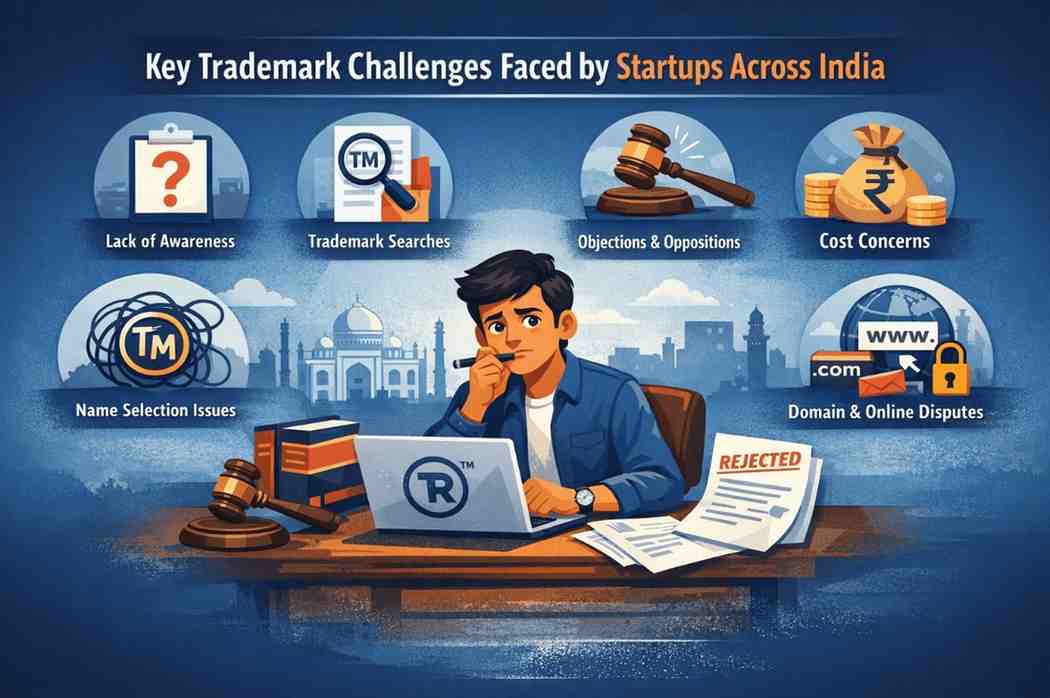
Building a startup in India involves more than innovation and funding. Brand identity plays a central role in long term success. A trademark protects this identity by securing exclusive rights over names, logos, and other distinctive elements. Yet many startups struggle to navigate trademark law in India. These challenges often delay growth and expose businesses to legal risks.
This article explores the key trademark challenges faced by startups across India, with a focus on practical insights grounded in legal experience and current regulatory practices.
Trademark protection in India is governed by the Trade Marks Act, 1999. Registration grants the owner exclusive rights to use the mark in relation to specific goods or services. It also provides legal remedies in case of infringement.
Despite its importance, many startups underestimate the complexity of the process. Limited awareness and resource constraints often lead to avoidable mistakes.
One of the most common issues startups face is delay in filing a trademark application. Founders tend to prioritise product development and market entry over legal protection. As a result, they begin using brand names without checking availability or filing for registration.
This delay creates significant risk. Another entity may already own a similar mark or may file for registration first. In such cases, startups may have to rebrand entirely, leading to financial loss and reputational damage.
Early registration helps secure rights and prevents disputes. Conducting a thorough trademark search before adopting a brand name is essential.
Trademark searches require more than a simple online lookup. The Indian Trademark Registry maintains a database of registered and pending marks. However, interpreting search results demands legal understanding.
Startups often overlook phonetic similarities or marks in related classes. For example, a name may appear unique but may still conflict with an existing mark due to similar pronunciation or meaning.
Improper searches increase the chances of objections or opposition during registration. Professional assistance can help identify potential conflicts early.
Another major challenge lies in selecting a distinctive trademark. Many startups prefer descriptive or generic names as they seem easier for customers to understand. However, such marks are difficult to register.
The Trademark Registry often objects to marks which lack distinctiveness or directly describe the goods or services. For instance, a startup offering organic food products may choose a name which simply describes the product category. Such marks rarely qualify for protection.
A strong trademark should be unique and capable of distinguishing the brand from competitors. Invented words or arbitrary names tend to receive stronger protection under Indian law.
Trademark applications in India often face examination objections. These objections may arise due to similarity with existing marks, lack of distinctiveness, or improper classification.
Startups frequently struggle to respond effectively to these objections. The response must address legal grounds raised by the examiner and provide supporting arguments and evidence.
Inadequate responses can lead to rejection of the application. Drafting a strong reply requires knowledge of legal precedents and registry practices. Many startups underestimate the importance of this stage.
Even after acceptance, a trademark application may face opposition from third parties. Competitors or prior users can challenge the registration within a specified period.
Opposition proceedings resemble court litigation and involve filing evidence, arguments, and hearings. For startups, this process can be time consuming and expensive.
Lack of preparation or legal strategy can result in loss of rights over the mark. Startups must be ready to defend their brand if challenged.
Startups often operate with limited budgets. Trademark registration, legal advice, and enforcement actions involve costs which may seem burdensome in early stages.
Many founders try to minimise expenses by handling filings themselves. While this approach may reduce immediate costs, it often leads to errors and future complications.
Understanding trademark filing fees in India helps startups plan their legal expenses effectively. Allocating resources for brand protection should be seen as an investment rather than an avoidable cost.
Trademarks in India are registered under specific classes based on goods and services. Selecting the correct class is crucial for effective protection.
Startups sometimes choose incorrect classes or limit their application to a narrow scope. This restricts their rights and leaves room for competitors to use similar marks in related sectors.
Expanding into new product lines later may require fresh applications. Proper classification at the initial stage ensures broader protection and reduces future legal hurdles.
Registering a trademark is only the first step. Enforcing rights against infringers presents another challenge.
Startups often lack the resources or awareness to monitor unauthorised use of their mark. Infringement may occur through online platforms, local markets, or domain names.
Taking legal action involves filing suits, seeking injunctions, and proving ownership and use. Delayed enforcement weakens the brand and reduces the effectiveness of legal remedies.
Working with a trademark law firm in India can assist startups in monitoring and enforcing their rights more efficiently.
India’s diverse linguistic landscape adds another layer of complexity. A mark may have different meanings or pronunciations across regions. This can lead to conflicts or objections during registration.
Startups targeting multiple states must consider linguistic variations while choosing a brand name. Ignoring this aspect may affect brand perception and legal validity.
In the digital age, trademarks extend beyond physical products. Domain names, social media handles, and online presence play a key role in brand identity.
Startups often face conflicts when desired domain names are already registered. Cybersquatting and unauthorised use of brand names online are common issues.
Securing domain names alongside trademark registration helps maintain consistency and prevents misuse.
Trademark protection requires ongoing maintenance. Registration is valid for ten years and must be renewed periodically.
Many startups fail to track renewal deadlines or monitor the status of their trademarks. Lapses in renewal can lead to loss of rights.
Regular audits and monitoring systems ensure continued protection of the brand.
Trademark law involves procedural requirements such as filing forms, submitting documents, and attending hearings. Errors in documentation can delay or derail the process.
Startups without legal expertise often find these procedures complex. Missing deadlines or incorrect filings can result in rejection or abandonment of applications.
Professional guidance ensures compliance with procedural requirements and smooth progression of applications.
Trademark protection is a critical component of business strategy for startups in India. While the legal framework offers robust protection, navigating it requires awareness, planning, and expertise.
Startups face several challenges including lack of awareness, improper searches, weak brand selection, objections, financial constraints, and enforcement issues. Each of these challenges can impact the growth and sustainability of a business.
A proactive approach towards trademark registration and management can help mitigate risks. Early action, informed decision making, and professional support play a vital role in building a strong and protected brand identity.
Investing in trademark protection from the outset not only safeguards intellectual property but also strengthens credibility in a competitive market.

© 2025 Crivva - Hosted by Airy Hosting Managed Website Hosting.