


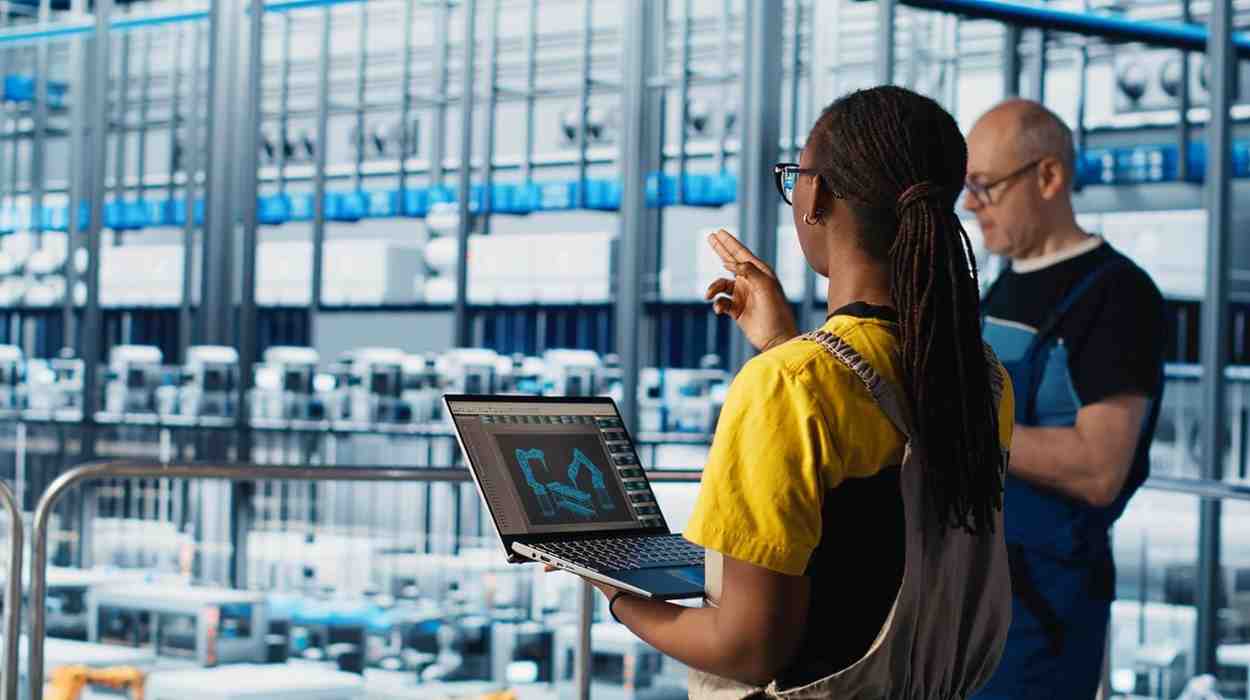
Manufacturing businesses today face one major challenge: the market never stays still. Customer preferences shift, supply chains break down, and new competitors appear overnight. To keep up, manufacturers need more than just good machinery and skilled workers. They need smart technology working behind the scenes. This is where IT services for manufacturing come in. These services help factories and production companies use technology to make faster decisions, reduce delays, and stay ahead of demand changes without scrambling at the last minute.
When demand for a product suddenly goes up or down, manufacturers need to respond quickly. A slow response means missed sales, wasted inventory, or frustrated customers. Traditional methods of tracking orders and managing production through spreadsheets or outdated systems simply cannot keep pace.
Modern IT solutions give manufacturers real-time visibility into what is happening across their operations. Whether it is raw material levels, machine performance, or order volumes, having accurate data at the right time makes a huge difference in how fast a business can adapt.
One of the biggest advantages of IT in manufacturing is access to real-time data. When production managers can see live information about inventory, output rates, and delivery schedules, they can make decisions based on facts rather than guesses.
Analytics tools go a step further by spotting patterns in that data. They can predict when demand is likely to rise, when a machine might need maintenance, or when a supplier is likely to cause delays. This kind of foresight allows manufacturers to prepare before problems actually arrive rather than reacting after the fact.
Cloud technology has changed how manufacturers store and use information. Instead of relying on servers that sit in one location, cloud-based systems allow teams to access important data from anywhere. A plant manager can check production reports from a mobile device. A supply chain team can update orders in real time without waiting for a daily report.
This flexibility means that when demand spikes unexpectedly, the entire team can respond together without confusion or communication gaps. Cloud systems also make it easier to scale up operations without large upfront investments in hardware.
Enterprise Resource Planning, or ERP, systems connect different departments within a manufacturing company into one organized platform. Sales, inventory, finance, and production all work from the same data. When a large order comes in, the system automatically updates inventory levels, adjusts production schedules, and flags any potential shortages.
Without this kind of integration, departments often work in silos. One team might not know what another team is doing, which leads to delays and errors. ERP systems remove that confusion and help everyone move in the same direction at the same time.
Automation is another way IT helps manufacturers respond faster. Routine tasks like generating purchase orders, updating inventory counts, or sending customer notifications can all be automated. This frees up staff to focus on more important work, such as managing relationships with suppliers or solving production issues.
When a factory automates its workflows, it also reduces human error. Orders get processed faster, shipments go out on time, and customers receive accurate updates. All of this contributes to a business that can move quickly when the market demands it.
The Internet of Things, commonly called IoT, refers to machines and devices that are connected to the internet and share data with each other. In manufacturing, IoT sensors can monitor temperature, pressure, machine speed, and energy use in real time.
When these sensors detect something unusual, they send alerts immediately. Maintenance teams can fix issues before they cause downtime. Production lines can be adjusted without waiting for a manual inspection. This level of connectivity means manufacturers can keep operations running smoothly even when conditions change.
As manufacturers become more connected, protecting that connection becomes critical. A cyberattack on a production system can shut down an entire facility. Ransomware attacks on manufacturing companies have increased in recent years, causing significant financial and operational damage.
A strong cybersecurity setup protects sensitive data, keeps production systems running, and ensures that customer information stays private. Investing in cybersecurity is not just about protecting data. It is about protecting the ability to operate at all.
Manufacturing companies that want to stay competitive need to embrace technology as a core part of how they work. From real-time analytics to cloud systems and automation, IT plays a central role in helping businesses respond faster to market demand changes. Partnering with a reliable software development agency that understands the manufacturing sector can help companies build and implement the right tools for their specific needs. The manufacturers who invest in the right technology today will be the ones who thrive when the market shifts tomorrow.
Q1. What types of IT services are most useful for manufacturers?
The most useful IT services for manufacturers include ERP systems, cloud computing, data analytics, IoT integration, and cybersecurity solutions. These tools work together to improve visibility, speed up decision-making, and reduce operational delays.
Q2. How does real-time data help manufacturers respond to demand changes?
Real-time data gives production managers an accurate picture of inventory levels, machine performance, and order volumes at any given moment. This allows them to make quick adjustments instead of relying on outdated reports or estimates.
Q3. Is cloud technology suitable for small and mid-sized manufacturers?
Yes, cloud technology is well-suited for businesses of all sizes. It eliminates the need for expensive on-site servers, offers flexible pricing, and allows teams to collaborate and access information from any location.
Q4. How does automation reduce response time in manufacturing?
Automation handles repetitive tasks such as updating inventory, processing orders, and sending notifications without human input. This speeds up operations, reduces errors, and allows staff to focus on tasks that require judgment and problem-solving.
Q5. Why is cybersecurity important for manufacturing companies?
Manufacturing companies rely on connected systems to manage production, supply chains, and customer data. A cyberattack on these systems can halt operations entirely. Strong cybersecurity protects both the business and its ability to serve customers without interruption.

© 2025 Crivva - Hosted by Airy Hosting Managed Website Hosting.