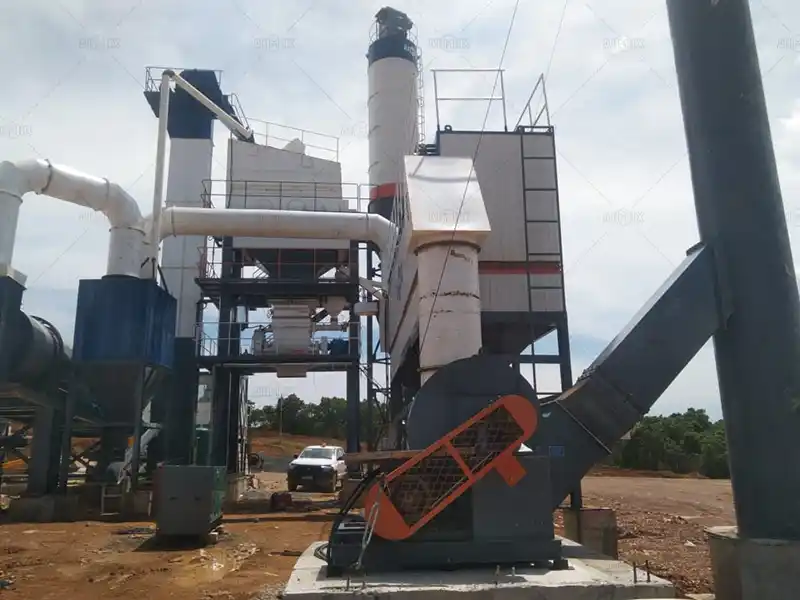
The road construction industry in Uzbekistan is expanding quickly, driven by national infrastructure upgrades, urban development, and regional trade connectivity projects. As a result, many contractors and investors are asking a practical question: Is investing in an asphalt plant profitable in the Uzbekistan road sector? The answer is not simply yes or no. Profitability depends on demand patterns, project structure, equipment selection, and operational efficiency. In this article, we break down the real business logic behind asphalt plant investment in Uzbekistan, so contractors and investors can make informed decisions.
Instead of focusing only on equipment cost, we will analyze market demand, project opportunities, cost structures, and return potential. This helps you understand how an asphalt plant can become a long-term revenue-generating asset rather than just a construction machine.
Uzbekistan has been investing heavily in road modernization in recent years. Highways connecting Tashkent, Samarkand, Bukhara, and regional industrial zones are being upgraded. At the same time, rural road improvement programs continue to expand access to remote areas. This creates consistent demand for asphalt mixtures across multiple project types.
What makes Uzbekistan particularly interesting is the combination of government-led infrastructure projects and private construction growth. This dual demand structure increases the stability of asphalt consumption. As we move forward, it becomes clear that understanding demand is the first step in evaluating profitability.
However, demand alone does not guarantee profit. The next factor is how contractors manage production costs and supply chains.
Many contractors in Uzbekistan still rely on external asphalt suppliers. While this approach reduces upfront investment, it often increases long-term costs and reduces control over project timelines. Delays in material delivery can slow down paving schedules and increase penalties.
In contrast, owning an asphalt plant gives contractors full control over production timing, mix quality, and delivery schedules. This control becomes especially important in large highway projects where deadlines are strict and weather conditions are unpredictable.
Therefore, asphalt plants are not just production machines. They act as strategic tools that help contractors reduce dependency and improve project efficiency. This operational advantage directly influences profitability.
To evaluate profitability, we must first understand the cost structure. Asphalt plant investment in Uzbekistan typically includes asphalt plant equipment purchase, installation, transportation, labor, and maintenance.
Initial investment varies depending on capacity. For example, small mobile plants require lower capital, while large stationary plants require higher upfront spending. However, higher capacity plants often reduce per-ton production cost, which improves long-term profit margins.
In addition, operational costs include fuel, bitumen, aggregate, and electricity. Among these, fuel and bitumen usually represent the largest share. Therefore, efficient plant design and optimized energy consumption directly affect profitability.
As we move forward, it is important to connect these costs with actual revenue potential in real projects.
Revenue from asphalt plants depends on production capacity and project volume. In Uzbekistan, medium and large road projects often require thousands of tons of asphalt mixtures. Highway expansion projects can require even more.
For example, a medium-scale plant producing 80–120 tons per hour can supply multiple road construction sites continuously. If the plant operates efficiently during peak construction seasons, daily output can translate into strong revenue streams.
Moreover, contractors can sell asphalt mixtures to third-party projects when internal demand is low. This creates additional income channels and improves asset utilization.
Therefore, profitability is not only about internal use but also about market flexibility.
Although asphalt plants have strong revenue potential, profitability depends on several key factors. Understanding these factors helps investors reduce risk and increase returns.
Distance between plant and construction sites significantly affects transportation cost. In Uzbekistan, road conditions and site distribution can vary widely. A strategically located plant reduces delivery time and fuel consumption, which improves profit margins.
This leads us to the next important factor: production efficiency.
Choosing the right capacity is critical. A small plant may struggle during peak demand, while an oversized plant may increase idle cost. Contractors should match plant capacity with expected project pipeline over 2–5 years.
Balanced capacity planning ensures stable utilization and reduces financial pressure.
Asphalt production depends heavily on bitumen and aggregates. If supply chains are unstable, production delays can reduce profitability. Therefore, contractors should evaluate supplier reliability before investing.
This factor often determines whether a project remains profitable during peak construction seasons.
Modern asphalt plants with energy-saving systems and precise mixing control can significantly reduce waste. Even small improvements in fuel efficiency can lead to large savings over time.
Thus, technology selection plays a direct role in long-term profitability.
In Uzbekistan’s road sector, asphalt plant ROI typically depends on utilization rate. Higher utilization leads to faster payback periods. Contractors involved in multiple infrastructure projects often achieve quicker returns.
In many cases, well-managed plants can recover investment within a few construction seasons. However, this depends on consistent project flow and efficient cost control.
It is also important to note that ROI is not only financial. Time savings, quality control, and project independence also contribute to long-term business value.
Therefore, investors should evaluate both direct profit and strategic benefits.
Like any industrial investment, asphalt plants also involve risks. However, most risks can be managed with proper planning.
Construction demand may vary based on government budgets and seasonal conditions. To manage this, contractors can diversify clients and avoid relying on a single project.
Unexpected breakdowns can reduce productivity. Regular maintenance schedules and spare parts availability are essential to minimize downtime.
Since raw material prices fluctuate, profit margins can change. Efficient procurement strategies and long-term supplier agreements help reduce this risk.
By addressing these risks early, investors can significantly improve profitability stability.
Despite challenges, Uzbekistan remains a strong market for asphalt plant investment. Infrastructure development continues across highways, industrial zones, and urban expansion projects.
In addition, regional connectivity projects linked to trade routes further increase long-term demand. This means asphalt consumption is expected to remain stable or grow over time.
For investors, this creates a favorable environment where demand visibility is relatively strong compared to many other developing markets.
So, is investing in an asphalt plant profitable in the Uzbekistan road sector? The answer is yes—if the investment is planned strategically. Profitability depends on choosing the right capacity, ensuring stable material supply, controlling operational costs, and securing consistent project demand.
More importantly, asphalt plants give contractors independence, better project control, and long-term revenue opportunities beyond single contracts. These advantages often outweigh the initial investment cost.
If you are planning to enter or expand in Uzbekistan’s road construction market, an asphalt plant can become a powerful asset for long-term growth. The key is not just buying equipment, but building a complete production and project strategy around it.
If you want to evaluate suitable asphalt plant configurations for your project scale in Uzbekistan, professional consultation can help you avoid overinvestment and maximize ROI from the beginning.

© 2025 Crivva - Hosted by Airy Hosting Managed Website Hosting.