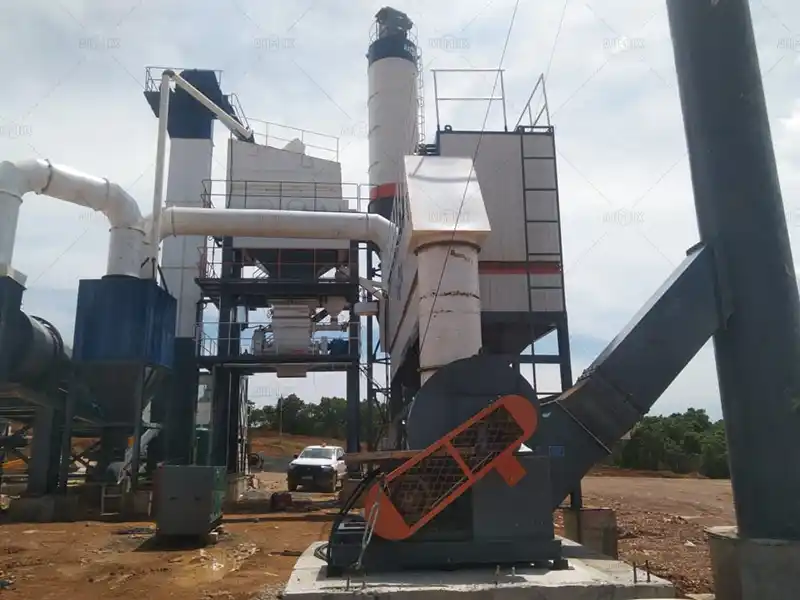
Short-term road repair contracts in Indonesia are growing rapidly as local governments and private contractors focus on faster infrastructure maintenance. In this environment, many contractors face a key decision: should they invest in a mobile asphalt plant or continue relying on fixed asphalt supply?
The answer is not simple. It depends on project duration, logistics, material cost control, and production flexibility. However, in many real construction scenarios across Indonesia—from provincial road patching in Sumatra to urban maintenance in Java—a mobile asphalt plant often proves to be a highly cost-effective solution.
This article breaks down the real economic value of asphalt mixing plant portable from a contractor’s perspective. It also explains how they perform in short-term contracts and why they are increasingly preferred in fast-moving road repair projects.
Indonesia’s road network is extensive and constantly exposed to tropical weather, heavy rainfall, and high traffic loads. As a result, road damage appears frequently and requires continuous maintenance.
Short-term road repair contracts typically last from a few weeks to several months. These projects include pothole repairs, resurfacing, emergency rehabilitation, and municipal maintenance works. Because of the short timeline, contractors must work under tight deadlines and strict cost control.
At this point, material supply becomes a critical issue. If asphalt must be transported from distant fixed plants, contractors face higher logistics costs, delays, and quality loss. This is where mobile asphalt plants start to change the economics of the project.
To better understand their value, we must first look at how mobile asphalt plants operate in real project environments.
A mobile asphalt plant is designed for fast relocation, quick setup, and flexible production. Unlike stationary plants, it can be installed close to the project site, reducing transport distance for hot mix asphalt.
This design creates three immediate advantages: faster deployment, lower transportation cost, and better control over production timing.
In Indonesia, where many road repair sites are spread across islands and rural regions, mobility becomes a key operational advantage rather than just a convenience.
Mobile asphalt plants can be installed within days depending on the configuration. This allows contractors to respond quickly to new contracts without waiting for long infrastructure preparation.
Moreover, when one project ends, the plant can be relocated to the next site. This flexibility increases equipment utilization rate and reduces idle time, which directly improves profitability.
Another major advantage is on-site or near-site production. Instead of transporting asphalt mix over long distances, contractors produce material closer to the construction zone.
As a result, temperature loss is reduced, paving quality improves, and fuel consumption for transport vehicles decreases significantly.
This efficiency becomes especially important in Indonesia’s traffic-heavy urban areas such as Jakarta, Surabaya, and Medan, where transport delays often affect project schedules.
To evaluate cost-effectiveness, we must break down the real cost structure of road repair projects. Many contractors focus only on equipment price, but the real cost comes from multiple layers.
These include material logistics, fuel consumption, labor efficiency, downtime risk, and production flexibility. When all these factors are combined, mobile asphalt plants often show stronger performance in short-term contracts.
Let’s analyze the most important cost components one by one.
In Indonesia, transporting hot mix asphalt from fixed plants can be expensive, especially for island or remote projects. Long-distance transport also increases the risk of temperature loss and material waste.
Mobile asphalt plants reduce this cost significantly. By positioning production closer to the site, contractors can shorten transport routes and reduce truck cycles.
Over a short-term contract, these savings can quickly offset part of the equipment investment cost.
Fuel consumption is another important factor. Traditional setups require longer haul distances, which increases truck fuel usage.
With a pabrik aspal hotmix, trucks travel shorter distances and complete more cycles per day. This improves operational efficiency and reduces total fuel expenditure.
Additionally, modern mobile asphalt plants are designed with energy-efficient drying and mixing systems, further lowering fuel consumption during production.
Short-term contracts require fast coordination and flexible labor deployment. Mobile asphalt plants simplify site management because production and paving are integrated in one location.
This reduces communication delays between plant operators and paving teams. As a result, fewer workers are needed for coordination tasks, and project execution becomes smoother.
Not every project automatically requires a mobile asphalt plant. The cost-effectiveness depends on project scale, duration, and location complexity.
However, in Indonesia, several scenarios strongly favor mobile asphalt plants.
For projects under six months, building a fixed asphalt supply chain is often inefficient. Mobilization time and logistics setup can consume a large part of the contract period.
In contrast, a mobile asphalt plant can be deployed quickly and start production almost immediately. This reduces downtime and maximizes productive working days.
Indonesia’s geography includes islands, mountainous regions, and remote rural roads. Transporting asphalt over long distances in such conditions is not cost-efficient.
Mobile plants can be relocated between multiple sites, making them ideal for contractors handling several small road repair packages at once.
This flexibility allows better resource allocation and reduces dependency on centralized production hubs.
Emergency road repair projects require immediate response. Delays in asphalt supply can cause safety risks and traffic disruption.
In such cases, mobile asphalt plants provide a strategic advantage. They allow contractors to start production directly near the damaged site and complete repairs faster.
In recent years, many Indonesian contractors have shifted toward mobile asphalt solutions for provincial and municipal road works. The main reason is simple: faster execution leads to better contract performance and higher profitability.
For example, in island-based projects, logistics often account for a significant portion of total cost. By using mobile plants, contractors reduce dependence on external suppliers and gain more control over production timing.
In urban repair projects, traffic congestion makes long-distance transport inefficient. Mobile plants placed near construction zones significantly reduce waiting time and improve paving continuity.
As a result, contractors can complete more projects within the same time frame, improving overall revenue potential.
Cost-effectiveness is not only about saving money. It also includes reducing operational risks.
Mobile asphalt plants help reduce risks in several ways. First, they minimize supply chain dependency. Second, they reduce delays caused by traffic or weather conditions. Third, they improve production control on-site.
When contractors control both production and paving, they gain better quality assurance. This reduces rework costs and improves client satisfaction.
Over time, these advantages strengthen a contractor’s reputation and increase chances of winning future contracts.
To maximize return on investment, contractors should focus on proper planning and utilization strategy. A mesin amp aspal delivers the best value when it is used continuously across multiple projects.
One effective approach is project clustering. Contractors can group nearby road repair contracts and move the plant strategically between sites.
Another approach is rental or shared usage models. Smaller contractors can cooperate and share equipment to reduce initial investment pressure.
In addition, proper maintenance planning ensures long-term performance and avoids unexpected downtime during critical project phases.
For short-term road repair contracts in Indonesia, a mobile asphalt plant is often a cost-effective and strategic investment. It reduces transportation cost, improves production efficiency, and increases project flexibility.
More importantly, it helps contractors respond faster to market demand, especially in emergency repairs and multi-site projects. While the initial investment may seem significant, the operational savings and increased productivity often outweigh the cost.
In a competitive construction market like Indonesia, speed and flexibility directly influence profitability. Contractors who adopt mobile asphalt technology gain a clear advantage in execution efficiency and project control.
If you are planning short-term road repair contracts in Indonesia, choosing the right asphalt production strategy is critical. A mobile asphalt plant can help you reduce costs, improve delivery speed, and increase overall project success rate.
Contact a professional equipment supplier to evaluate your project requirements and get a tailored solution. The right setup can significantly improve your profitability and operational stability in the long run.

© 2025 Crivva - Hosted by Airy Hosting Managed Website Hosting.