

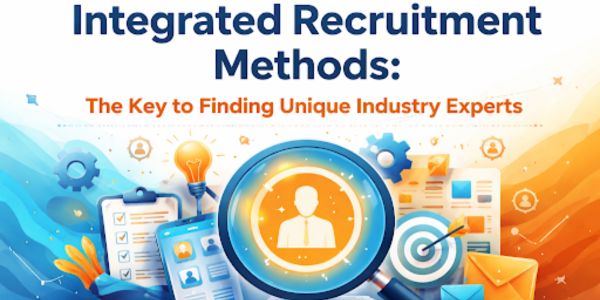
Finding rare talent today feels like searching for a specific star in a sky full of noise. You post a job. You wait. You refresh your inbox. And still, the unique industry expert you need never shows up. That’s exactly why integrated recruitment methods have become essential. In a competitive market where specialized professionals are selective, busy, and often invisible to traditional hiring channels, relying on one approach simply doesn’t work anymore. Integrated recruitment methods combine strategy, branding, technology, data, and human connection into one cohesive system. Instead of hoping the right candidate applies, you build a structured ecosystem that attracts, identifies, and engages them wherever they are. In this guide, you’ll learn what integrated recruitment truly means, why traditional hiring fails specialized roles, the tools and strategies that work, and how to implement a framework that consistently uncovers hidden experts.
At its core, integrated recruitment methods mean connecting all hiring efforts into one aligned strategy. Rather than treating sourcing, employer branding, outreach, technology, and leadership involvement as separate tasks, integration ensures they work together toward one goal: attracting and securing the best possible talent. Think of it like an orchestra. If each musician plays beautifully but not in sync, the result is chaos. When aligned under one conductor, the sound transforms into harmony. That’s what integration does for recruitment. It synchronizes HR, marketing, leadership, and operations so messaging, targeting, and engagement reinforce each other instead of competing. Traditional hiring often operates reactively. A role opens. A job ad goes live. Recruiters scramble. Integrated recruitment flips this model. It builds pipelines before the role exists. It strengthens employer visibility across platforms. It uses data to refine targeting. And most importantly, it treats talent acquisition as a strategic growth function rather than an administrative necessity. The benefits are tangible. Companies experience stronger employer branding, improved candidate quality, faster hiring cycles, and higher retention rates. When all moving parts align, recruitment becomes proactive, predictable, and powerful.
Traditional hiring methods rely heavily on job boards and inbound applications. While this approach works for general roles, it fails when targeting niche experts. Why? Because specialized professionals rarely spend time browsing job listings. They’re already employed, building projects, speaking at events, or contributing to industry communities. Over-reliance on job postings limits your reach to active job seekers only. That’s a small fraction of the total talent market. Passive candidates—often the most skilled—remain untouched. Referrals may help, but they usually circulate within the same limited networks, reducing diversity and innovation. Competitive markets add another layer of complexity. In fields like AI, cybersecurity, biotech, advanced engineering, and even highly specialized sectors such as insurance recruiting, demand for experienced professionals significantly outweighs supply. Experts in underwriting analytics, actuarial science, risk modeling, and regulatory compliance are rarely scrolling job boards. They are typically approached discreetly, often multiple times per month, making generic outreach ineffective. Traditional hiring is like fishing with one line in a vast ocean. Integrated recruitment casts multiple nets strategically, guided by data, branding, and long-term planning.
An effective integrated recruitment strategy isn’t random. It rests on structured pillars that reinforce each other and create a seamless talent acquisition ecosystem.
Before sourcing begins, clarity matters. What expertise will your organization need in six months? In a year? Which departments are scaling? Workforce planning ensures you identify gaps before urgency forces rushed decisions. This process requires collaboration with department heads and leadership teams. It’s not just about job titles; it’s about defining impact. What problem will this expert solve? What measurable outcomes will they influence? Data forecasting tools can help predict demand trends and turnover patterns, giving your organization a competitive head start. Defining what “unique expert” means internally prevents vague hiring criteria. Specificity leads to precision, and precision attracts the right talent. When hiring in niche industries, this clarity becomes even more critical because technical depth and regulatory expertise often separate average candidates from true industry leaders.
Experts choose environments, not just salaries. Your employer brand must communicate innovation, growth, and purpose across your website, LinkedIn presence, social platforms, and thought leadership content. Consistency is critical. If your website promises innovation but your job posts feel generic, candidates notice. Showcase real projects, team achievements, and industry contributions. Publish insights. Participate in industry discussions. Position your company as a hub of expertise. A strong employer brand reduces resistance during outreach. Instead of convincing candidates to listen, you invite them into a brand they already recognize and respect. In sectors where trust is paramount—such as finance, healthcare, and insurance—credibility significantly influences expert engagement.
Integrated recruitment uses multiple sourcing channels strategically rather than randomly. These may include specialized job boards, niche communities, LinkedIn outreach, conferences, webinars, referral programs, and talent CRM systems. Here’s a simplified comparison:
| Traditional Hiring | Integrated Recruitment |
|---|---|
| One or two job board | Multi-channel sourcing ecosystem |
| Reactive posting | Proactive pipeline building |
| Limited analytics | Data-driven optimization |
| Short-term focus | Long-term talent relationships |
The goal isn’t to use every channel but to align the right ones with your target audience’s habits. Experts often gather in specialized forums, professional associations, and invite-only communities. Integrated sourcing ensures you’re present where they already interact.
Gut instinct has its place, but data sharpens it. Track which channels deliver the highest-quality hires. Measure time-to-fill for specialized roles. Analyze candidate engagement rates. When you identify patterns, you refine your strategy. Perhaps industry webinars generate stronger leads than job boards. Maybe referral programs outperform paid ads. Integrated recruitment evolves continuously, guided by measurable insights rather than assumptions.
Technology acts as the backbone of integration. Without centralized systems, efforts become fragmented.
An ATS centralizes candidate data, improves collaboration, and automates repetitive tasks. Hiring managers gain visibility. Recruiters avoid duplication. Workflow automation reduces errors and accelerates communication.
AI enhances skill-based matching, uncovering candidates who may not perfectly align with keyword filters but possess transferable expertise. Structured screening processes can also minimize bias, creating more equitable hiring decisions.
Email campaigns, retargeting ads, and talent community platforms nurture passive candidates. Instead of cold outreach, you build familiarity over time. Content marketing positions your company as a thought leader, making outreach feel natural rather than intrusive.
Attracting passive candidates requires empathy and personalization. Experts don’t respond to templates. They respond to relevance. Start by researching their work. Reference specific projects or achievements. Explain why their expertise matters to your mission. Offer value before asking for commitment—whether through networking opportunities, knowledge sharing, or collaborative discussions. Storytelling also matters. Instead of listing responsibilities, describe impact. What change will they drive? What innovation will they influence? People move toward purpose, not bullet points.
Integrated recruitment is not HR’s responsibility alone. Marketing shapes employer branding. Leadership influences credibility. Operations clarify workforce needs. When these departments share KPIs and communicate regularly, recruitment messaging becomes stronger and more consistent. Leadership involvement during outreach signals seriousness. Cross-functional collaboration prevents mixed messaging. Recruitment becomes a strategic business driver, not a reactive support function.
You can’t improve what you don’t measure. Key performance indicators include:
Continuous optimization ensures your integrated strategy remains effective as markets evolve.
Treating recruitment channels as separate silos weakens impact. Ignoring employer brand consistency confuses candidates. Over-automation removes the human element that experts value. Failing to nurture passive talent eliminates long-term opportunities. Training hiring managers on integrated strategies ensures alignment and execution excellence.
Evaluate your current hiring process. Identify gaps in sourcing, branding, and collaboration. Define ideal expert profiles clearly and precisely.
Select technology platforms that integrate seamlessly. Launch multi-channel campaigns. Track performance metrics. Refine continuously based on data insights. Integration is not a one-time project; it’s an evolving system.
Talent markets are becoming increasingly specialized. Experts expect personalized engagement, meaningful opportunities, and authentic branding. Organizations that operate with disconnected recruitment processes will struggle. Integrated recruitment methods create resilience. They reduce dependency on single channels. They strengthen employer reputation. They accelerate hiring cycles. Most importantly, they position your organization as a destination for high-level expertise. Integration is not optional. It’s strategic.
Finding unique industry experts requires more than posting a job and waiting. It demands a cohesive, data-driven, multi-channel approach that aligns branding, technology, and human connection. Integrated recruitment methods transform hiring from a reactive necessity into a strategic growth engine. When systems align, outreach becomes meaningful, pipelines remain full, and specialized talent becomes accessible. The organizations that embrace integration today will define tomorrow’s competitive landscape.

© 2025 Crivva - Hosted by Airy Hosting Managed Website Hosting.