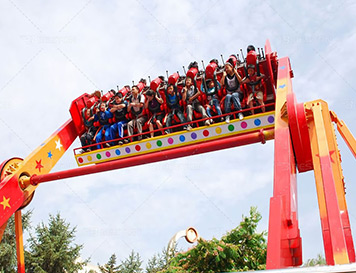
Thematic packaging has become a decisive factor in elevating amusement attractions from standard mechanical experiences to narrative-driven entertainment assets. Modern parks increasingly rely on immersive aesthetics, multisensory cues, and storyline coherence to differentiate themselves in a saturated market. This shift places stronger emphasis on visual identity, spatial storytelling, and integrated design methodologies. The objective is simple yet demanding: transform hardware into a complete experiential module.
Effective thematic packaging reshapes visitor perception. It encourages emotional engagement, enhances spatial memory, and increases repeat-visit motivation. A compelling theme can augment even a modest attraction by adding layers of context and symbolic meaning. A spinning top ride or spinning cup ride, for example, can evolve from a simple rotational motion system into a fully articulated narrative centerpiece through thoughtful packaging.
Parks now operate with the understanding that an attraction’s value is not only mechanical but perceptual. Thematic packaging is thus treated as a capital investment with long-term returns, not a decorative afterthought.
Advanced thematic packaging applies a hierarchical visual framework. Designers typically conceptualize elements across three tiers: macro-structure, mid-range features, and micro-details.
The macro layer defines the overarching silhouette and spatial presence of the ride. Large-scale architectural forms, volumetric contours, and primary color blocks set the dominant tone. For a spinning cup ride, exaggerated geometric forms and dynamic surface patterns reinforce the motion-centric aesthetic, turning rotational inertia into an integral part of the visual identity.
This level harmonizes between large architectural masses and tactile elements. Sculpted reliefs, ornamentation, lighting arrays, and thematic iconography populate this layer. These components serve as transitional visual cues that guide the eye naturally across the attraction’s form. In a spinning cup ride, mid-range elements may include kinetic lighting strips, stylized cup contours, or embellished seat façades that echo the central theme.
The micro layer—the often overlooked yet highly potent detail domain—includes texture patterning, material finishes, graphic inlays, and miniature decorative motifs. These details significantly influence visitor perception at close range. They play a critical role in maintaining thematic credibility and preventing “aesthetic dead zones.”
Modern thematic concepts integrate sensory engineering alongside visual design. These include carefully orchestrated soundscapes, olfactory triggers, synchronized vibration cues, and interactive lighting.
Directional speakers, ambient loops, and dynamic sound modulation strengthen immersion. For instance, a spinning cup ride can incorporate rotationally synchronized audio pulses that intensify as the speed increases, creating a psychoacoustic sense of acceleration.
Advanced illumination—pixel-mapping LED grids, volumetric light beams, and color-adaptive algorithms—allow themes to shift with seasons or special events. Dynamic lighting also bridges the mechanical motion with the visual storyline, enabling seamless narrative transitions.
Fog bursts, bubble cannons, scent diffusers, and micro-mist systems augment the thematic envelope. When used strategically, they provide an atmospheric depth that static decor alone cannot achieve.
Cutting-edge thematic packaging relies on advanced materials and digital fabrication technologies to achieve intricate forms and durable finishes.
Composite panels, UV-stable coatings, waterborne automotive paints, and corrosion-resistant alloys support longevity while offering design flexibility. Their ability to mimic stone, wood, metal, or fantasy textures expands creative possibilities without compromising structural requirements.
CNC milling, 3D printing of complex organic forms, and robotic carving enable designers to realize hyper-detailed motifs that would be impractical using traditional sculpting methods. These techniques are especially valuable in creating distinctive thematic shells for attractions such as a spinning top ride, which benefits from fluid surface geometry and aerodynamic contours.
A high-quality theme does more than decorate—it explains, contextualizes, and elevates the ride experience. The storyline must permeate architecture, queue design, signage, sound, and even operational procedures.
Queue environments present ideal opportunities for pre-show narratives. Layered storytelling—through projection mapping, interactive panels, or sculptural vignettes—primes guests for the thematic logic of the ride.
Motion dynamics and thematic cues should align. A spinning top ride can evoke energy coils, vortex motifs, or time-shift illusions; a spinning cup ride can draw from whimsical narrative worlds, alchemical laboratories, or quirky fantasy kitchens. When the movement reflects the storyline, experiential authenticity increases dramatically.
Parks increasingly require themes that can be refreshed with minimal downtime. Modular theming systems, interchangeable façades, and magnetic decorative fixtures enable rapid seasonal transformations.
This modularity is particularly valuable for attractions with cyclical visitor traffic, enabling operators to present new experiences without replacing core hardware. A spinning cup ride can shift from a winter-themed design to a festival-style presentation simply by swapping panels, updating lighting sequences, and introducing new audio tracks.
Sustainability is no longer optional. Thematic packaging must incorporate long-life materials, low-energy lighting, and maintainable decorative structures. Durable coatings, simplified component geometry, and smart drainage paths prevent premature aging.
Maintenance-centric design ensures that decor elements remain visually coherent despite weather exposure or heavy daily operation. Accessible mounting points, replaceable sub-components, and anti-fade pigmentation increase lifecycle value and reduce refurbishment costs.
Data analytics guide decision-making in thematic packaging today. Visitor flow models, dwell-time analysis, and heat-map tracking reveal which visual clusters draw the most engagement. These insights inform the placement of high-value thematic elements and optimize layout configurations.
Behavioral metrics can also drive dynamic lighting cycles, adaptive soundscapes, or interactive responses—establishing an attraction ecosystem that reacts in real time.
Interactive engagement has become an essential component of next-generation amusement ride theming. Guests increasingly expect to participate rather than merely observe, and designers now integrate responsive technologies to create a deeper sense of agency.
Pressure sensors, proximity detectors, and gesture-recognition modules allow ride façades and queue environments to react to guest presence. For example, when visitors approach a themed panel, embedded LEDs can ignite in cascading patterns, or ambient audio can shift to a more intense soundscape. These micro-interactions generate anticipation and keep guests engaged during wait times.
Ride motion can also trigger corresponding thematic responses. A spinning top ride may activate spiraling floor projections that mirror its rotation, while a spinning cup ride can bring animated character graphics to life with each turn. Such synchronization bridges the mechanical system with the thematic narrative, creating a unified sensory loop.
Innovative thematic packaging elevates amusement facilities into multidimensional entertainment platforms. It merges industrial engineering with narrative architecture and sensory design. Whether enhancing a spinning top ride with kinetic sculpting or transforming a spinning cup ride into an enchanting micro-world, the key lies in synthesizing technology, aesthetics, and storytelling into a cohesive whole.
Through thoughtful design and forward-leaning creativity, thematic packaging continues to redefine the boundaries of experiential entertainment.

© 2025 Crivva - Hosted by Airy Hosting Managed Website Hosting.