


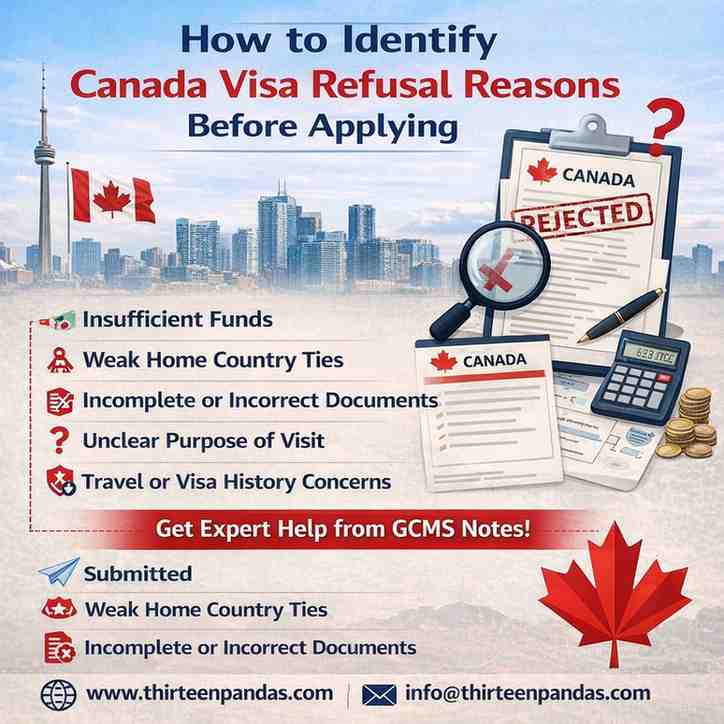
Applying for a Canada visa, whether it’s for Permanent Residence (PR), Study Permit, Work Permit, or Visitor Visa, is a major step in your immigration journey. However, many applicants face visa refusals due to avoidable mistakes. Understanding the common reasons for Canada visa refusal before applying can help you prepare a stronger application, avoid rejection, and save time and money.
At FindGCMSNotes, we help applicants gain secure access to GCMS and CAIPS notes—official records from Immigration, Refugees and Citizenship Canada that reveal the details of visa applications. For any assistance, you can contact us at [email protected].
Before diving into refusal reasons, it’s important to understand the tools that can help you identify potential issues before applying.
GCMS (Global Case Management System) and CAIPS (Computer Assisted Immigration Processing System) notes are official records maintained by IRCC. They include:
By requesting GCMS notes, applicants can see exactly why a visa was refused in the past and identify areas that need improvement before submitting a new application.
Understanding the most frequent reasons for Canada visa refusal can help you avoid mistakes. Here are the main causes:
Submitting forms with missing or incorrect information is a major reason for refusal. Even minor errors, like a wrong passport number or date, can lead to rejection.
Tips to avoid:
For visitor, study, or work visas, applicants must prove they have enough funds to support themselves in Canada. Lack of sufficient proof of funds is a frequent reason for visa refusal.
Tips to avoid:
For temporary visas, IRCC expects applicants to return to their home country after their stay. Lack of family, job, or property ties can lead to rejection.
Tips to avoid:
Past visa refusals can impact current applications. If previous refusals are not addressed properly, IRCC may reject your application again.
Tips to avoid:
Missing or incomplete supporting documents often lead to visa refusal. This includes invitation letters, admission letters, or employment verification documents.
Tips to avoid:
Each visa category has specific eligibility requirements. For example:
Failure to meet these criteria results in rejection.
Tips to avoid:
Applicants with serious health issues or security risks may face refusal. IRCC conducts medical exams and background checks to ensure applicants do not pose risks.
Tips to avoid:
Submitting false information or fake documents is a serious offense. Misrepresentation can lead to visa refusal and even a ban from Canada.
Tips to avoid:
The best way to understand why a visa may be refused is to check GCMS notes for previous or current applications. These notes reveal:
With these insights, you can strategically fix mistakes and improve your application chances.
Contact email [email protected] for secure assistance.
If you have applied before, review your previous submissions. Identify missing documents, mistakes, or areas where IRCC raised concerns. Learning from past errors can prevent future refusals.
Certified immigration consultants can help analyze your documents and strategy. They provide guidance on:
Expert advice ensures your application is complete, accurate, and strong.
A well-prepared document package reduces the risk of refusal. Include:
GCMS notes give applicants:
By leveraging GCMS notes, you can proactively prepare your application and reduce the risk of Canada visa refusal.
Identifying Canada visa refusal reasons before applying can significantly improve your chances of success. By understanding the common pitfalls, reviewing GCMS notes, and preparing a strong application, you can reduce risks and make informed decisions about your immigration journey.
For secure assistance with GCMS notes or expert guidance, visit FindGCMSNotes or contact us at [email protected]

© 2025 Crivva - Hosted by Airy Hosting Managed Website Hosting.