

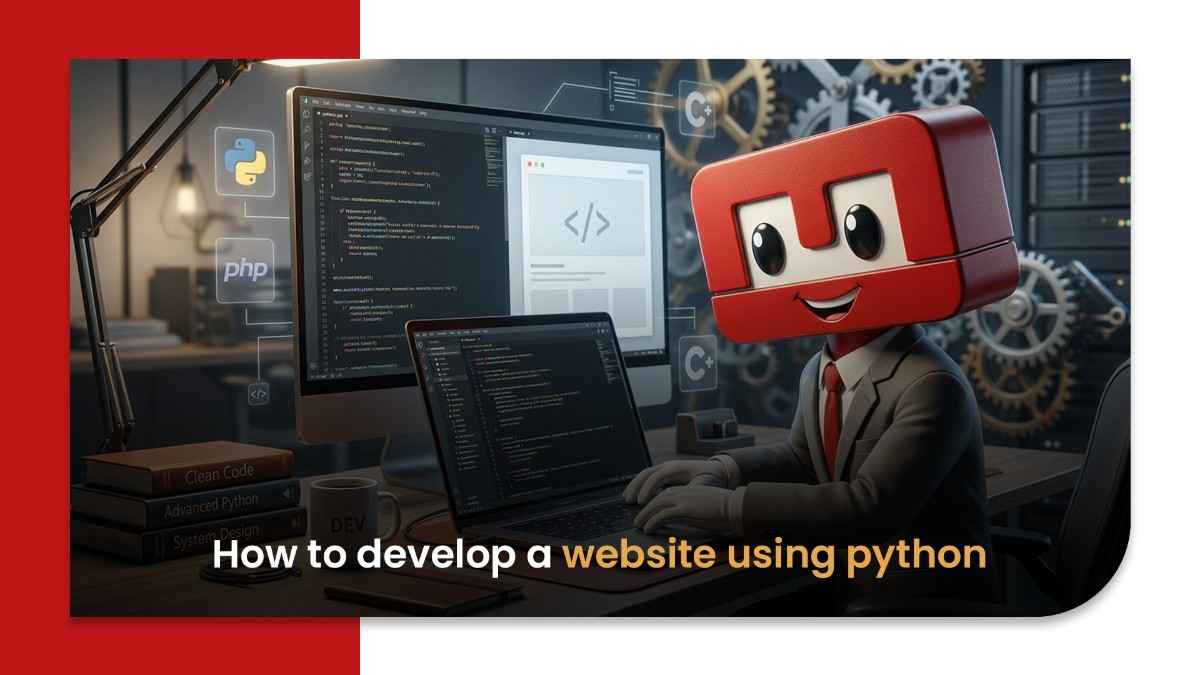
Not too long ago python was mostly at home as a scripting language & data science… Now it is quietly driving some of the largest digital sites online today not simply because it is a trend but because it actually works.
Python is still in the top 3 most used programming languages globally according to the 2025 Stack Overflow Developer Survey and companies that rely on python for developing their back end systems typically report faster overall speed to deliver their product to their end users because python has an easily readable and extensive ecosystem with many tools available to help achieve this goal.
For these reasons, python web development provides tangible benefits to any organization or business including:
Because python is so easy to read and write it can cut the development effort providing a direct benefit to your cost.
Many leading websites today such as Instagram started using python as their first programming language and as a result have been able to effectively support hundreds of millions of users.
There are hundreds of third party tools available today that provide frameworks and libraries allowing for a reduced effort in building new capabilities compared to building everything from scratch.
From the perspective of a CEO or Marketing Executive, these advantages yield one result, faster time to launch and effective iterations as your business strategy changes.
If you expect a tutorial with “click here and drag there” that is not how production applications are developed; however, the development process will follow a structured approach.
Prior to making any modifications to your current site design, you must consider:
Is this an eCommerce or SaaS? Are you creating an internal tool?
What are your performance goals?
How much emphasis is put on SEO versus page load times?
This is vital to understand since although YouTube is full of people showing examples of a blog versus a real-time dashboard and saying they are built in a similar fashion, they are not.
Your framework choice determines everything from speed to scalability.
Popular options:
Django: Best for full-scale applications. Comes with authentication, admin panel, and ORM out of the box. Ideal for django website development.
Flask: Lightweight and flexible. You build only what you need. Great for startups and microservices, especially in flask web development.
FastAPI: Designed for high-performance APIs. Increasingly popular for modern applications.
Choosing a python web framework isn’t about which one is “best.” It’s about which one fits your business model without unnecessary overhead.
You’ll typically need:
Python installed
Virtual environment (to manage dependencies)
Package manager like pip
A code editor (VS Code, PyCharm)
This is the part most non-technical founders ignore, then wonder why development timelines stretch. Environment setup impacts everything downstream.
This is where python backend development shines.
Key components include:
Routing: Defines how URLs map to functions
Database integration: Using PostgreSQL, MySQL, or SQLite
Authentication systems: User login, sessions, security
If you’re planning to create web app in python, backend architecture determines performance and scalability far more than design ever will.
Python handles the backend. Your frontend still relies on:
HTML, CSS, JavaScript
Frameworks like React or Vue (optional)
In python full stack development, the real challenge is ensuring smooth communication between frontend and backend through APIs.
Most teams treat performance as an afterthought. Then spend months fixing it.
Bad idea. Google reports that 53% of mobile users abandon a site if it takes longer than 3 seconds to load. That’s not a “nice to fix later” problem. That’s revenue walking out.
Key performance factors:
Server response time: Python apps need proper optimization and caching
Database queries: Poor queries slow everything down
Content delivery networks (CDNs): Essential for global audiences
In web development using django, built-in caching tools can significantly improve load times if used correctly.
You wanted something current, so here it is.
In 2025, multiple developer conferences, including PyCon US 2025, highlighted how Python is becoming the backbone of AI-powered web platforms.
Businesses are now embedding:
Recommendation engines
Chat interfaces
Predictive analytics dashboards
And Python makes this easier because the same language handles both AI models and web applications.
Modern platforms are no longer monolithic.
Instead, companies are:
Building APIs first
Connecting multiple services
Scaling components independently
This shift makes frameworks like FastAPI and Flask more relevant than ever in python web app tutorial discussions.
Users don’t care how elegant your backend is.
They care about:
Load speed
Reliability
Seamless experience across devices
Even a 100ms delay in load time can reduce conversion rates by 7%. That’s not a technical issue. That’s a business problem.
Let’s drop theory for a second.
Real-world python website examples include:
Content platforms with heavy traffic
SaaS dashboards with data visualization
E-commerce backends handling complex logic
AI-powered tools and recommendation systems
Python is not always the fastest language. But it often wins because it reduces development friction and scales logically.
The upcoming section will likely cause you some discomfort. The leading cause for business failures is decisions made incorrectly by management rather than technology.
Some of the most common blunders include:
Overengineering prior to market validation, wasting both valuable resources and time.
Ignoring backend scalability only to panic at the increase in usage.
Choosing software based upon fads instead of necessity we’re all guilty of investing in technologies because they are trendy; they’ve been seen everywhere!
Putting off performance improvements until too late, ultimately killing both search engine optimization (SEO) rankings and the long-term retention rate of users.
Even the best python website tutorial won’t fix poor decision-making.
Here’s the uncomfortable truth. You don’t just need developers. You need alignment between development, marketing, and performance goals.
Companies that partner with experienced teams, including firms like Eta Marketing Solutions, often see measurable improvements in:
Page load speed
Conversion rates
SEO rankings
System scalability
Not because of “magic,” but because decisions are made with business outcomes in mind, not just code quality.
Outsourcing isn’t new. But the quality gap has narrowed significantly. A Web Development Company in Ahmedabad today can offer:
Competitive pricing without compromising expertise
Strong experience in global projects
Faster turnaround times due to dedicated teams
Many US-based businesses are now working with offshore teams not just for cost, but for efficiency and scalability.
Not all vendors are equal. Obviously.
Look for:
Portfolio depth: Real projects, not just templates
Technical stack clarity: Can they explain why they chose a framework?
Performance metrics: Load speed, uptime, scalability
Communication structure: Time zone gaps can either help or destroy productivity
Choosing the right Web Development Company in Ahmedabad is less about location and more about alignment with your business goals.
Python is just a tool. A very capable one, but still just a tool.
The real advantage comes from how you use it:
Are you building for speed or just aesthetics?
Are you planning for scale or reacting to it?
Are your technical decisions aligned with business growth?
It’s not the companies with the “best” technology that win; it’s the companies that can make better, faster decisions and then adjust to an ever-changing reality.
Python allows you to achieve this more easily, quickly, and in a more flexible manner than other technologies. The value of that flexibility will outweigh any emerging technology trends in today’s fast-changing user experience.

© 2025 Crivva - Hosted by Airy Hosting Managed Website Hosting.