If you’re anything like me, your Stanley Cup probably goes everywhere with you. Mine has been through the ringer: early-morning commutes, road trips, gym days, and lazy weekends on the couch. It’s the one I reach for without a second thought. But since I use it all the time, I quickly learned one thing: if I don’t clean it regularly—and I mean really clean it—odors, stains, or even mold start showing up pretty quickly.
In this guide, I’m going to share how I clean my Stanley Cup in a simple, everyday way. I’ll talk about what I do on a daily basis, what I do on a weekly basis, and the mistakes I used to make before I figured out what actually works.
I used to think that since I only filled my Stanley with water most days, it didn’t really need a deep clean. But after using it for a few weeks, I started noticing a faint smell—nothing too crazy, just a hint of something stale. That was a real eye-opener for me.
Even when we’re just drinking water, residue from saliva, minerals, and dust can build up. Stainless steel doesn’t absorb flavors, but the lid, gasket, and straw can definitely trap moisture. And, as I learned the hard way, moisture is exactly what mold loves.
Once I made cleaning a part of my routine, the difference was huge:
To be honest, I’m not usually someone who pays a lot of attention to detail. Before I got into the habit, I definitely had moments where I skipped washing it “just this once.” Here’s what happened when I didn’t clean my Stanley Cup well enough:
Coffee was the worst offender. Even one latte could leave a scent that lasted days.
This was a real eye-opener for me. The silicone ring looked harmless from the outside, but once I removed it, I realized how easily gunk collects underneath. That was the moment I started cleaning smarter.
If I left the cup unwashed overnight after drinking anything flavored, I sometimes noticed mild stomach discomfort later. It might have been coincidence, but it was enough to make me more careful.
When the gasket gets grimy, the lid doesn’t close as tightly. My cup once leaked inside my backpack—lesson learned.
This is the routine that finally made cleaning feel effortless for me. It takes only a few minutes and keeps the cup in great condition.
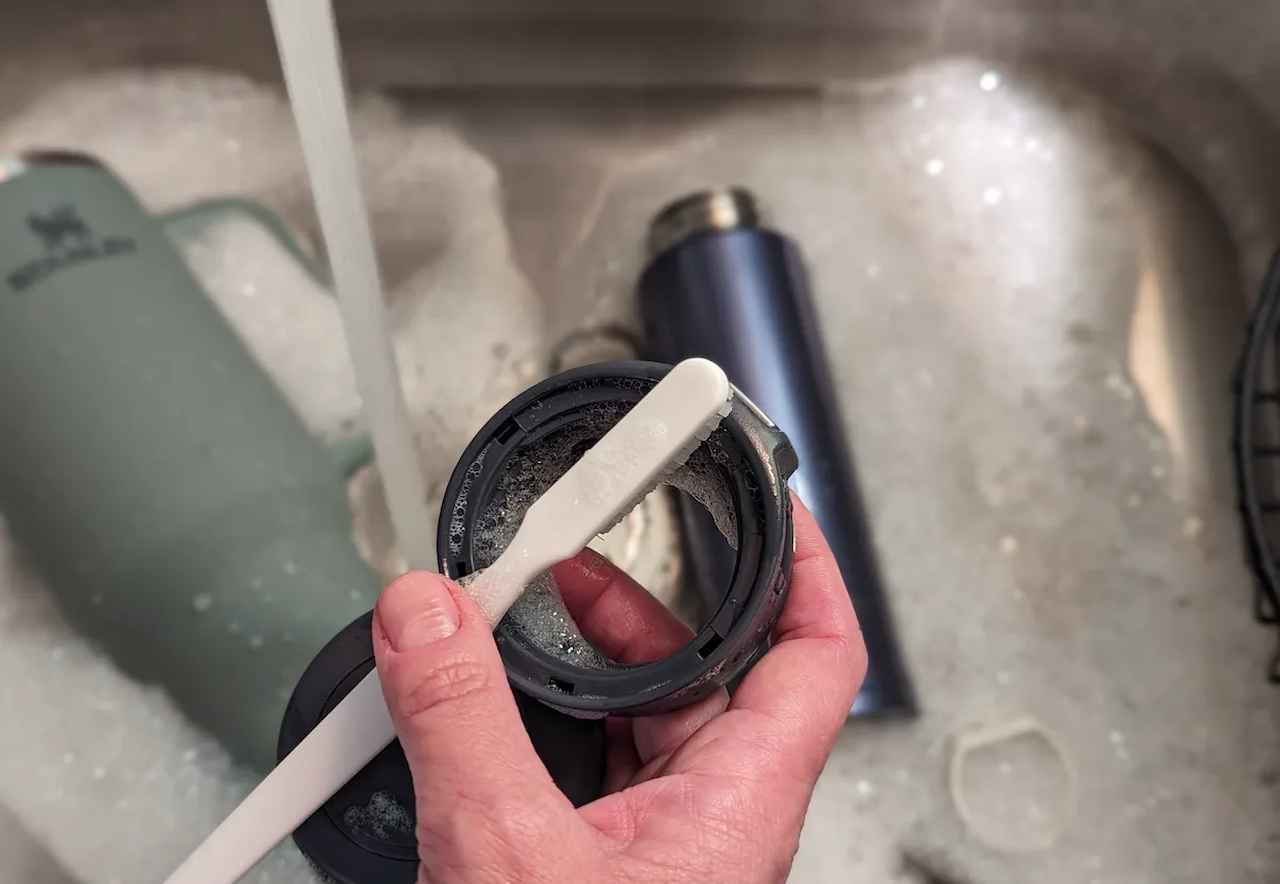
If I only rinse the cup body, I’m missing half the job. Now, I always separate the lid, the straw, and especially the silicone gasket. Anything removable gets removed.
I fill the cup with warm, soapy water and use a soft sponge to clean the inside. For the lid and straw, I use a small brush designed for bottles or straws. It gets into the corners much better than a regular sponge.
Dish soap residue affects taste, so I rinse everything until I’m sure there’s no soap left.
This part matters more than I expected. I always place the cup and all its parts somewhere open—usually on a drying rack—so everything dries naturally. I never close the lid before it’s fully dry.
These little habits have saved me a lot of trouble.
Once a week, I give my Stanley Cup a more thorough reset. It sounds like extra work, but it genuinely makes a difference.
My go-to combination.
I sprinkle in a teaspoon of baking soda, fill the cup halfway with warm water, shake gently, and let it sit for about 15 minutes. It’s incredibly good at removing light odors.
If something stronger is needed—usually after a week of coffee—I sprinkle in baking soda and pour in a small amount of white vinegar. It foams dramatically, which is oddly satisfying. After the fizz settles, I wash everything as usual.
I soak these in warm soapy water or a diluted vinegar solution for about 20–30 minutes.
Then:
This step is what prevents the mysterious “why does my cup smell even though I washed it?” problem.
Stainless-steel-safe cleaning tablets (like denture tablets) work amazingly well. I drop one in, fill the cup with warm water, let it dissolve, and come back later to rinse everything.
Every 7–10 days works for me. More often if I use flavored drinks regularly.
Over time, I realized there are a few small details that really matter:
These rules alone prevent 90% of the issues people complain about.
This is a common question, and here’s the straightforward truth based on my experience:
I’ve put mine in the dishwasher many times and never had problems with the steel.
The lid has:
High heat and strong water pressure sometimes don’t reach all the corners. In one case, the heat slightly softened a gasket, and the lid sealed less tightly afterward. Since then, I don’t risk it.
This balance has worked very well for me.
Keeping my Stanley Cup clean has gone from being a chore to being a little daily ritual. It only takes a few minutes, and it’s totally worth it. My drinks always taste fresh, the cup never has that weird smell, and I never have to deal with gasket mold again.
When you use something every day, taking care of it becomes part of your lifestyle. For me, keeping my Stanley Cup clean is one of those small, meaningful habits that quietly make everyday life better.

© 2025 Crivva - Hosted by Airy Hosting Managed Website Hosting.