

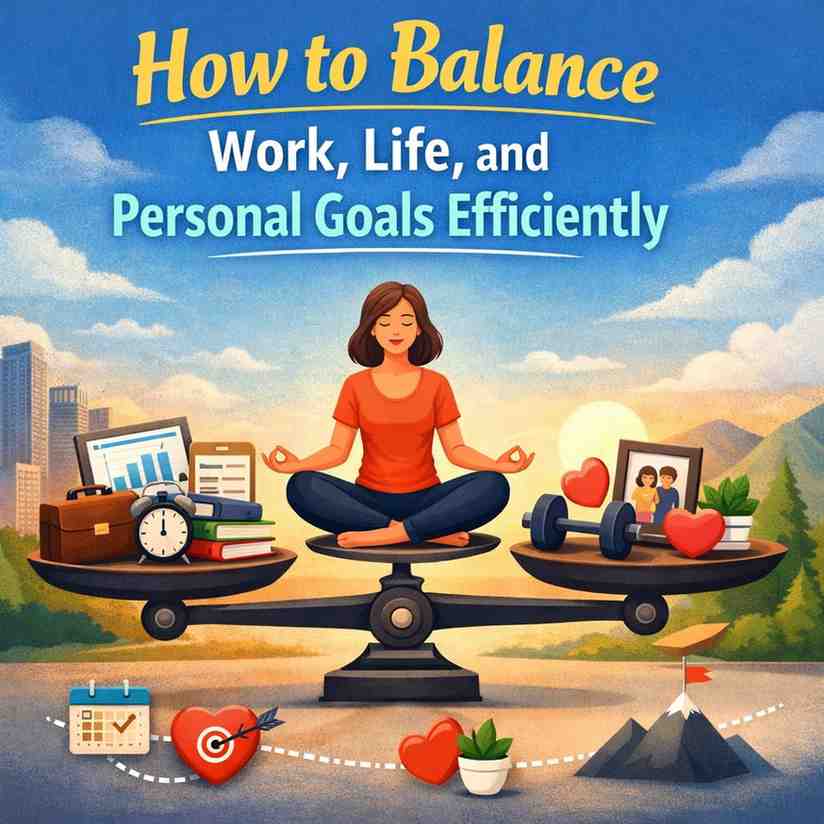
Balancing work, personal life, and your own goals can feel like trying to manage ten tabs open in your brain at the same time. One tab is deadlines, another is family, one more is health, and somewhere in the background, your personal dreams are buffering, waiting for their turn. Most people don’t fail at balance because they don’t care. They fail because everything feels urgent at once. Work wants attention, responsibilities don’t slow down, and personal goals keep getting pushed to “later,” which somehow never comes.
Here are ways to keep work, life, and personal goals moving together without feeling like you’re always catching up.
When everything looks urgent, your mind stays tense all day. Emails feel urgent, messages feel urgent, deadlines feel urgent, and even small tasks start feeling bigger than they are.
That constant feeling of “I’ll do it later” slowly turns into weeks and even months, which is where most personal goals quietly disappear without you even noticing.
Real balance isn’t about dividing time equally. It’s about making sure nothing important keeps getting ignored for too long. Once you understand that, managing life becomes less stressful and a lot more practical. Here are ways to keep work, life, and personal goals moving together without feeling like you’re always catching up. 1. Stop Acting Like Every Task Is a Crisis When everything looks urgent, your mind stays tense all day. Emails feel urgent, messages feel urgent, deadlines feel urgent, and even small tasks start feeling bigger than they are.
This constant pressure tricks your brain into thinking you’re always behind, even when you’re actually doing enough.
Take a step back and ask yourself what actually needs to be done today and what can wait. Not everything deserves the same level of attention. People who stay organized don’t do more work. They just know what to ignore for now. Once your priorities are clear, your head feels lighter and your day feels more manageable.
If you only plan one day at a time, life keeps surprising you. One busy day turns into three, and suddenly your personal plans disappear.
Weekly planning gives you breathing space and helps you avoid that last-minute rush where everything feels out of control.
Looking at the whole week gives you control. You can see where work will take more time and where you can fit personal things without rushing. Schedule your goals the same way you schedule meetings. If they are not written anywhere, they won’t happen.
Not every hour of the day feels the same. Sometimes your mind works fast, sometimes it feels slow for no clear reason. Instead of fighting that, use it. Do serious work when your focus is strong. Keep simple tasks for the hours when your brain doesn’t want to cooperate.
Paying attention to your energy instead of just the clock can quietly improve your productivity without adding extra effort.
Some people even look at their online kundali to understand personal patterns, especially when they notice certain periods feel more productive than others. Whether you believe in astrology or just follow your routine, the idea is the same, work with your natural rhythm, not against it.
Work responsibilities always look more important because they have deadlines. Personal goals don’t shout, so they get ignored. That’s why you need reminders. Write your goals down. Keep them on your phone, your desk, or anywhere you see daily.
Even a simple sticky note or phone reminder can act as a small push that keeps your personal goals from fading into the background.
It could be fitness, learning something new, saving money, or building a skill. If you don’t see it, you won’t do it.
You don’t have to accept every extra task, every invitation, or every request that comes your way. Trying to please everyone fills your schedule faster than you expect. Suddenly your own plans disappear, and you don’t even know when it happened.
Overcommitting might feel productive in the moment, but it often leads to burnout and unfinished priorities later.
Saying no doesn’t mean you’re rude. It means you know your limits. People who protect their time stay balanced. People who don’t usually end up tired and irritated.
You don’t need five apps, three notebooks, and a complicated routine to stay organized. One simple system is enough if you use it regularly. Write tasks down. Keep dates clear. Note important work. When everything is written somewhere, your mind stops trying to remember everything at once.
A clutter-free system reduces mental load and makes it easier to actually follow through with your plans.
When work follows you everywhere, life starts feeling like one long shift. Checking emails during dinner, thinking about tasks while resting, or working late every night slowly kills your energy. Your mind never gets a chance to relax. Decide when work stops for the day. After that, let your brain switch to something else. You don’t need perfect rules, but you do need boundaries. Without them, balance doesn’t exist.
Sometimes you try planning, scheduling, and adjusting, but life still feels messy. That’s usually when you need another perspective. Talking to someone experienced can help you see what you’re missing. It could be a mentor, a friend, or even your first free chat with astrologer if you want insight about timing, career choices, or personal direction.
A fresh perspective often reveals simple solutions that are hard to notice when you’re overwhelmed.
You don’t have to follow every suggestion. Sometimes just hearing a different point of view clears your mind. When your mind is clear, decisions become easier.
Balancing work, life, and personal goals is less about perfect planning and more about staying aware of where your time is going. Some days work will take over, some days personal life will need attention, and some days you just need rest without guilt. The key is making sure one area doesn’t keep getting ignored again and again.
Consistency matters more than perfection, and small improvements over time create a much more sustainable balance.
Balance doesn’t come from doing everything. It comes from doing the right things at the right time.

© 2025 Crivva - Hosted by Airy Hosting Managed Website Hosting.