

The aggregate industry in Latin America is undergoing a gradual transformation as construction demand, infrastructure development, and mining activity continue to expand across the region. Traditionally, aggregate production relied heavily on fixed facilities where materials were transported from quarries to a stationary aggregate crusher plant. While this model has supported the industry for decades, changing project environments and economic pressures are pushing producers to adopt more flexible solutions.
In this evolving landscape, mobile crushing equipment is becoming increasingly important. A mobile stone crusher plant allows producers to move crushing operations closer to the raw material source or construction site, reducing transportation costs and improving operational efficiency. As a result, many companies are reconsidering the traditional business model built around a permanent aggregate crusher plant and exploring how mobile equipment can reshape production strategies across Latin America.
For many years, the aggregate industry followed a relatively standardized production structure. Quarry operators extracted rock from a fixed location and transported it to a stationary stone crusher plant for processing.
A traditional aggregate crusher plant(planta chancadora de agregados) is typically built near a quarry with large reserves of raw material. The plant includes multiple stages of crushing, screening, and material storage. Once aggregates are produced, they are transported to construction sites or concrete plants.
This centralized production approach has several advantages. Large plants can achieve high production capacity, and equipment can be optimized for continuous operation. However, this model also has limitations, especially when construction projects are located far from the quarry.
In many Latin American countries, transportation infrastructure can be uneven. Long distances between quarries and construction sites often increase logistics costs significantly.
When aggregates must be transported over hundreds of kilometers, the cost of hauling materials may exceed the production cost at the aggregate crusher plant. This economic pressure has encouraged producers to search for alternative production strategies.
Technological advancements in mobile crushing equipment have provided a new solution for aggregate producers. Instead of relying solely on a fixed stone crusher plant, companies can deploy mobile equipment directly at quarry sites or construction projects.
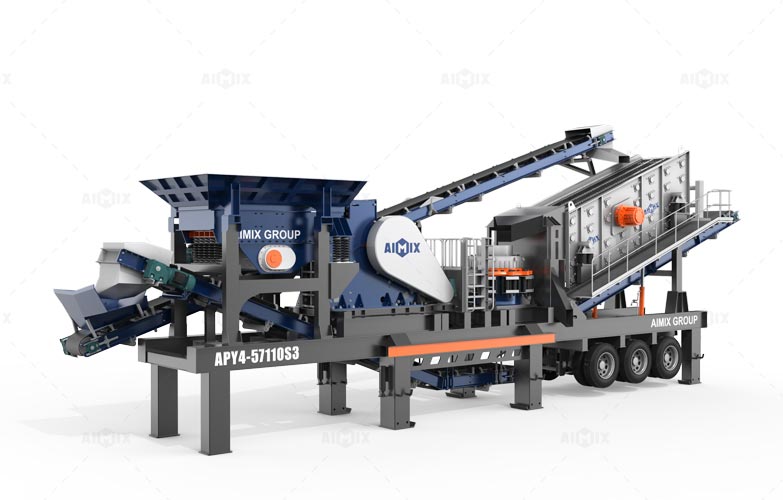
A mobile stone crusher plant(planta trituradora movil) can be transported by truck and installed relatively quickly compared to traditional stationary facilities. This flexibility allows aggregate producers to adapt production to changing project locations.
For example, in highway construction projects that extend across long distances, a mobile stone crusher plant can be relocated along the project route. This reduces the need to transport raw materials or finished aggregates over long distances.
At the same time, mobile equipment can complement a permanent aggregate crusher plant. While the stationary plant handles large-scale production, mobile units can supply aggregates for temporary or remote projects.
Another advantage of mobile crushing systems is their shorter installation time. Building a stationary stone crusher plant often requires significant civil engineering work, including foundations, steel structures, and infrastructure connections.
In contrast, a mobile stone crusher plant can often be operational within a few days or weeks after delivery. This rapid deployment allows contractors to respond quickly to new construction opportunities.
The introduction of mobile equipment is also changing how companies invest in aggregate production.
Constructing a large aggregate crusher plant requires substantial investment in land, civil construction, and equipment. For smaller companies or new market entrants, this investment can represent a significant financial barrier.
Mobile crushing equipment offers a more flexible investment approach. Companies can start with a smaller mobile stone crusher plant and expand their fleet as demand grows.
This scalable investment model reduces financial risk and allows producers to test new markets before committing to large stationary facilities.
Many infrastructure projects in Latin America have limited construction periods. Building a permanent stone crusher plant solely for a temporary project may not be economically feasible.
In these situations, a mobile stone crusher plant provides a practical alternative. Equipment can be installed near the project site, used during the construction phase, and then relocated to the next project.
This mobility allows aggregate producers to maximize equipment utilization across multiple projects.
Mobile crushing equipment also brings several operational advantages that can improve the efficiency of aggregate production.
In a traditional aggregate crusher plant, raw materials are often transported from the quarry face to the crushing facility using trucks or conveyors.
With a mobile stone crusher plant, crushing operations can be positioned closer to the extraction point. This reduces the need for material transport and lowers fuel consumption.
Quarries and construction sites often have complex terrain or limited space. Mobile equipment is designed to operate under such challenging conditions.
A mobile stone crusher plant can be relocated within the quarry to follow the progression of extraction activities. This flexibility helps maintain efficient material flow and reduces unnecessary transportation inside the quarry.
The adoption of mobile crushing technology can also contribute to more sustainable aggregate production.
Transportation is one of the largest sources of carbon emissions in aggregate operations. By reducing the distance between the crushing location and the raw material source, mobile systems help decrease fuel consumption and emissions.
In many cases, using a mobile stone crusher plant near the quarry face can significantly reduce truck traffic compared to operating a distant aggregate crusher plant.
Mobile crushers are also widely used in construction waste recycling. Demolition materials such as concrete and asphalt can be processed directly at construction sites and reused as aggregates.
This recycling capability supports circular economy practices and reduces the need for new quarry extraction.
Modern mobile crushing equipment increasingly incorporates digital technologies that enhance operational control and monitoring.
Sensors and automation systems allow operators to track production data, energy consumption, and equipment performance in real time.
Whether operating a stationary aggregate crusher plant or a mobile stone crusher plant, these monitoring tools help identify operational inefficiencies and optimize production.
Digital platforms also allow equipment manufacturers to provide remote technical support. Maintenance teams can diagnose mechanical issues and recommend solutions without needing to visit the site immediately.
This capability is particularly valuable for remote quarry operations common in Latin America.
The growing demand for mobile crushing solutions is also creating new opportunities for equipment manufacturers and suppliers.
Manufacturers are developing increasingly sophisticated mobile crushing systems that integrate crushers, screens, and conveyors into compact units.
These systems allow customers to deploy a complete production line without building a permanent aggregate crusher plant.
Many equipment suppliers now offer integrated solutions that combine stationary and mobile equipment. A central stone crusher plant may provide base production capacity, while mobile units support additional demand during peak construction periods.
This hybrid approach gives aggregate producers greater operational flexibility.
The aggregate industry in Latin America will likely continue evolving as infrastructure investment and urban development expand. Producers will need to balance production efficiency, cost control, and environmental responsibility.
Mobile crushing equipment is expected to play an increasingly important role in this transformation. By complementing traditional aggregate crusher plant facilities with flexible mobile systems, producers can respond more effectively to changing market conditions.
The ability to relocate a mobile stone crusher plant between projects allows companies to improve asset utilization and reduce operational risks. At the same time, technological innovations will continue to enhance the performance and reliability of mobile equipment.
As the construction industry becomes more dynamic, the aggregate sector must adopt more adaptable production strategies. Mobile crushing technology provides a powerful tool for achieving this flexibility.
Rather than relying exclusively on a fixed stone crusher plant, companies can build a diversified production system that includes both stationary and mobile equipment. This approach allows producers to serve multiple markets, support infrastructure projects more efficiently, and reduce logistics costs.
By integrating mobile solutions into their operations, aggregate producers across Latin America can develop more resilient and competitive business models that are better suited to the region’s rapidly evolving construction landscape.

© 2025 Crivva - Hosted by Airy Hosting Managed Website Hosting.