

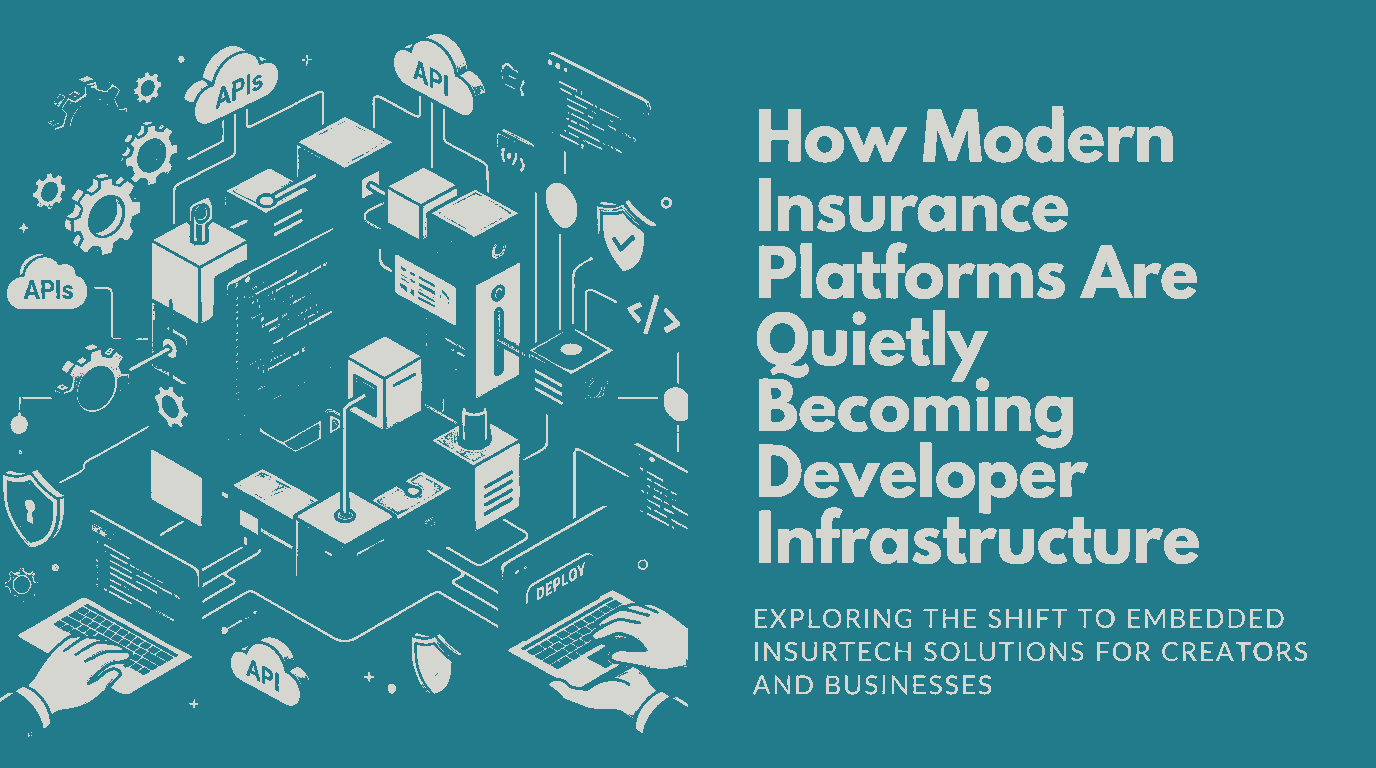
Most developers don’t think about insurance until they’re suddenly integrating with one. Then reality hits: legacy APIs, PDFs masquerading as data, and business logic buried inside systems older than the web itself. But that’s changing fast — and if you’re building anything in financial services, healthcare, or employee benefits, you need to understand why the insurance backend is being rebuilt from scratch right now, and what that means for developers working on top of it.
The Old Stack Was Never Designed for Developers Traditional insurance platforms were built in the 1980s and 1990s for actuaries and underwriters, not engineers. Most of them run on COBOL or RPG on IBM mainframes. Data lives in flat files. Business rules are encoded directly in procedural code with no documentation. When a modern SaaS startup wants to build a health benefits portal or an insurance marketplace, they’re expected to integrate with this — through CSVs emailed weekly, or proprietary EDI formats that require specialists to interpret. This is the root cause of why insurtech has been so hard to build on. It’s not a regulatory problem or a data problem. It’s an infrastructure problem.
If you’re building in the insurtech space, here’s what the modernization wave means practically:
Webhook-first event models are becoming the norm. Instead of polling a claims system to check if a status changed, you subscribe to claim lifecycle events. This is the same pattern you know from Stripe or GitHub — except the payload might be a PolicyEffectivenessChanged event or a ClaimDecisionIssued event.
Separation of document management from business logic. FNOL (First Notice of Loss) documents, medical records, and policy contracts are increasingly managed through document service layers with their own APIs. The claims system consumes structured data extracted from these documents, not the raw PDFs.
Rules engines as external services. Coverage eligibility, claim adjudication rules, and premium calculation logic is moving into dedicated rule engine services (many using RETE algorithm implementations). For developers, this means you can call a rules API with a structured policy context and get a decision object back — rather than reverse-engineering embedded business logic.
Despite the progress, real-world insurance integrations still require understanding two worlds simultaneously.
Modern carriers who’ve rebuilt their stacks will give you:
OAuth2-secured REST APIs with OpenAPI specs
Webhook subscriptions for lifecycle events
Sandbox environments with realistic test data
SDKs in Python, Java, and Node
Legacy carriers and there are still many will give you:
SOAP endpoints (if you’re lucky) or file-drop integrations
Monthly batch processing cycles, not real-time data
Proprietary data formats like ACORD XML that require specialist libraries
Change windows measured in quarters, not sprints
Knowing which category your integration partner falls into before you start architecture planning will save you months of rework. Ask specifically about their API authentication method, event notification support, and whether their sandbox is persistent or rebuilt on each request. Those three questions will tell you almost everything.
One thing that’s easy to underestimate: every field you touch in a life insurance or annuity system has regulatory context. State-level insurance regulations, HIPAA (when health data is adjacent), and SOC 2 requirements all create constraints on how data flows between systems.
If you’re building a developer integration layer on top of insurance infrastructure, you’ll want to instrument your data flows carefully and understand exactly which fields trigger regulatory requirements. Claims payment data, beneficiary PII, and policy effective dates all have specific handling requirements that vary by jurisdiction.
This isn’t a reason to avoid building in the space — it’s just architecture context that the insurance industry doesn’t always communicate clearly to developers.
The trajectory is clear: insurance systems are becoming programmable infrastructure, the same way payments became programmable infrastructure through Stripe, and communications became programmable through Twilio.
The companies building the abstraction layer — modern policy administration and claims platforms with real API surfaces — are doing for insurance what Plaid did for banking: making the legacy layer addressable by developers who never want to think about the mainframe underneath.
If you’re building in this space, the technical fundamentals are the same as any distributed system: event sourcing, idempotent APIs, schema evolution for long-running policy contracts. What’s different is the domain model, the regulatory context, and the patience required when your integration partner is still running batch jobs overnight.
Learn the domain model well. The rest is familiar engineering.
Have you integrated with insurance backends? What was your experience with modern vs legacy systems? Share in the comments.

© 2025 Crivva - Hosted by Airy Hosting Managed Website Hosting.