

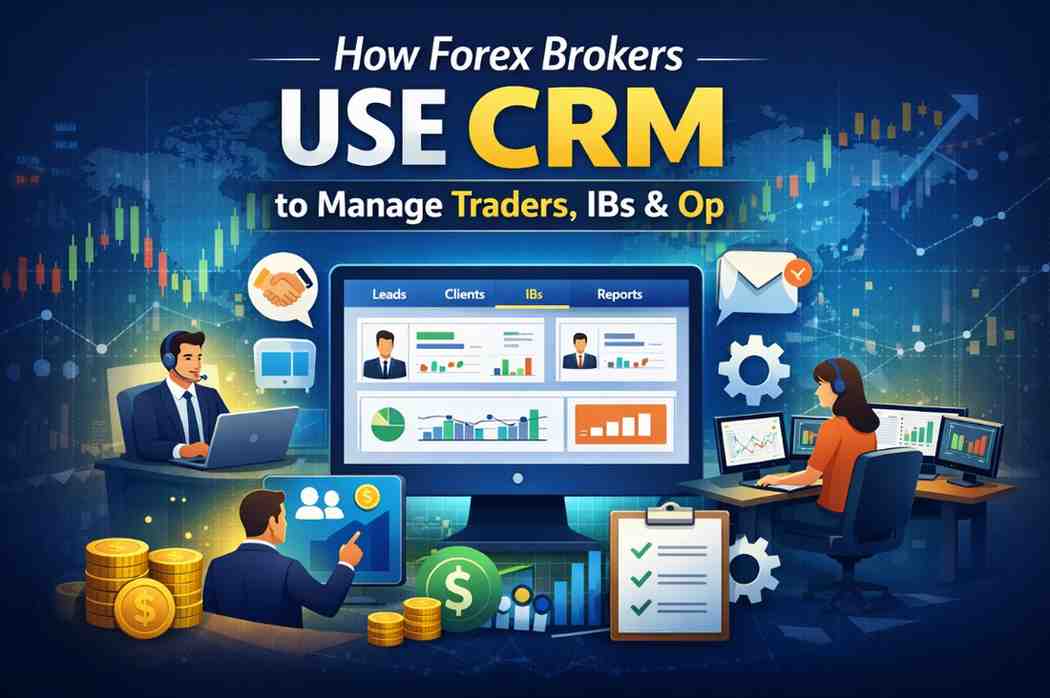
The global Forex industry has become increasingly competitive, highly regulated, and deeply technology-driven. As brokerages expand across multiple regions, serve thousands of traders, and collaborate with extensive Introducing Broker (IB) and affiliate networks, operational complexity grows at a rapid pace. Managing this scale using spreadsheets, disconnected tools, or generic customer management systems is no longer practical or sustainable. In this environment, a CRM for Forex Brokers plays a critical role by acting as the central operating system of a modern brokerage.
A Forex-specific CRM goes far beyond basic contact management. It is designed to support the complete brokerage lifecycle—from lead capture and trader onboarding to compliance, IB management, payments, reporting, and internal coordination. By centralizing data and automating workflows, CRM software enables Forex brokers to operate efficiently, scale confidently, and maintain regulatory readiness. This article explores how Forex brokers use CRM software to manage traders, IBs, and daily operations while strengthening control, transparency, and long-term growth.
At the core of every Forex brokerage are its traders. Effectively managing trader data, behavior, compliance status, and engagement is essential for sustainable growth and profitability. A CRM for Forex Brokers provides a centralized trader profile that consolidates all relevant information into a single, accessible dashboard. This typically includes registration details, verification status, KYC and AML documentation, trading accounts, platform activity, deposit and withdrawal history, communication logs, and support interactions.
One of the most valuable benefits of a Forex CRM is streamlined trader onboarding. Automated workflows guide new users through account registration, document uploads, and verification steps in a structured and compliant manner. Compliance teams can review, approve, or reject KYC and AML documents directly within the CRM, reducing dependency on manual processes and minimizing the risk of errors or delays. This not only improves operational efficiency but also enhances the trader experience by reducing friction during the initial onboarding phase.
Beyond onboarding, Forex CRMs enable brokers to monitor trader activity and engagement in real time. Through integrations with trading platforms such as MT4, MT5, or proprietary systems, brokers gain visibility into trading volumes, account performance, margin usage, and behavioral trends. Sales, retention, and account management teams can use this data to identify inactive accounts, high-value traders, or users who may require additional support. By acting on these insights, brokerages can improve trader retention, increase lifetime value, and reduce churn.
Effective communication is critical in building trust and maintaining long-term relationships with traders. A CRM for Forex Brokers ensures that all communication—emails, calls, tickets, and internal notes—is recorded and accessible in one place. This unified communication history allows teams to provide consistent, personalized responses regardless of which department interacts with the trader.
CRM-driven segmentation further enhances engagement. Traders can be grouped based on geography, account type, trading behavior, or lifecycle stage. This allows brokers to send relevant updates, platform notifications, or educational content without appearing intrusive or promotional. Over time, this structured approach to communication helps brokerages strengthen relationships and improve overall client satisfaction.
Introducing Brokers and affiliates remain one of the most effective acquisition channels for Forex brokerages. However, managing large IB networks manually can quickly become complex due to varying commission structures, multi-level hierarchies, regional agreements, and performance tracking requirements. A purpose-built CRM for Forex Brokers simplifies IB and affiliate management by centralizing all partner-related activities.
Forex CRMs allow brokers to create dedicated IB profiles with unique referral links, tracking IDs, and customized commission plans. Whether the brokerage operates with single-tier, multi-tier, or hybrid IB models, the CRM ensures accurate attribution of referred traders and trading activity. Commission calculations are automated based on predefined rules, reducing manual intervention, preventing disputes, and ensuring transparency for both brokers and partners.
Performance analytics is another key advantage of CRM-based IB management. Brokers can evaluate which IBs generate high-quality traders, analyze conversion rates, and measure long-term profitability per partner. This data-driven visibility allows brokerages to focus on high-performing partners while optimizing or restructuring underperforming relationships. As a result, IB programs become more scalable, predictable, and aligned with business goals.
Beyond tracking and commissions, communication with IBs is essential for maintaining productive partnerships. CRM software enables brokers to share real-time reports, commission statements, and performance updates directly through the platform. Targeted announcements, onboarding resources, or compliance updates can be distributed efficiently, ensuring that IBs remain informed and aligned with brokerage policies.
This transparency builds trust and reduces operational friction. IBs gain clarity into their performance and earnings, while brokers maintain control over branding, messaging, and compliance standards across partner networks.
In addition to managing traders and IBs, Forex brokerages rely on multiple internal teams, including sales, compliance, finance, risk, and customer support. A CRM for Forex Brokers serves as a unified operational platform that connects these departments, ensuring smooth collaboration and accountability.
Workflow automation is a critical component of operational efficiency. Tasks such as lead distribution, document verification, account approvals, follow-ups, and ticket escalation can be automated within the CRM. This reduces delays, minimizes human error, and ensures that responsibilities are clearly assigned. Role-based access controls further enhance security by ensuring that each team member only accesses relevant data.
For finance and operations teams, CRM integration with payment gateways and trading platforms enables real-time tracking of deposits, withdrawals, and transaction histories. This improves reconciliation accuracy and provides better visibility into cash flow and revenue performance. Automated alerts can flag unusual activity, supporting internal risk management and fraud prevention efforts.
Customer support teams also benefit significantly from CRM-driven ticketing systems. Every interaction with a trader or IB is logged, allowing agents to respond quickly and with full context. This consistency improves response quality, reduces resolution times, and enhances the overall client experience.
In an increasingly data-driven industry, informed decision-making is essential for maintaining competitiveness. A robust CRM for Forex Brokers provides advanced reporting and analytics tools that offer insights across all areas of the brokerage.
Customizable reports enable management teams to analyze lead sources, trader acquisition costs, conversion rates, trading volumes, IB performance, and revenue trends. These insights support strategic planning, whether the goal is entering new markets, optimizing marketing spend, or improving trader retention strategies. Real-time dashboards ensure that executives and operational leaders always have access to current, actionable data.
CRM systems also play an important role in regulatory reporting. By maintaining structured records of client data, transactions, communications, and compliance actions, Forex CRMs reduce the burden of audits and regulatory reviews. This readiness enhances credibility with regulators, banking partners, and liquidity providers.
Unlike generic CRM platforms, Forex-specific CRM software is built to address the unique operational and regulatory challenges of the trading industry. These systems are designed to integrate seamlessly with trading platforms, liquidity providers, payment gateways, and compliance tools, creating a cohesive brokerage ecosystem.
For growing brokerages, this specialization is critical. A tailored CRM for Forex Brokers supports scalability without sacrificing control or compliance. Technology providers such as Shark Technologies focus on delivering flexible, secure, and customizable CRM solutions that adapt to different brokerage models, regulatory environments, and stages of growth.
By offering modular architectures and API-driven integrations, such platforms allow brokers to evolve their operations without disruptive system changes. This long-term adaptability is a key reason why specialized CRM solutions are increasingly viewed as strategic investments rather than optional tools.
As the Forex industry continues to evolve, operational efficiency, transparency, and data-driven management have become defining factors for successful brokerages. A modern CRM for Forex Brokers enables firms to manage traders, IBs, and internal operations through a single, centralized platform. From automated onboarding and IB commission management to compliance support, reporting, and workflow automation, CRM software has become an indispensable foundation for sustainable brokerage growth.
For Forex brokers aiming to scale globally while maintaining control, trust, and regulatory compliance, investing in a specialized CRM solution is no longer optional—it is a strategic necessity.

© 2025 Crivva - Hosted by Airy Hosting Managed Website Hosting.