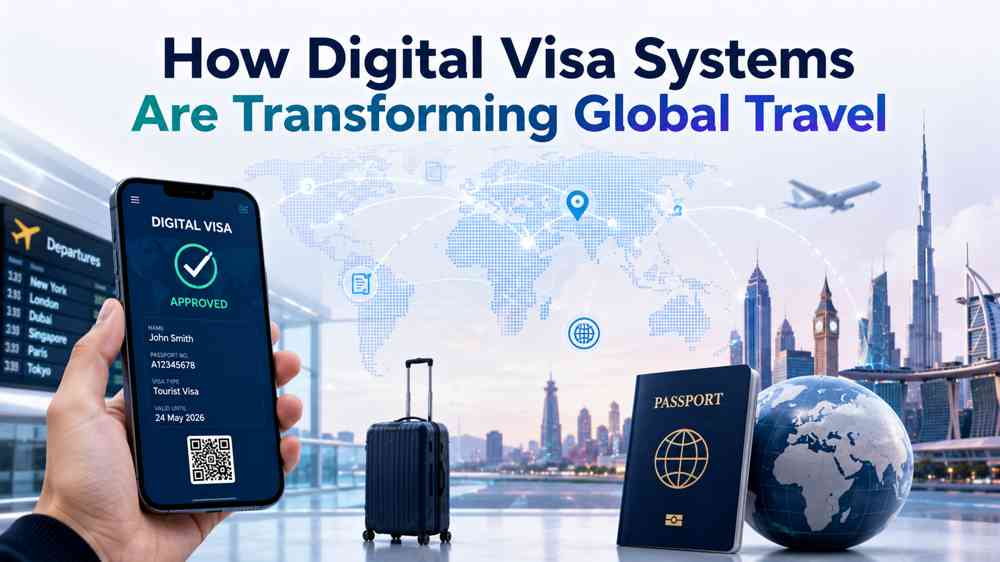
International travel procedures are undergoing rapid modernization as governments and immigration authorities increasingly adopt digital visa systems. Travelers today expect faster approvals, simplified documentation, and seamless border management experiences. As a result, countries worldwide are investing in advanced visa processing infrastructure to improve efficiency while strengthening security and compliance frameworks.
The growing volume of cross-border tourism, business travel, and international education has further accelerated the shift toward digital immigration services. According to a recent visa industry analysis, the Global Visa Market is projected to grow at a CAGR of around 7.1% during 2025–2030. The expansion reflects increasing digitization initiatives, rising travel demand, and broader government investments in automated identity verification technologies.
Several countries are modernizing their immigration ecosystems to reduce administrative burdens and improve traveler experiences. Online application systems, biometric verification, and AI-assisted background checks are becoming increasingly common across visa processing platforms.
Organizations such as the International Air Transport Association have also emphasized the importance of digital identity technologies in streamlining global mobility systems. According to the association, digital travel credentials could significantly improve airport efficiency while supporting secure cross-border movement.
Governments are additionally integrating cloud-based data management systems that enable real-time communication between immigration departments, border authorities, and consulates. This interconnected infrastructure is helping reduce processing delays while improving transparency for travelers.
Many immigration departments are also introducing mobile-first platforms to accommodate the growing number of smartphone-based visa applications. Mobile integration enables applicants to upload documents, track application status, and receive real-time notifications directly through digital portals. These advancements are helping governments improve accessibility while reducing operational costs linked to manual paperwork processing.
Biometric authentication technologies are playing an increasingly important role in modern visa systems. Facial recognition, fingerprint scanning, and iris verification are now widely used to enhance traveler identification and reduce identity fraud risks.
The International Civil Aviation Organization has continuously promoted standards for biometric-enabled travel documentation to strengthen global aviation security frameworks. These technologies not only improve verification accuracy but also support faster passenger clearance at airports and border checkpoints.
Many countries are now integrating biometric databases with electronic visa programs to create more secure and efficient immigration processes. Automated traveler verification also reduces dependence on manual checks, allowing immigration authorities to process higher passenger volumes more effectively.
Biometric-enabled border gates are also becoming increasingly common at major international airports. These automated systems allow travelers to complete immigration clearance within minutes, reducing waiting times and improving airport operational efficiency. As global passenger volumes continue to rise, biometric automation is expected to become a standard feature across modern travel ecosystems.
The growing adoption of electronic visas has simplified international travel for millions of passengers worldwide. E-visa platforms allow applicants to submit documents, complete payments, and receive approvals remotely without visiting embassies or consulates.
This transition is particularly beneficial for tourists and business travelers seeking faster turnaround times. Digital application systems also improve accessibility for travelers from remote regions where embassy services may be limited. The World Tourism Organization has highlighted that simplified visa policies can contribute significantly to tourism development and international economic activity. Easier visa accessibility often encourages greater inbound tourism and strengthens business connectivity between countries.
Several emerging economies are also leveraging e-visa programs to attract international visitors and strengthen tourism recovery strategies. Simplified entry requirements can encourage repeat travel while helping destinations remain competitive in the global tourism industry.
Artificial intelligence is becoming an important component of next-generation visa management systems. AI-powered platforms can assist authorities in document verification, fraud detection, and applicant risk assessment.
Machine learning algorithms are increasingly used to identify inconsistencies in applications and flag suspicious activity patterns. This helps immigration departments improve operational efficiency while maintaining compliance with security protocols.
In addition, AI-driven automation reduces repetitive manual tasks for visa officers, enabling faster processing times and more accurate decision-making. As global travel demand continues to rise, automated processing technologies are expected to play an increasingly central role in immigration operations.
Natural language processing technologies are also helping immigration agencies automate multilingual communication with applicants. AI-powered chatbots and virtual assistants can provide instant responses to common visa inquiries, improving customer support experiences while reducing administrative workloads for consular staff.
The recovery of international business travel is contributing to rising demand for efficient visa services. Global companies are expanding cross-border operations, international conferences are returning at scale, and multinational workforce mobility is increasing across several industries.
Industries such as technology, healthcare, manufacturing, and finance rely heavily on international collaboration, making streamlined visa processing increasingly important for operational continuity. Faster approval systems can help businesses reduce travel delays and improve workforce flexibility.
The rise of remote work and digital nomad programs has also encouraged governments to introduce specialized visa categories designed for long-term international professionals. These emerging visa models are reshaping traditional immigration structures while supporting global talent mobility.
Countries offering digital nomad visas are increasingly attracting remote professionals seeking flexible work environments and international living opportunities. These programs are also generating new economic opportunities for local hospitality, real estate, and service sectors.
As visa systems become increasingly digitized, cybersecurity has emerged as a major operational concern. Immigration databases contain highly sensitive personal and biometric information, making them attractive targets for cybercriminals.
The International Telecommunication Union has emphasized the importance of robust digital security frameworks for protecting cross-border data systems and identity management platforms. Governments are therefore investing heavily in encryption technologies, secure cloud infrastructure, and multi-factor authentication systems.
Maintaining public trust remains essential for the long-term success of digital visa ecosystems. Strong cybersecurity protocols and transparent data governance policies are becoming critical components of modern immigration management strategies.
Regional economic partnerships and international travel agreements are also shaping the evolution of visa systems. Several countries are introducing visa-free arrangements, multi-country travel permits, and regional mobility frameworks to strengthen tourism and trade.
Such agreements often encourage governments to modernize immigration infrastructure and harmonize border management practices. Regional cooperation can also help reduce administrative complexity for travelers moving across multiple destinations.
As international mobility continues evolving, visa systems are expected to become more interconnected, technology-driven, and user-centric. Digital identity verification, biometric authentication, and AI-assisted processing are likely to remain central to the future of global travel management.
The future of visa services will likely focus on balancing convenience, security, and interoperability across international borders. Governments that successfully modernize their immigration ecosystems may gain significant advantages in tourism growth, foreign investment attraction, and global business connectivity.

© 2025 Crivva - Hosted by Airy Hosting Managed Website Hosting.