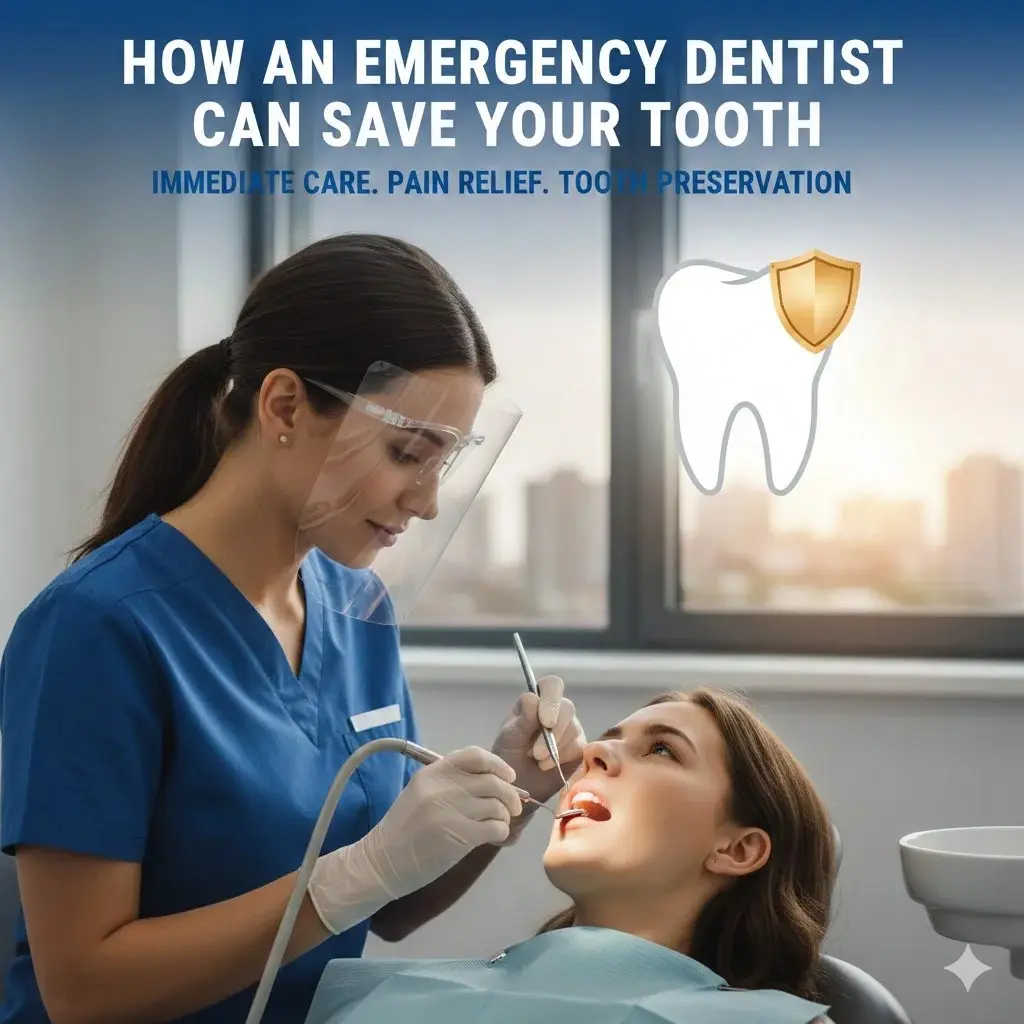
Dental emergencies happen without warning. Whether you’ve knocked out a tooth during sports, cracked a molar biting something hard, or woke up with unbearable tooth pain, knowing when and how an emergency dentist can intervene makes the difference between saving and losing your natural tooth.
Not every toothache requires emergency care, but certain situations demand immediate professional attention. Recognizing true dental emergencies helps you act quickly when your tooth’s survival depends on it.
Knocked-Out Tooth (Avulsion)
A completely dislodged tooth represents one of the most time-sensitive dental emergencies. The periodontal ligament cells that attach your tooth to the jawbone begin dying within minutes of being separated. An emergency dentist has the best chance of successfully reimplanting your tooth if you arrive within 30 to 60 minutes of the injury.
Severe Tooth Fracture
When trauma breaks your tooth deeply, exposing the inner pulp containing nerves and blood vessels, immediate treatment prevents infection and saves the tooth structure. Cracks extending below the gum line or through the root pose serious threats that emergency dental care addresses before complications develop.
Dental Abscess and Infection
A dental abscess is a pocket of pus caused by bacterial infection. Left untreated, abscesses can spread to your jaw, neck, and other areas, becoming life-threatening. Emergency dentists drain abscesses and prescribe antibiotics while working to save the infected tooth through root canal therapy rather than extraction.
Uncontrolled Bleeding
Bleeding that doesn’t stop after 10 minutes of firm pressure indicates a serious problem requiring emergency dental evaluation. Whether from injury, post-surgical complications, or gum disease, persistent bleeding needs professional intervention to protect your tooth and overall health.
Emergency dentists employ various techniques depending on your specific situation. Their primary goal is always tooth preservation when possible.
When you arrive with a knocked-out tooth, your emergency dentist works swiftly to reimplant it. They gently clean the tooth and socket, position the tooth back in place, and stabilize it with splinting materials attached to neighboring teeth. Success rates improve dramatically when reimplantation occurs within the first hour.
The dentist monitors healing over several weeks and may perform root canal therapy once the tooth stabilizes. This approach saves your natural tooth rather than requiring artificial replacement through implants or bridges.
Severe decay, deep cracks, or trauma can expose or damage the tooth’s pulp. Rather than extracting the tooth, emergency dentists perform root canal treatment to remove infected or damaged pulp, clean and disinfect the root canal system, and seal the tooth to prevent reinfection.
Modern emergency root canal procedures are surprisingly comfortable with proper anesthesia. This treatment allows you to keep your natural tooth, maintaining proper bite function and preventing adjacent teeth from shifting.
Loose teeth from trauma or severe gum disease can be saved through splinting techniques. Your emergency dentist bonds the mobile tooth to stable neighboring teeth using composite materials and thin wires, allowing the supporting structures time to heal and reattach.
This conservative approach preserves your natural tooth rather than resorting to extraction. The splint typically remains in place for several weeks while healing progresses.
For fractured or severely damaged teeth, emergency dentists use bonding materials, crowns, or other restorations to rebuild tooth structure. These same-day treatments protect the remaining healthy tooth from further damage and infection while restoring appearance and function.
Time is your tooth’s greatest enemy during dental emergencies. Understanding the urgency helps you act appropriately when accidents happen.
Dental research consistently shows that teeth reimplanted within 60 minutes have the highest survival rates. After two hours, the chances of successful reimplantation drop significantly as the periodontal ligament cells die.
If your tooth gets knocked out, handle it only by the crown (the white part), rinse it gently without scrubbing, keep it moist in milk or saliva, and get to an emergency dentist immediately. Every minute counts.
Dental infections don’t improve on their own. Bacteria multiply rapidly, destroying more tooth structure and surrounding bone tissue with each passing hour. What starts as treatable decay or a small abscess can progress to tooth loss within days without emergency dental intervention.
Emergency dentists stop infection progression through drainage, antibiotics, and definitive treatment like root canal therapy, giving your tooth the best chance of survival.
Severe dental pain often indicates serious underlying problems that threaten your tooth’s viability. While over-the-counter pain relievers provide temporary relief, they mask symptoms without addressing root causes.
An emergency dentist identifies and treats the actual problem, whether it’s infection, exposed nerves, or structural damage. This approach not only eliminates pain but also prevents tooth loss that delays might cause.
Understanding the emergency dental process reduces anxiety and helps you prepare when urgent situations arise.
Your emergency dentist begins with a comprehensive examination of the affected tooth and surrounding tissues. They take digital X-rays to assess damage below the gum line, check for infection, and evaluate bone health. This thorough assessment determines the best treatment approach to save your tooth.
Controlling pain is a priority. Emergency dentists use local anesthesia to numb the affected area before beginning treatment. For anxious patients or complex procedures, sedation options provide additional comfort while your tooth receives necessary care.
Many emergency dental procedures are completed in a single visit. Root canals, tooth reimplantation, splinting, temporary crowns, and infection drainage typically don’t require multiple appointments. Your emergency dentist stabilizes your tooth immediately, scheduling follow-up visits only when necessary for monitoring or final restorations.
While accidents happen, many dental emergencies are preventable with proper precautions and regular care.
If you participate in sports or high-impact activities, wear a custom-fitted mouthguard. These protective devices absorb impact forces that would otherwise fracture or dislodge teeth. The investment in a quality mouthguard is minimal compared to emergency dental treatment and potential tooth loss.
Many dental emergencies stem from untreated decay, weakened teeth, or gum disease. Regular checkups and cleanings identify problems early when they’re easily treatable, preventing the infections and structural failures that become emergencies.
Your dentist can also address habits like teeth grinding that weaken tooth structure over time, making fractures more likely during normal activities.
Knowing where to turn during dental emergencies ensures you receive timely care that saves your tooth.
Quality emergency dental practices offer extended hours including evenings and weekends, same-day appointments for urgent situations, advanced diagnostic equipment like digital X-rays, experienced dentists trained in emergency procedures, and clear communication about treatment options and costs.
While emergency dentist handle most dental crises, certain situations require hospital emergency rooms. Seek hospital care for uncontrolled bleeding that soaks through gauze within minutes, swelling that affects breathing or swallowing, trauma involving jaw fractures or facial bones, or high fever accompanying dental infection.
Hospital emergency rooms stabilize life-threatening conditions and can refer you to emergency dental specialists for definitive tooth-saving treatment.
Emergency dental intervention to save your tooth provides benefits that extend far beyond the immediate crisis.
Your natural teeth work together as a system. Losing even one tooth affects how you bite, chew, and speak. Saved teeth continue performing these essential functions without the adjustment period required for artificial replacements.
Natural tooth roots stimulate your jawbone through daily activities, maintaining bone density and facial structure. When teeth are lost, the jawbone gradually deteriorates. Emergency treatment that saves your tooth prevents this bone loss and the facial changes it causes.
While emergency dental care requires immediate investment, saving your natural tooth costs significantly less than tooth replacement options like dental implants, bridges, or dentures. The lifetime value of your natural tooth far exceeds emergency treatment expenses.
What qualifies as a dental emergency?
Knocked-out teeth, severe fractures, uncontrolled bleeding, dental abscesses, persistent pain, and loose teeth from injury all require emergency dental care to prevent tooth loss and complications.
How quickly should I see an emergency dentist for a knocked-out tooth?
Seek care within 30 to 60 minutes for the best chance of successful reimplantation. Keep the tooth moist in milk or saliva and handle it only by the crown.
Can emergency dentists perform root canals?
Yes, emergency dentists commonly perform root canal therapy to save infected or damaged teeth, often completing the procedure in a single visit to preserve your natural tooth.
Is emergency dental care more expensive than regular treatment?
Emergency services may cost slightly more due to after-hours availability, but saving your tooth through emergency care costs far less than tooth replacement options like implants.
Should I go to the ER or emergency dentist for tooth pain?
Visit an emergency dentist for tooth-specific problems. Go to the emergency room only if you have breathing difficulties, uncontrolled bleeding, high fever, or facial trauma affecting bones.

© 2025 Crivva - Hosted by Airy Hosting Managed Website Hosting.