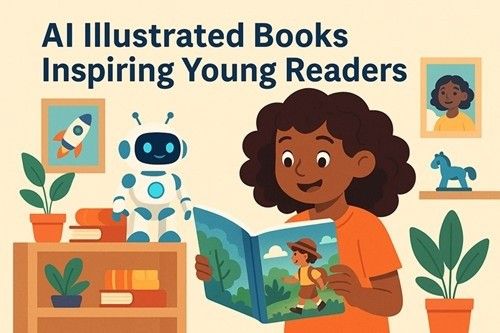
The world of children’s books is changing faster than ever. Parents want stories that spark imagination, teachers want materials that support learning, and children want characters they can connect with. This growing demand has led to the rise of the AI illustrated children’s book, a new format that blends creativity with advanced technology to create stories that feel magical, meaningful, and deeply personal.
While traditional illustrated books will always have their place, AI-powered storytelling introduces a fresh layer of possibility. It helps families and educators bring unique ideas to life, create diverse characters instantly, and build stories designed specifically for each child. These innovations are changing how children read and how parents encourage early learning at home.
This blog explores how AI illustrated books work, why they are becoming so popular, and how they inspire today’s generation of young readers.
In the past, creating a children’s book required months of sketching, revising, reviewing, and refining. While this process produced beautiful art, it also limited the number of stories a writer—or a parent—could create. AI removes many of these barriers by helping generate high-quality illustrations and story elements in minutes.
This speed allows creators to experiment with colors, styles, characters, and scenes without ever compromising quality. For parents, this means they can now craft personalized books for birthdays, holidays, or everyday reading routines. For educators, it means they can build learning materials that match classroom needs quickly and affordably.
Artificial intelligence is not replacing the creativity of writers and artists—it is giving them more room to explore new ideas that would take too long or cost too much to produce manually.
Young children learn best when visuals and storytelling work together. AI illustrated books take this concept even further by making illustrations feel more expressive, more vibrant, and more relevant to each child’s life.
Here is why kids connect so strongly with AI-generated visual stories:
Children see characters who wear similar clothes, live in similar environments, or share their hobbies. AI tools can instantly adjust the appearance of characters to better reflect a child’s identity or interests.
AI illustrations often include more detail and movement than traditional flat drawings. Kids naturally engage more when they see colors, expressions, and environments that feel alive.
When a child influences how a character looks or how a story unfolds, reading becomes interactive. This hands-on connection encourages kids to read more often and more confidently.
AI illustrations create a world where children feel like participants rather than just observers.
Personalized children’s books have existed for decades, but AI takes personalization to a completely new level. Instead of simple name insertions or generic look-alike characters, today’s AI-driven books allow families to customize:
Character appearance
Cultural background
Hair, skin tone, and clothing styles
Settings and environments
Story direction and emotional tone
This level of personalization helps children feel recognized, appreciated, and understood.
Studies in early childhood development show that children stay engaged longer when stories reflect their identity and experiences. When kids recognize themselves in a book, it strengthens emotional connection, boosts self-esteem, and encourages a lifelong love of reading.
Platforms like Kidscribe offer families an easy way to explore these possibilities. You can see how AI-powered story creation works here:
AI illustrated children’s book creation at Kidscribe.
Children naturally imagine worlds full of mystery and color. AI supports this creativity by turning their ideas into something they can see immediately—something they can hold, read, and share.
When a child describes a magical forest, a flying unicorn, or a brave explorer, AI brings that vision to life in seconds. This immediate feedback strengthens several developmental skills:
Kids learn they can create endless stories without limits. Their imaginations become the driving force behind the artwork and narrative.
As children engage with stories they helped design, they improve vocabulary, sentence structure, and comprehension.
Interactive, AI-assisted storytelling often includes choices that help children learn decision-making skills.
The moment a child sees their imagination turned into a real book, their confidence in storytelling and self-expression grows naturally.
AI illustrated books aren’t simply entertainment—they are educational tools that support a child’s whole development.
One of the most meaningful changes AI illustration brings is easy access to diverse storytelling. For many years, traditional publishing has faced challenges with representation. Children from underrepresented communities often struggled to find books that reflected their families, traditions, or experiences.
AI makes inclusive storytelling simple and natural. It can generate characters with different:
Cultures
Skin tones
Abilities
Family structures
Languages
Clothing styles
Physical features
This allows creators and parents to design stories that feel authentic and respectful. Children who see themselves represented grow up feeling valued and understood.
Inclusivity isn’t just a benefit—it is essential for raising confident, empathetic kids.
Families today use AI-generated storybooks in many meaningful ways. Some parents create personalized stories for birthdays, bedtime routines, or holiday gifts. Others design books to help kids understand emotions, prepare for school transitions, or learn new skills.
Here are common uses at home:
Turning real family events into illustrated storybooks
Creating bedtime stories with the child as the hero
Helping shy or anxious children through personalized stories
Encouraging reluctant readers with fun visuals
Supporting bilingual reading
Teaching values and social behaviors in a familiar context
Parents often share that children re-read personalized AI books far more often than traditional storybooks—because the story feels like it belongs to them.
Educators also see the value in AI technology. Teachers use AI-illustrated stories to:
Personalize learning materials
Explain abstract ideas with visual storytelling
Build confidence in emerging readers
Support ESL students with visual cues
Create group storytelling activities
Introduce cultural stories in inclusive ways
AI helps teachers create customized content without long production times or expensive illustration work.
AI illustrated children’s books are not replacing traditional books. Instead, they are expanding what children’s literature can offer. Kids today want stories they can relate to, interact with, and feel proud of. AI gives families and educators a tool to make those stories happen in ways that are fun, meaningful, and educational.
As technology grows, personalized storytelling will only become more common. Children will grow up not only reading stories but helping create them. This shift encourages deeper learning, stronger imagination, and a more empowered generation of young readers.

© 2025 Crivva - Hosted by Airy Hosting Managed Website Hosting.