

Managing customer communication has become significantly more demanding for businesses in recent years. Customers today expect fast responses, accurate information, and consistent service across every communication channel—whether it’s phone calls, websites, live chat, or email. These expectations apply at all hours of the day, not just during traditional business timings.
For many organizations, especially those dealing with high volumes of inquiries, meeting these expectations through traditional front desk operations alone has become increasingly difficult. Staff limitations, human error, delayed responses, and missed calls can all affect customer satisfaction and business efficiency.
As a result, businesses in the United States are increasingly exploring AI-supported front desk systems. These systems are designed to assist with routine communication tasks, improve responsiveness, and support human staff rather than replace them. This shift represents a broader transformation in how companies handle customer interaction and operational workflows.
Some modern platforms, including tools such as dynaris.ai , illustrate how businesses are experimenting with structured AI-based communication systems as part of their broader customer service strategy.
Traditionally, front desk operations were limited to greeting customers, answering phone calls, and directing inquiries to the appropriate department. Over time, however, the role has expanded significantly.
Today’s front desk responsibilities often include:
This expansion has increased workload pressure on reception and support staff. At the same time, customer expectations for speed and availability have continued to rise. Businesses are now expected to provide near-instant responses, even outside working hours.
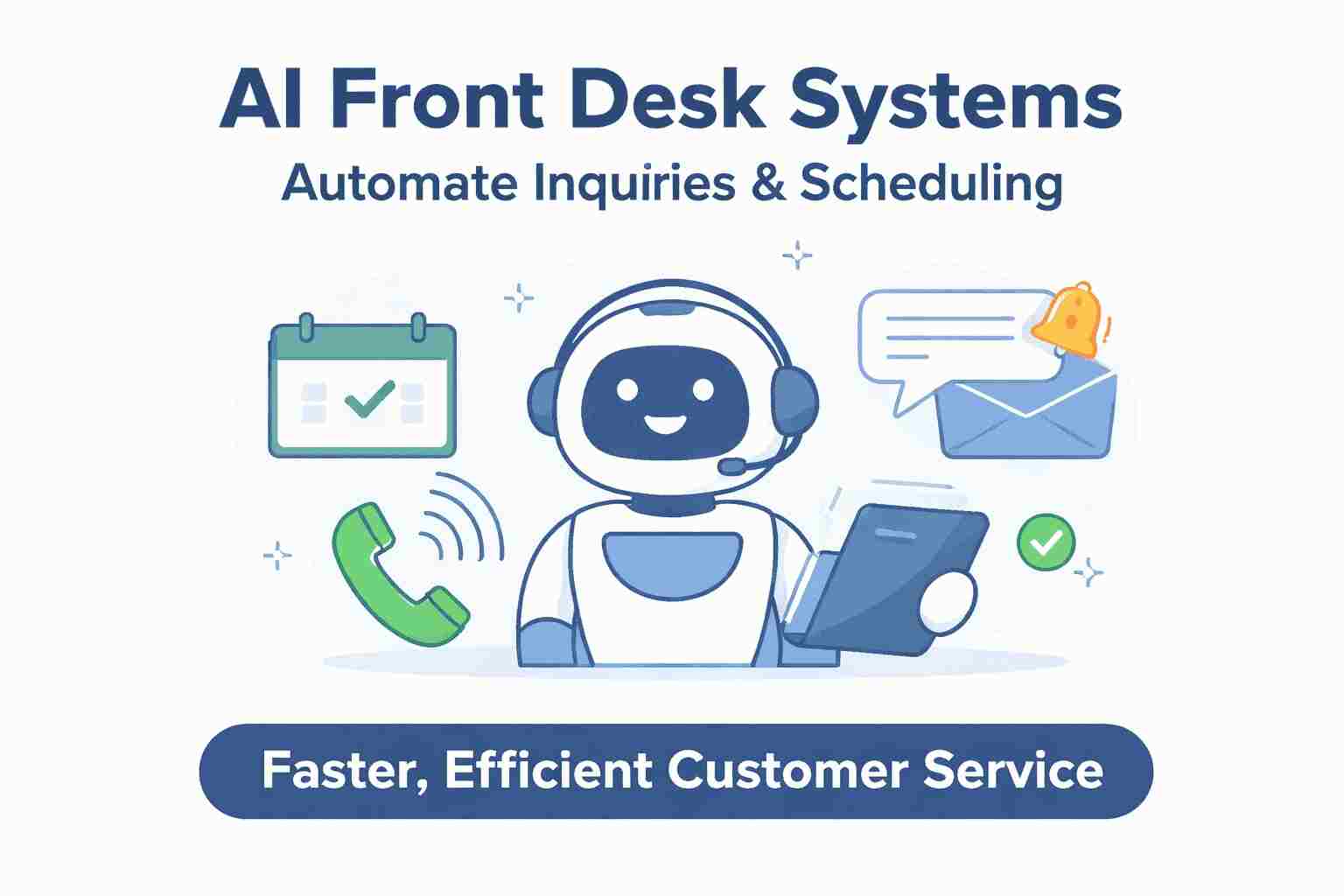
AI front desk systems have emerged as a solution to help manage this growing complexity. They are designed to automate repetitive communication tasks, reduce response times, and ensure that no inquiry goes unanswered.
AI front desk systems are not designed to replace human employees entirely. Instead, they act as digital assistants that support daily communication tasks and improve operational efficiency.
These systems typically perform several key functions:
AI systems can respond instantly to incoming customer inquiries. Instead of waiting in queues, customers receive immediate acknowledgment or assistance.
They can deliver standard business information such as working hours, location details, services offered, or pricing guidelines.
Many systems are capable of booking, rescheduling, or confirming appointments automatically based on availability.
AI systems can identify the nature of a customer’s request and direct it to the appropriate department or human staff member.
Every interaction can be recorded and stored for future reference, helping businesses track communication history and customer needs.
By handling these repetitive tasks, AI front desk systems allow human employees to focus on more complex or sensitive customer interactions.
The adoption of AI front desk systems is spreading across a wide range of industries in the USA. Each industry uses these tools differently based on its operational needs.
In healthcare settings, AI systems are often used to manage appointment bookings, send reminders, and handle basic patient inquiries. This helps reduce administrative burden on medical staff.
Real estate agencies use AI front desk tools to respond to property inquiries, schedule viewings, and collect client preferences before human follow-up.
Law firms often use these systems to manage initial client intake, gather case details, and route inquiries to appropriate legal professionals.
Retail businesses use AI systems to handle customer service queries, return requests, and order tracking information.
Plumbing, cleaning, consulting, and other service-based companies rely on AI front desks to manage bookings and respond to customer requests efficiently.
Despite industry differences, the main goal remains consistent: improving response time and reducing manual workload.
Businesses that adopt AI-supported communication systems often report several operational improvements.
Since AI systems can respond immediately, fewer customer inquiries go unanswered.
Customers receive instant replies instead of waiting for human availability.
Requests are categorized and directed efficiently, reducing confusion and delays.
AI systems ensure standardized responses, reducing variations in communication quality.
Human employees are freed from repetitive tasks, allowing them to focus on more meaningful work.
These benefits contribute to smoother communication processes and improved customer experience.
While AI front desk systems offer clear advantages, they are not without limitations. Businesses need to be aware of these challenges before implementation.
AI systems are best suited for structured and repetitive tasks. Complex emotional or sensitive conversations still require human judgment.
The effectiveness of an AI system depends heavily on how well it is configured. Poor setup can lead to incorrect responses or confusion.
Businesses often use multiple tools for CRM, scheduling, and communication. Integrating AI systems with existing workflows can be challenging.
Not all customers are comfortable interacting with automated systems. Some prefer speaking directly with a human representative.
AI systems require regular updates and monitoring to ensure accuracy and performance.
These limitations highlight the importance of using AI as a supportive tool rather than a complete replacement for human interaction.
One of the most effective models emerging today is the hybrid approach. In this model, AI handles initial communication and routine tasks, while human staff take over when necessary.
For example:
This balance ensures efficiency without losing the personal touch that many customers value.
The role of AI in front desk operations is expected to expand further in the coming years. Several trends are already shaping the future:
AI systems will likely become better at recognizing returning customers and tailoring responses based on past interactions.
Future systems will understand more complex language, including tone and intent, making interactions feel more natural.
AI front desk tools will increasingly integrate with CRM systems, payment platforms, and analytics tools.
More advanced workflows, including follow-up communication and customer onboarding, may become fully automated.
However, even with these advancements, human oversight will continue to play an important role in ensuring quality and accuracy.
AI front desk systems are gradually reshaping business communication in the United States. By supporting routine tasks such as answering inquiries, managing appointments, and routing calls, these systems help businesses operate more efficiently and respond more quickly to customer needs.
At the same time, human involvement remains essential for handling complex, emotional, or high-value interactions. The most effective approach is not full automation, but a balanced system where AI and human staff work together.
As customer expectations continue to rise, the adoption of AI in front desk operations is expected to grow further. Businesses that implement these systems thoughtfully—focusing on integration, accuracy, and customer experience—are likely to see the most benefit in the long term.

© 2025 Crivva - Hosted by Airy Hosting Managed Website Hosting.