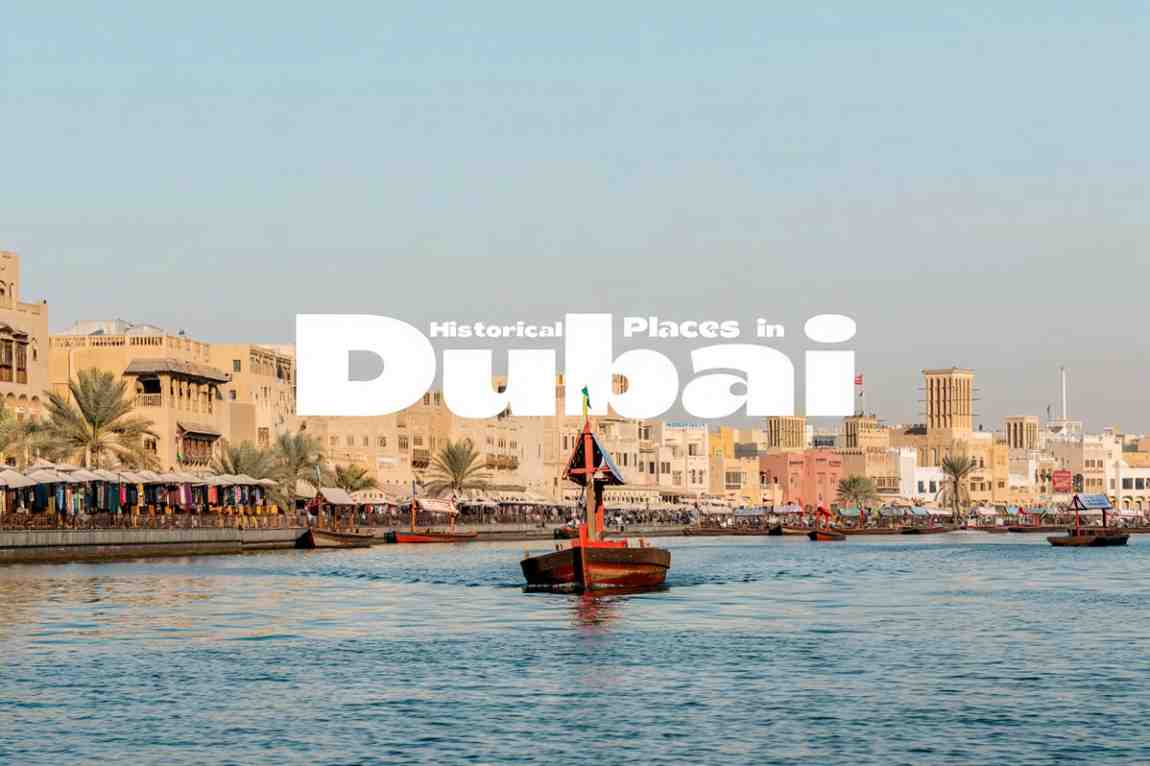
Dubai, often envisioned as a futuristic metropolis of towering skyscrapers and opulent malls, harbors a captivating secret: a deep, vibrant history etched into its very foundations. Beyond the glittering façade lies an ancient soul, where traditional wind-towers whisper tales of pearl divers, bustling souks echo with centuries of trade, and serene waterways connect the past to the present. This article will guide you through the most significant historical places in Dubai, offering a window into the city’s remarkable journey from a humble fishing village to a global icon.
The Al Fahidi Historical Neighbourhood, commonly known as Al Bastakiya, is the heart of Old Dubai and offers an unparalleled glimpse into the city’s early 20th-century life. This beautifully preserved district features narrow sikkas (alleys) and traditional sand-colored houses topped with iconic wind towers (barajeel), which served as an early form of natural air conditioning.
Historical Significance: Dating back to the 1890s, Al Fahidi was established by Persian merchants drawn to Dubai’s tax-free trade. It represents a crucial period of economic growth driven by pearl diving and trade.
Visitor Intel: Wander through art galleries, charming cafes, and boutique guesthouses. Don’t miss the XVA Gallery and the Arabian Tea House. Entry is free. Best for photography during the soft morning light.
Al Shindagha Museum is an expansive open-air heritage destination located along Dubai Creek, offering immersive insights into Emirati culture and history. It encompasses several themed pavilions, including the Perfume House and the meticulously restored House of Sheikh Saeed Al Maktoum.
Historical Significance: This area was once the residential quarter of Dubai’s ruling family, the Al Maktoums. The Perfume House showcases traditional scent-making, while Sheikh Saeed’s house, built in 1896, served as the family residence and seat of government until 1958.
Visitor Intel: Entry fees vary depending on the specific houses you wish to visit (combo tickets available). Allow ample time to explore. The House of Sheikh Saeed Al Maktoum offers stunning views of the Creek from its upper levels.
Dubai Creek is the natural saltwater inlet that divides the city into two main sections: Deira and Bur Dubai. For centuries, it has been the lifeblood of Dubai, facilitating trade, fishing, and pearl diving.
Historical Significance: The Creek was the original port that allowed Dubai to flourish as a regional trading hub. Its strategic location attracted merchants from India, Africa, and beyond.
Visitor Intel: The most authentic way to experience the Creek is by taking an “abra” (traditional wooden boat) ride fo. This offers fantastic views of the bustling souks and historic buildings on both sides.
Jumeirah Mosque is one of Dubai’s most iconic landmarks and one of the few mosques in the UAE open to non-Muslim visitors. Its beautiful façade, built entirely from white stone in the medieval Fatimid tradition, is particularly striking at sunset.
Historical Significance: Completed in 1979, the mosque is not ancient but was built to reflect traditional Islamic architecture and promote cultural understanding. It stands as a modern testament to Dubai’s commitment to heritage.
Visitor Intel: Guided tours are available through the Sheikh Mohammed Centre for Cultural Understanding (SMCCU) to learn about Islamic culture and customs. Modest dress is required (loose clothing, headscarf for women).
Nestled within the Al Shindagha Museum complex, the Saruq Al-Hadid Archaeology Museum presents fascinating artifacts unearthed from an Iron Age archaeological site discovered by Sheikh Mohammed bin Rashid Al Maktoum.
Historical Significance: Saruq Al-Hadid (“The Way of Iron”) was a major center for metalworking and trade over 3,000 years ago. Its discovery rewrote parts of Dubai’s ancient history, revealing a sophisticated civilization predating Islam.
Visitor Intel: The museum offers interactive displays and showcases gold jewelry, bronze, and ceramic pottery. It provides a unique perspective on Dubai’s very deep past.
Located about 130 km southeast of Dubai city, Hatta Heritage Village is a meticulously restored mountain village that transports visitors back in time to traditional Emirati life in the Hajar Mountains.
Historical Significance: The village comprises traditional houses, a mosque, and forts, all constructed from local materials like mud, stone, and palm fronds. It illustrates the rugged, self-sufficient lifestyle of early mountain inhabitants.
Visitor Intel: Explore the Watchtower, the ancient mosque, and various exhibits showcasing weaponry, handicrafts, and daily life. Pair your visit with a trip to the Hatta Dam for kayaking or mountain biking.
Housed within the imposing Al Fahidi Fort, the Dubai Museum is the oldest existing building in Dubai. The fort itself was built in 1787 to defend Dubai Creek.
Historical Significance: The fort served as a residence for the ruling family, a prison, and a garrison. The museum, opened in 1971, showcases Dubai’s evolution with dioramas and exhibits on pearl diving, Bedouin life, and ancient artifacts.
Visitor Intel: The underground exhibits are particularly well done, showcasing detailed scenes from traditional Emirati life.
Located in the Deira district, the Heritage House and Al Ahmadiya School offer a combined look into a wealthy merchant’s life and the region’s first semi-formal school.
Historical Significance: The Heritage House, built in 1890, belonged to a prominent pearl merchant. Al Ahmadiya School, established in 1912, was a pioneering educational institution that shaped generations of Emiratis.
Visitor Intel: These sites are often less crowded than Al Fahidi, offering a quieter experience. They provide excellent insights into the social and educational fabric of early Dubai.
Scattered along the northern bank of Dubai Creek, particularly near the Al Shindagha Museum, are several historic watchtowers. These cylindrical or square structures were strategically positioned to guard the city.
Historical Significance: These towers were vital for defending Dubai from potential invaders and protecting its crucial trade routes, particularly against pirate raids in the Arabian Gulf.
Visitor Intel: While most are not accessible inside, they offer fantastic photo opportunities, especially with the Creek as a backdrop. They serve as poignant reminders of Dubai’s past vulnerabilities and resilience.
Situated in the heart of the Gold Souk in Deira, the Women’s Museum (Bait Al Banat) is dedicated to celebrating the lives and achievements of Emirati women.
Historical Significance: This museum challenges common misconceptions, highlighting the pivotal roles women have played throughout Emirati history, from poets and entrepreneurs to educators and leaders.
Visitor Intel: Discover art, historical documents, and personal narratives. It’s a small but powerful museum offering a unique perspective on Emirati culture often overlooked in mainstream narratives.
To make the most of your historical exploration, here’s a suggested one-day itinerary:
Morning (9 AM – 1 PM): Start at the Al Fahidi Historical Neighbourhood. Explore the sikkas, visit the Coffee Museum, and have brunch at the Arabian Tea House. Then, cross the street to the Dubai Museum at Al Fahidi Fort.
Lunch (1 PM – 2 PM): Grab a traditional Emirati lunch in Bur Dubai or cross the Creek for a local eatery in Deira.
Afternoon (2 PM – 6 PM): Take an Abra across Dubai Creek to Deira. Explore the Spice Souk and Gold Souk. Head to the Al Shindagha Museum, focusing on the House of Sheikh Saeed Al Maktoum and the Perfume House. If time allows, visit the Heritage House and Al Ahmadiya School nearby.
What to Wear: When visiting historical and religious sites, dress modestly. Cover your shoulders and knees. Women should carry a light scarf to cover their heads if entering a mosque.
Best Time to Visit: The cooler months from October to April are ideal. Early mornings are best to avoid crowds and the midday heat, especially for outdoor sites.
Transportation: The Dubai Metro (Al Fahidi or Al Ghubaiba stations) is excellent for reaching Old Dubai. Water taxis (abras) are essential for crossing the Creek.
Embrace the Culture: Engage with local shopkeepers, try traditional snacks, and be open to learning about Emirati traditions.
Q: Is Old Dubai worth visiting?
A: Absolutely! Old Dubai offers a vital contrast to the modern city, providing rich cultural insights, historical depth, and unique experiences that are often considered the soul of Dubai.
Q: How do I get to Al Bastakiya (Al Fahidi Historical Neighbourhood)? A: Take the Dubai Metro to Al Fahidi Station (Green Line) or Al Ghubaiba Station (Green Line); both are within easy walking distance.
Q: What is the best way to experience Dubai Creek?
A: The most authentic way is to take an Abra ride between the Bur Dubai and Deira sides, offering a traditional and memorable local experience.
Q: Are there any entry fees for historical places in Dubai? A: Many areas A: Many areas like Al Fahidi are free to explore. Some museums and heritage houses, such as Dubai Museum and Al Shindagha Museum, may require an entry ticket.
Dubai is more than just a city of superlatives; it’s a testament to resilience, vision, and a deep respect for its heritage. By venturing into these historical places, you’re not just visiting old buildings—you’re stepping into the narrative of a nation. So, next time you’re in Dubai, take a moment to look beyond the glittering skyline and immerse yourself in the stories etched in sand and stone. Your journey into the city’s hidden soul awaits.

© 2025 Crivva - Hosted by Airy Hosting Managed Website Hosting.