


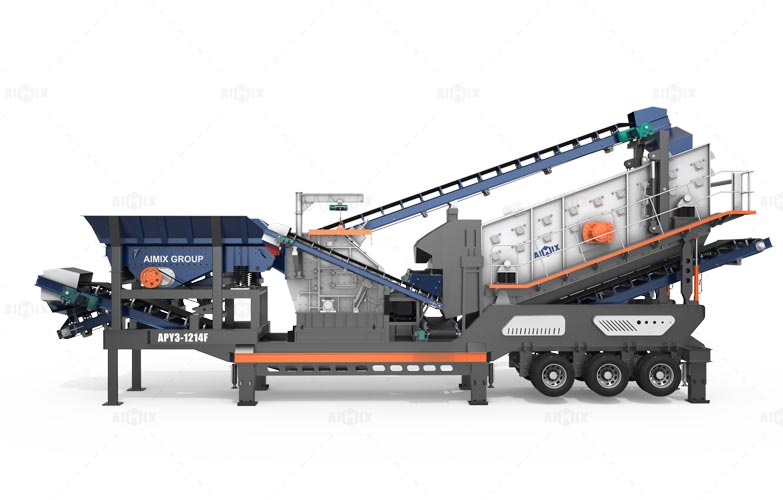
Operating a crushing plant at altitudes above 2,000 meters presents unique engineering challenges. Thinner air means less oxygen for combustion engines and reduced cooling capacity for electrical systems. For quarry owners in the Andes, the Tibetan Plateau, or the Rocky Mountains, these factors can slash productivity by 20–35% if not addressed properly. This guide explains how to maintain output efficiency for your stone crusher plant when working in high-altitude areas. From engine derating calculations to motor ventilation upgrades, the following recommendations are based on real-world installations between 2,500 and 4,500 meters above sea level. Whether you run a stationary or mobile aggregate plant, understanding altitude effects on power systems is essential for meeting production targets.
At higher elevations, atmospheric pressure drops. At 3,000 meters, air pressure is only about 70% of sea-level value. This reduction has two major consequences for crushing equipment. First, internal combustion engines receive less oxygen per cylinder stroke, which reduces power output. Second, electrical motors and generators lose cooling efficiency because the thinner air carries less heat away from windings and enclosures. A typical stone crusher plant(planta trituradora de piedra) rated for 300 tonnes per hour at sea level might only achieve 220 tonnes per hour at 3,500 meters without modifications. Understanding these physics is the first step toward maintaining efficiency.
Diesel engines power most mobile crushers and many remote stationary plants. Engine manufacturers publish derating curves showing power loss versus altitude. As a rule of thumb, naturally aspirated engines lose 3% of power per 300 meters above 1,000 meters. Turbocharged engines perform better, losing about 1–2% per 300 meters. However, even turbocharged units reach limits. At 4,000 meters, a turbocharged engine may retain only 75–80% of its sea-level power. For a stone crusher plant operating at these heights, this means you cannot simply install the same engine model you would use at low altitude. You must oversize the engine or add forced induction enhancements.
The most practical solution for a diesel-powered aggregate plant(planta de agregados) is selecting an engine with a higher base rating. For example, if your crusher needs 400 kW at sea level, at 3,500 meters you might need a 500 kW engine to deliver the same shaft power. Many quarry operators make the mistake of buying standard equipment and accepting reduced output. A better approach is to specify high-altitude packages from the manufacturer, which include larger turbochargers, modified fuel maps, and upgraded cooling systems. Additionally, consider the following adjustments:
A limestone quarry near Cerro de Pasco, Peru, at 4,300 meters, experienced chronic underperformance from their mobile crushing unit. The original 350 kW diesel engine delivered only 240 kW at altitude. After consulting with the engine distributor, the operator installed a larger turbocharger and reprogrammed the electronic control module. They also added an intercooler fan to reduce intake air temperature. These modifications restored 85% of sea-level power. The stone crusher plant then consistently processed 270 tonnes per hour, up from 190 tonnes previously. The total investment of $28,000 was recovered in less than four months through increased production.
Many stationary aggregate plant installations use electric motors, which suffer differently from altitude. Motors do not lose power directly from oxygen reduction, but they do lose cooling capacity. Thinner air cannot remove heat as effectively from motor frames and windings. A motor rated for 200 kW at sea level with class F insulation may overheat at 3,500 meters if run continuously at full load. The standard correction is to derate electric motors by 1% per 100 meters above 1,000 meters. Thus, at 3,000 meters, a motor should be derated by approximately 20%. In practice, this means specifying a larger motor or using forced ventilation.
For an existing aggregate plant at high altitude, the most cost-effective upgrade is adding a blower or forced draft fan that directs ambient air across the motor frame. Alternatively, specify motors with class H insulation (rated for 180°C instead of 155°C for class F) and higher service factors. Some quarry operators have successfully replaced standard motors with inverter-duty units that can run at slightly reduced speeds, lowering heat generation while maintaining torque. When purchasing a new stone crusher plant for high-altitude operation, always request altitude-corrected motor sizing from the vendor. A reputable supplier will adjust the motor selection automatically, but many standard quotes assume sea-level conditions.
Many remote crushing sites rely on generator sets (gensets) for electrical power. Gensets combine a diesel engine (which derates) with an alternator (which also requires cooling). The combined derating can be severe. At 3,500 meters, a genset rated for 500 kVA at sea level might only deliver 320–350 kVA. To maintain output for your stone crusher plant, you have three options: install a larger genset, parallel two smaller units, or add a boost system. Paralleling is often the most reliable because it provides redundancy. If one unit requires maintenance, the other can keep the aggregate plant running at reduced capacity. Always install gensets in well-ventilated enclosures; high-altitude sites can have strong winds that interfere with proper cooling airflow.
At high altitude, fuel burns differently. Diesel engines may produce more black smoke and carbon deposits due to incomplete combustion. Using a higher cetane fuel (50 or above) improves ignition. Some operators add a fuel-borne catalyst to promote more complete burning. Also, altitude sites often experience large temperature swings between day and night, leading to condensation in fuel tanks. Water in diesel fuel is especially harmful at altitude because injectors must work harder to atomize the thinner fuel-air mixture. Install a fuel polishing system or at minimum a high-quality water separator. These small investments protect your stone crusher plant from unexpected downtime.
High-altitude operation demands more frequent monitoring. Engine oil analysis every 250 hours (instead of the usual 500) can detect early wear from increased cylinder pressures. Air filter changes should be scheduled twice as often because engines draw in larger volumes of thin air, carrying the same amount of dust per cubic meter but requiring more cubic meters to achieve the same power. For an aggregate plant, clogged air filters quickly reduce output further. Install a filter restriction gauge with an audible alarm. Also, check belt tensions and coupling alignments more often; temperature cycles at altitude cause expansion and contraction that loosen drivetrain components.
Modern stone crusher plant controls can help manage altitude effects. Programmable logic controllers (PLCs) can monitor engine load, exhaust gas temperature, and inlet air pressure. When parameters drift, the system can automatically reduce feed rate to prevent stalling. Some advanced systems include altitude compensation maps that adjust hydraulic pump displacements based on real-time oxygen sensing. If your aggregate plant uses a variable-frequency drive (VFD) on the crusher motor, ensure the VFD is also derated or has altitude-specific cooling. VFDs generate heat inside their cabinets, and at high altitude, passive cooling becomes inadequate. Add cabinet fans or air conditioners as needed.
If you are planning to purchase crushing equipment for a high-altitude project, follow these steps. First, obtain accurate site elevation data and average ambient temperatures. Second, request altitude derating calculations from every equipment vendor. Third, consider buying a slightly larger stone crusher plant than sea-level calculations suggest—the upfront cost premium of 15–20% is far less than the loss from chronic underperformance. Fourth, ask about high-altitude kits, which typically include upgraded turbos, larger radiators, and sealed electrical enclosures. Finally, negotiate a service agreement that includes on-site altitude adjustments during commissioning. Many equipment failures at high altitude are not component defects but application errors. By understanding the physics of air density, you can ensure your aggregate plant delivers rated output even at 4,500 meters. The quarry that plans for altitude wins contracts; the one that ignores it struggles to meet specifications.

© 2025 Crivva - Hosted by Airy Hosting Managed Website Hosting.