

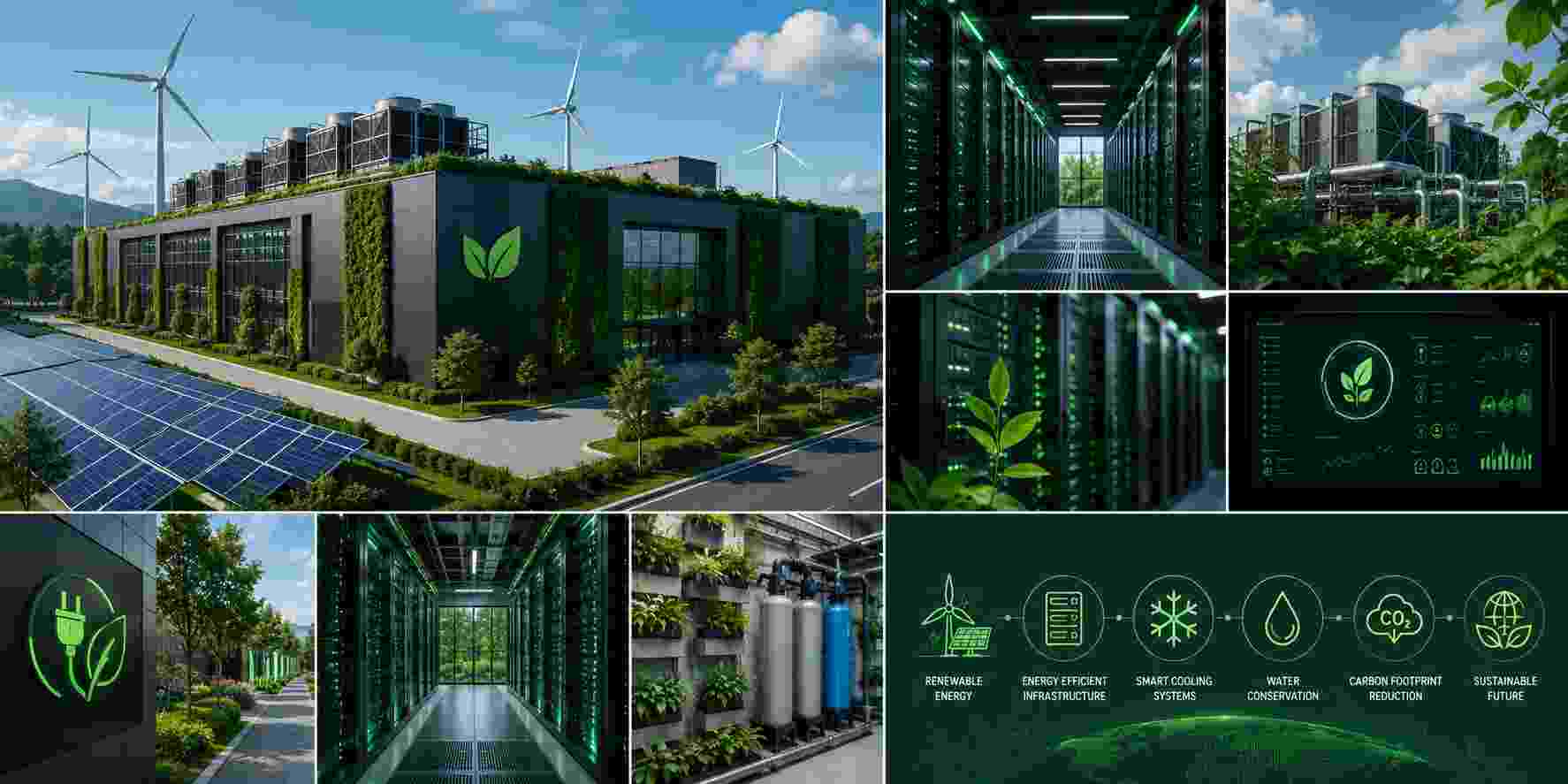
Green Data Centers are becoming an increasingly important part of the global digital ecosystem. As businesses, governments, and consumers generate unprecedented volumes of data, the demand for reliable computing infrastructure continues to rise. However, traditional data centers consume significant amounts of electricity and require extensive cooling systems, creating environmental challenges and increasing operational costs. In response, organizations are adopting sustainable approaches to data center design and operation that focus on energy efficiency, renewable energy integration, and reduced carbon emissions.
The concept of Green Data Centers extends beyond simply reducing power consumption. It encompasses the use of advanced technologies, environmentally responsible construction practices, intelligent cooling systems, and resource optimization strategies. As digital transformation accelerates across industries, Green Data Centers are emerging as a key component of sustainable digital infrastructure.
A Green Data Center is designed to minimize environmental impact while maintaining high levels of performance, reliability, and scalability. These facilities utilize energy-efficient hardware, optimized cooling mechanisms, and renewable energy sources to reduce overall resource consumption.
Traditional data centers often operate with significant energy overhead due to cooling requirements and underutilized computing resources. Green Data Centers address these inefficiencies through technologies such as server virtualization, intelligent workload management, advanced airflow systems, and high-efficiency power distribution.
In addition, modern facilities are increasingly being built with sustainable materials and designed to meet environmental certification standards. These efforts contribute to reduced carbon footprints while supporting long-term operational resilience.
Digital infrastructure forms the backbone of modern economies. Cloud computing, artificial intelligence, e-commerce, digital healthcare, financial services, and connected devices all depend on data center networks to function effectively.
As digital services expand, the environmental implications of data processing and storage have become more visible. Organizations are under growing pressure from regulators, investors, customers, and sustainability initiatives to reduce their environmental impact. This has encouraged greater investment in Green Data Centers as part of broader environmental and sustainability strategies.
According to a study by MarkNtel Advisors, increasing emphasis on sustainability, energy efficiency, and carbon reduction initiatives is contributing to greater adoption of environmentally responsible data center infrastructure across multiple sectors.
Beyond compliance objectives, sustainable digital infrastructure can also improve operational efficiency. Energy-efficient facilities often experience lower utility expenses, better resource utilization, and enhanced long-term cost management, making sustainability both an environmental and business priority.
Energy efficiency remains one of the defining characteristics of Green Data Centers sector. Operators continuously seek ways to maximize computing performance while minimizing electricity consumption.
One of the most widely adopted strategies involves server consolidation through virtualization. By allowing multiple workloads to run on fewer physical servers, organizations can significantly reduce hardware requirements and energy usage.
Advanced monitoring systems also play a critical role. Artificial intelligence and machine learning technologies can analyze operational patterns and automatically optimize power consumption based on real-time conditions. These intelligent systems help reduce waste while maintaining performance standards.
Efficient power management technologies, including high-efficiency uninterruptible power supplies (UPS) and intelligent power distribution units, further contribute to sustainability objectives. Together, these solutions enable organizations to maximize resource efficiency while supporting growing computational demands.
Cooling systems account for a substantial portion of data center energy consumption. As a result, innovative cooling technologies have become a major focus area within Green Data Center development.
Traditional cooling approaches often rely heavily on energy-intensive air conditioning systems. Modern facilities increasingly implement alternative methods such as free-air cooling, liquid cooling, immersion cooling, and hot aisle/cold aisle containment strategies.
Free-air cooling utilizes favorable outdoor temperatures to reduce dependence on mechanical refrigeration. Liquid cooling technologies provide more efficient heat transfer, allowing facilities to manage high-density computing environments with lower energy requirements.
These advancements not only reduce electricity consumption but also improve equipment performance and longevity. As computing workloads become more demanding, efficient cooling systems are expected to remain essential for sustainable infrastructure development.
According to The International Energy Agency (IEA), improvements in energy efficiency and advanced cooling technologies can help reduce the environmental impact associated with digital infrastructure expansion.
Renewable energy adoption is another defining feature of Green Data Centers. Many operators are investing in solar, wind, hydroelectric, and other renewable energy sources to power their facilities.
Major technology companies have established ambitious sustainability goals that include increasing renewable energy procurement for data center operations. Long-term power purchase agreements and on-site renewable energy installations are becoming common strategies for reducing reliance on fossil fuels.
Renewable energy integration supports carbon reduction objectives while helping organizations improve energy security. As renewable technologies become more cost-effective, their role in supporting data center sustainability is expected to expand further.
Energy storage solutions are also emerging as valuable complements to renewable power generation. Advanced battery systems can help manage intermittent energy production while maintaining operational reliability.
Artificial intelligence is transforming how Green Data Centers operate. AI-powered management platforms can continuously monitor equipment performance, cooling requirements, power consumption, and workload distribution.
These systems analyze vast amounts of operational data and identify opportunities to improve efficiency. Automated optimization enables operators to respond dynamically to changing conditions, reducing energy waste while maintaining service quality.
Predictive maintenance is another important application. By identifying potential equipment failures before they occur, AI systems help reduce downtime and extend asset lifecycles. This contributes to both operational sustainability and resource conservation.
As AI technologies become more sophisticated, their role in supporting sustainable infrastructure management may continue to expand across global data center networks.
According to The World Bank, investments in efficient digital infrastructure can support broader sustainability objectives while strengthening long-term economic development and technological resilience.
Different regions are adopting Green Data Center strategies based on their unique regulatory environments, energy availability, and sustainability priorities.
North America continues to witness significant investment in energy-efficient facilities driven by cloud service providers and technology companies seeking to reduce environmental impact. Europe has also emerged as a major center for sustainable data infrastructure, supported by strong environmental regulations and ambitious carbon reduction targets.
Meanwhile, countries across Asia-Pacific are expanding digital infrastructure capacity to support growing internet penetration, cloud adoption, and digital transformation initiatives. Many governments are encouraging sustainable facility development through policy incentives and renewable energy programs.
Emerging economies are also recognizing the importance of balancing digital expansion with environmental responsibility. This creates opportunities for the adoption of energy-efficient technologies and sustainable operational practices.
Despite their benefits, Green Data Centers face several implementation challenges. Initial capital investments can be substantial, particularly for advanced cooling technologies, renewable energy integration, and energy-efficient infrastructure upgrades.
Organizations must also balance sustainability objectives with performance, reliability, and scalability requirements. In some regions, access to renewable energy resources may be limited, complicating sustainability initiatives.
Rapid growth in data-intensive technologies such as artificial intelligence, machine learning, and high-performance computing may increase energy demands despite ongoing efficiency improvements. This highlights the importance of continuous innovation in sustainable infrastructure solutions.
Workforce expertise represents another consideration. Designing, managing, and optimizing environmentally responsible facilities requires specialized skills and knowledge that may not always be readily available.
Nevertheless, ongoing technological advancements and growing sustainability commitments are helping organizations address these challenges more effectively.
The Green Data Center ecosystem includes a diverse range of technology providers, infrastructure developers, and service organizations. Companies specializing in cloud computing, energy management, cooling technologies, renewable energy integration, and intelligent infrastructure solutions play important roles in advancing sustainability objectives.
Leading participants continue investing in innovative technologies that improve operational efficiency, reduce environmental impact, and support evolving digital infrastructure requirements. Collaboration among technology vendors, energy providers, policymakers, and enterprise customers is helping accelerate the transition toward more sustainable data center operations worldwide.
Green Data Centers represent a significant evolution in how digital infrastructure is designed, operated, and optimized. As data consumption continues to expand across industries, sustainability considerations are becoming increasingly important for organizations seeking to balance technological advancement with environmental responsibility.
Energy-efficient systems, advanced cooling technologies, renewable energy integration, and artificial intelligence-driven management solutions are helping transform traditional data center operations. While implementation challenges remain, continued innovation and growing sustainability commitments could indicate a future where environmentally responsible digital infrastructure becomes a standard component of global technological development.

© 2025 Crivva - Hosted by Airy Hosting Managed Website Hosting.