

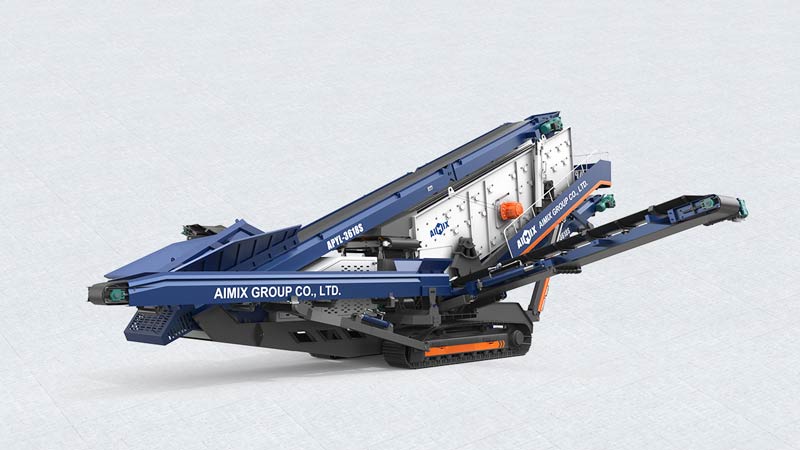
The decision to invest in aggregate processing equipment is often driven by the immediate demands of a single, large project. The calculus is straightforward: secure the necessary machinery, like an aggregate crusher plant, to meet contract specifications, finish the job, and move on. In this narrow view, the plant is a project cost—a capital expense to be depreciated against a single revenue stream. However, this short-term, transactional perspective overlooks a far more strategic and profitable reality. For forward-thinking companies in Latin America’s dynamic construction and mining sectors, an aggregate crusher plant should not be viewed as a consumable expense but as a long-term strategic asset. This requires a fundamental shift from a project-based mindset to a systemic, business-oriented perspective, where the plant becomes a permanent, revenue-generating hub central to the company’s growth, resilience, and market competitiveness.
Focusing solely on the lowest upfront price to serve a single contract introduces significant, often hidden, long-term risks and limitations.
Choosing an aggregate crusher plant based primarily on a minimal initial investment often means compromising on build quality, component durability, and manufacturer support. The consequences—frequent breakdowns, high maintenance costs, excessive downtime, and inconsistent product quality—emerge during the critical phase of a project, eroding any initial savings. The plant becomes a liability, jeopardizing project deadlines, incurring penalty clauses, and damaging the company’s reputation for reliability.
A plant purchased for a specific project’s output and product specifications may be ill-suited for future opportunities. Once that project ends, the company is left with a highly specialized, potentially underutilized asset that cannot easily adapt to new material types, different production requirements, or changing market demands. This lack of flexibility turns capital equipment into a stranded asset, failing to contribute to future business growth.
Transforming a crusher plant into a long-term asset requires a holistic investment philosophy built on four interconnected pillars.
The initial purchase price is just one data point. The intelligent investor analyzes the Total Cost of Ownership (TCO), which includes:
Initial Capital Expenditure (CapEx): The purchase price of the aggregate crusher plant.
Operational Expenditure (OpEx): Fuel/electricity consumption, wear part costs (liners, screen meshes), routine maintenance labor, and lubricants.
A premium, well-engineered aggregate crusher plant(planta procesadora de agregados) from a reputable manufacturer typically offers a superior TCO. It features more durable components, higher energy efficiency, and advanced designs that yield more saleable product per ton of feed. While its CapEx might be higher, its OpEx and downtime costs are drastically lower over a 10-15 year lifespan, generating a much higher return on investment.
A long-term asset must be adaptable. The most valuable aggregate crusher plant is one designed with modularity and scalability in mind. This means:
Modern control systems are no longer a luxury; they are a core component of a productive long-term asset. Automation in an aggregate crusher plant delivers:
The plant should not operate in a vacuum. Its true value is realized when integrated into the company’s broader operational and commercial system.
Shifting to this systemic perspective requires a new framework for investment decisions:
Conduct a 10-Year Business Scenario Analysis: Model how different plant capabilities could serve not just the current project, but future market opportunities.
Evaluate Suppliers as Long-Term Partners: Assess manufacturers based on their local support network, parts inventory, training programs, and technology upgrade paths, not just their brochure price.
Finance for the Long Haul: Structure financing to match the asset’s lifespan, focusing on monthly cash flow impact and long-term equity building rather than minimizing the first payment.
In the competitive and infrastructure-hungry markets of Latin America, the companies that will lead are those that build their foundations on strategic assets, not short-term tools. Re-conceptualizing the aggregate crusher plant from a project expense to a core, long-term asset is a powerful paradigm shift. It moves the investment discussion from “What is the cheapest way to complete this job?” to “What is the best capital investment to build our company’s production capacity, market flexibility, and competitive advantage for the next decade?”
This systemic perspective prioritizes durability, adaptability, and intelligence in equipment selection. It transforms the crushing plant from a cost center on a balance sheet into a profit center and a cornerstone of enterprise value. By making this shift, companies secure not just aggregate for today’s project, but the foundational capacity for tomorrow’s growth, ensuring they are building roads—and a business—that lasts.

© 2025 Crivva - Hosted by Airy Hosting Managed Website Hosting.