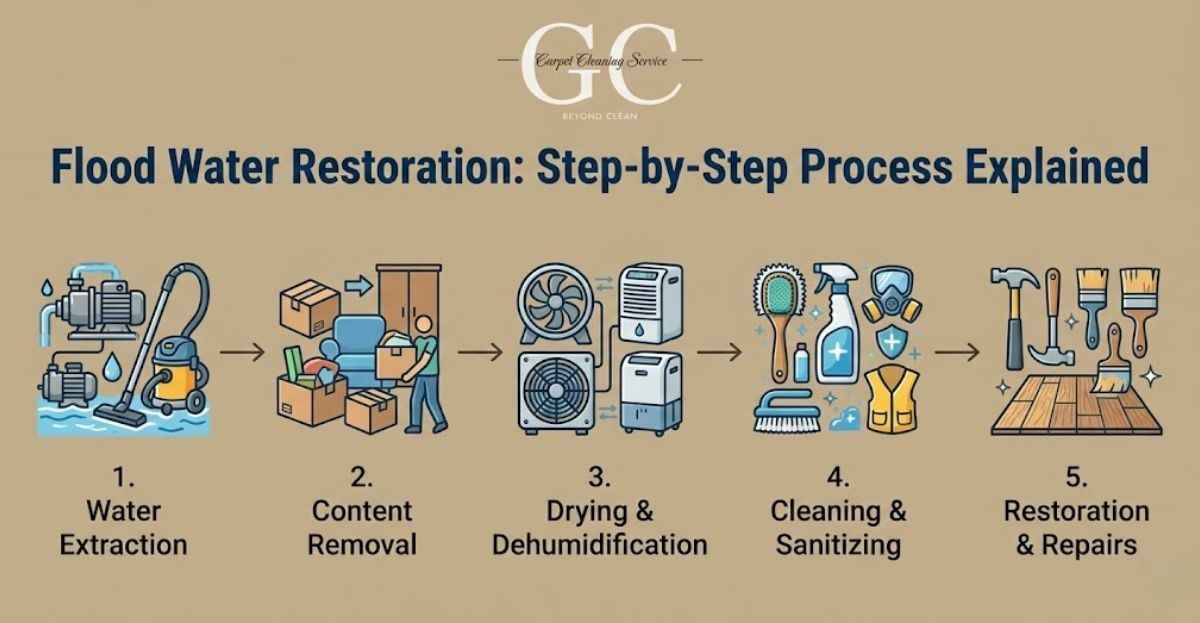
Flooding can strike without warning—after heavy rainfall, burst pipes, sewage backups, or storm surges. When water invades your home or business, flood water restoration becomes urgent. Acting fast isn’t just about removing visible water; it’s about protecting your structure, preventing mold, and restoring safety.
In this in-depth guide, we’ll explain flood water restoration step by step, using industry best practices and professional insights from GC Carpet Cleaning Services. You’ll also learn how flood restoration works behind the scenes, what homeowners should (and shouldn’t) do, and how professionals ensure complete recovery.
Flood water restoration is a professional process that removes floodwater, dries affected areas, cleans and sanitizes surfaces, and repairs damage to return a property to a safe, pre-loss condition.
Unlike simple water cleanup, flood restoration addresses:
Hidden moisture inside walls and floors
Contaminants and bacteria in floodwater
Structural weakening
Long-term mold risks
The goal isn’t just drying—it’s full recovery.
Time is the biggest factor in flood damage. Within hours, water begins to seep deeper into materials, and within 24–48 hours, mold growth can start.
Delaying flood water restoration can lead to:
Permanent structural damage
Mold infestation
Electrical hazards
Higher restoration costs
Health risks for occupants
Professional response in the first 24 hours can significantly reduce damage and cost.
Below is the complete flood water restoration process, followed by trained professionals like GC Carpet Cleaning Services.
Before any restoration begins, professionals conduct a thorough inspection.
This includes:
Identifying the source and type of floodwater
Checking structural safety
Assessing electrical and gas hazards
Measuring moisture levels with specialized tools
Floodwater is classified into categories (clean, gray, or black water). This determines the cleaning methods and safety precautions required.
Safety always comes first—never enter a flooded area if electricity or structural stability is uncertain.
The next step in flood water restoration is removing standing water as quickly as possible.
Professionals use:
High-powered submersible pumps
Industrial wet vacuums
Truck-mounted extraction systems
Fast extraction:
Limits water absorption into walls and floors
Prevents secondary damage
Speeds up the overall flood restoration timeline
The faster water is removed, the easier and more successful restoration becomes.
Not all materials can be saved after flooding. During this stage, technicians remove items that cannot be restored safely.
Common removals include:
Waterlogged drywall
Saturated insulation
Damaged carpets and padding
Swollen baseboards or trim
This step prevents trapped moisture and bacteria from causing long-term issues.
Even after visible water is gone, moisture remains hidden inside materials. This is where professional flood restoration truly matters.
Drying equipment includes:
Industrial air movers
High-capacity dehumidifiers
Moisture detection sensors
Technicians monitor moisture levels daily to ensure:
Walls, floors, and ceilings dry evenly
No hidden dampness remains
Mold-friendly conditions are eliminated
This step may take several days but is essential for complete flood water restoration.
Floodwater often carries bacteria, sewage, chemicals, and debris. Once drying begins, all affected surfaces must be thoroughly cleaned and sanitized.
This includes:
Antimicrobial treatments
Odor neutralization
Carpet and upholstery cleaning (if salvageable)
Hard surface disinfection
Professional flood restoration ensures your property isn’t just dry—but safe and healthy.
Mold is one of the biggest risks after flooding. Even a small amount of moisture can trigger growth.
Preventive measures include:
Antifungal treatments
HEPA air filtration
Continuous moisture monitoring
If mold is already present, certified remediation steps are taken immediately to prevent spread.
The final stage of flood water restoration is rebuilding and repair.
This may involve:
Drywall replacement
Flooring installation
Painting and finishing
Minor structural repairs
The goal is to restore your property to its pre-flood condition—or better.
Many homeowners consider DIY cleanup after flooding, but this often leads to hidden damage.
Household fans can’t dry deep moisture
Mold growth often goes unnoticed
No antimicrobial protection
Risk of electrical hazards
Commercial-grade drying equipment
Moisture detection technology
Certified cleaning and sanitation
Insurance documentation support
For serious flooding, professional flood restoration is not optional—it’s essential.
GC Carpet Cleaning Services follows a structured, industry-approved approach to flood water restoration, ensuring:
Rapid emergency response
Advanced water extraction systems
Professional drying and sanitization
Mold prevention protocols
Transparent communication throughout the process
Their team understands that flood damage is stressful—and focuses on restoring both property and peace of mind.
Understanding the cause helps prevent future incidents. Common sources include:
Heavy rainfall and storms
Basement flooding
Burst or frozen pipes
Appliance leaks
Sewer backups
Regular maintenance and early detection reduce flood risks significantly.
Every situation is unique, but general timelines include:
Water extraction: 1 day
Drying and dehumidification: 3–7 days
Cleaning and sanitization: 1–2 days
Repairs and reconstruction: varies
Prompt action shortens recovery time dramatically.
Watch out for:
Persistent musty odors
Peeling paint or bubbling walls
Warped flooring
Mold spots
High indoor humidity
These indicate moisture was not fully removed—and professional inspection is needed.
Install sump pumps with battery backup
Seal basement cracks
Maintain gutters and drainage
Inspect plumbing regularly
Elevate valuables and appliances
Prevention saves time, money, and stress.
Flood water restoration is a professional process that removes floodwater, dries affected areas, sanitizes surfaces, and restores damaged property to a safe condition.
Immediately. Restoration should start within 24 hours to prevent mold growth and structural damage.
It depends on the water category and exposure time. Clean water carpets may be salvageable; contaminated water carpets usually are not.
Yes. Floodwater can contain bacteria, sewage, chemicals, and debris, making professional cleaning essential.
Coverage depends on your policy and the cause of flooding. Professional restoration companies often assist with documentation.
Flood damage is overwhelming—but with the right approach, recovery is absolutely possible. Understanding the step-by-step flood water restoration process empowers you to act fast, avoid costly mistakes, and protect your property long-term.
When handled professionally by experts like GC Carpet Cleaning Services, flood restoration doesn’t just repair damage—it restores safety, comfort, and confidence.

© 2025 Crivva - Hosted by Airy Hosting Managed Website Hosting.