Something significant is happening in the clean energy world right now. Companies that were once cautious about deep-water wind projects are now pouring billions into them. The reason is simple: floating wind is no longer just a promising idea. It is delivering real financial returns, and investors have noticed.
In 2026, the momentum has shifted. What started as an experimental technology is now a commercially viable sector attracting serious capital from energy giants, private equity, and government-backed funds across Europe, Asia, and North America.
Most people are familiar with fixed-bottom offshore wind, where turbines are anchored directly into the seabed. That works well in shallow waters. But much of the world’s best wind resource sits in deeper waters, sometimes more than 60 meters below the surface, where fixed foundations simply are not practical.
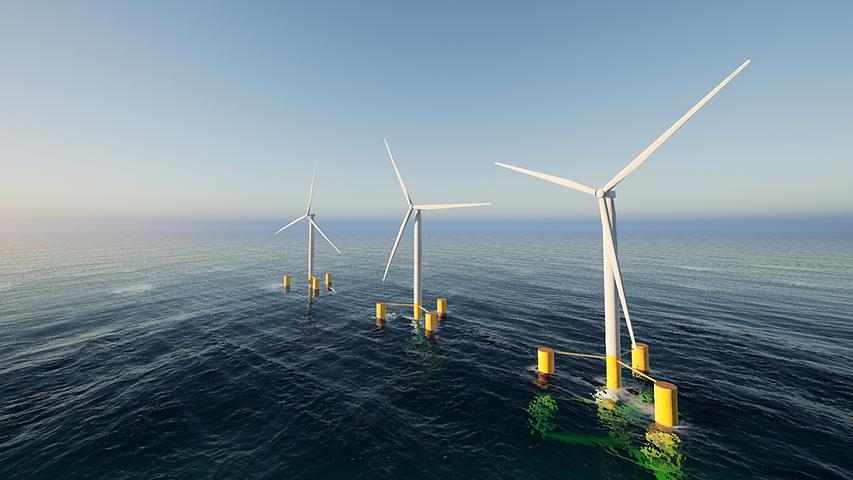
This is where floating wind comes in. Instead of being bolted to the ocean floor, floating turbines are attached to buoyant platforms and held in place by mooring lines. This design opens up vast stretches of ocean that were previously inaccessible. Countries like Japan, Norway, South Korea, and the United States have deep coastlines with exceptional wind speeds, and floating technology unlocks all of that potential.
A few years ago, the main concern around this technology was cost. Building and deploying floating platforms was expensive, and the numbers did not always add up for investors. That has started to change.
Manufacturing processes have improved. Supply chains are maturing. Engineering teams have learned from early projects, and costs per megawatt are falling at a faster pace than many analysts expected. At the same time, governments in Europe and Asia are signing long-term power purchase agreements that give developers stable revenue visibility for 15 to 20 years.
The financial risk is lower than it used to be, and the upside remains enormous. That combination is what is driving the current wave of investment.
Discussions at recent industry events, including the leading floating wind conference held earlier this year, reflected this shift in confidence. Developers, financiers, and policymakers shared a clear message: the technology works, the economics are improving, and the scale-up is already underway.
Governments are playing a critical role. In 2026, several major economies have introduced dedicated auction rounds and funding mechanisms specifically designed for floating projects. The United Kingdom, France, South Korea, and Portugal have all announced targets that require floating capacity to meet their long-term renewable energy goals.
This policy clarity matters enormously. When developers know that governments are committed to buying the electricity these projects produce, it becomes much easier to raise construction finance and move forward with large-scale builds.
The European Union’s offshore wind targets, updated in late 2025, now explicitly include floating requirements as part of the broader push to decarbonize the energy grid by 2050. This regulatory backing has removed a significant layer of uncertainty for the private sector.
Developed by Equinor, Hywind Tampen became the world’s largest floating wind farm when it reached full operation. Located in the Norwegian North Sea, the project powers oil and gas platforms using clean electricity, reducing emissions from those facilities. The project demonstrated that floating turbines could operate reliably in harsh, deep-water conditions and deliver consistent power output at a commercial scale. Its success has directly influenced new investment decisions across Scandinavia and beyond.
This French project, developed by a consortium including EDF Renewables, is one of Europe’s most closely watched pilot developments. Operating off the coast of Marseille, it has provided critical real-world performance data on spar-buoy and semi-submersible designs. The results have fed into France’s broader offshore wind expansion plans and helped reduce the cost uncertainty that had previously made large-scale deployment difficult to finance.
The rise of floating wind is not just good news for investors. It is good news for the planet. Wind resources in deep water are stronger and more consistent than those close to shore. Accessing them means more reliable clean electricity and fewer gaps in power supply.
For communities near coastlines, floating installations are often placed far enough out to sea that they have minimal visual impact. This reduces local opposition that has sometimes slowed down nearshore projects.
As this technology continues to mature, it is expected to play a major role in the global energy mix alongside solar, battery storage, and fixed-bottom offshore wind.
Floating wind refers to wind turbines mounted on floating platforms that are anchored to the seabed using mooring lines. Unlike fixed turbines, they can be deployed in deep waters where the seabed is too far down for conventional foundations. The platform moves slightly with the water but remains stable enough to generate electricity reliably.
Yes. Projects like Hywind Tampen in Norway have demonstrated that floating turbines can operate at commercial scale in challenging ocean environments. More projects are now in development or construction across Europe and Asia, confirming the technology’s readiness for broader deployment.
Costs have come down significantly, supply chains have strengthened, and governments have introduced long-term contracts that give developers reliable revenue. The combination of lower financial risk and strong policy backing has made the investment case much more compelling.
Traditional offshore wind uses fixed foundations drilled into the seabed, which limits it to shallower waters. Floating wind uses buoyant platforms that can be deployed in much deeper water, opening up far larger ocean areas with stronger and more consistent wind speeds.
Norway, the United Kingdom, France, South Korea, Japan, and Portugal are currently the most active markets. Each has either operational projects or significant auction programs underway to accelerate deployment over the next decade.

© 2025 Crivva - Hosted by Airy Hosting Managed Website Hosting.