


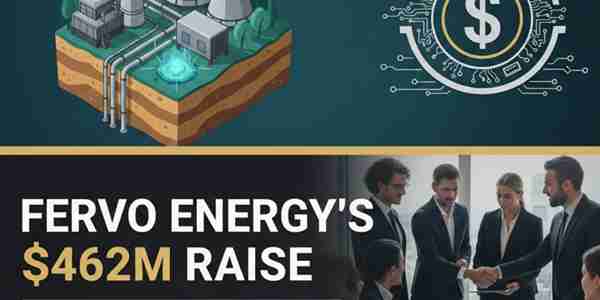
The clean energy industry is experiencing a powerful resurgence that goes far beyond the traditional narratives of solar panels and wind farms. A new wave of investment interest is forming around next-generation geothermal energy, positioning it as an unexpected darling in the venture capital allocation landscape. The oversubscribed Series E round of Fervo Energy, raising an extraordinary 462 million dollars, represents far more than capital deployment. It signals a fundamental reassessment of which climate technologies can scale meaningfully, reliably, and profitably at global infrastructure levels. This moment reflects a broader maturation of climate investing, where scale, execution, and commercial certainty matter more than speculative technological ambition.
What makes this funding moment especially significant is the stage at which venture capital is being deployed. Unlike early experimental rounds driven by hypothetical upside, Fervo’s Series E represents late-stage conviction rooted in demonstrated feasibility. The company is not inventing untested physics. Instead, it is recombining proven technologies such as horizontal drilling and distributed fiber-optic sensing in a novel operational framework. This reduces technical uncertainty while unlocking massive commercial potential. For investors fatigued by science experiments masquerading as startups, this pragmatic innovation model offers a refreshing alternative. It underscores a shift in venture capital priorities toward execution-focused climate technologies with credible deployment pathways.
The sheer size of the 462 million dollar raise narrates its own story about market maturity. This is not a speculative Series A fueled by vision alone, nor a Series B reliant on pilot data. It is growth capital backing existing commercial relationships, signed power purchase agreements, and revenue visibility. The implication for climate tech founders is profound. Capital will still flow, but only to companies that demonstrate operational discipline and market validation. Growth rounds will increasingly reward startups that prove they can generate predictable cash flows. This financing milestone sets a new benchmark, redefining expectations across the climate technology investment ecosystem globally.
A key driver behind geothermal’s resurgence is its unique position as a baseload clean energy source.Five hundred million dollar rounds will become common in sectors once considered unsuitable for venture funding. Unlike solar and wind, which suffer from intermittency and require costly storage solutions, geothermal offers continuous, round-the-clock power. This reliability premium is now reshaping climate investment theses. Grid integration challenges and storage economics continue to weigh heavily on intermittent renewables. In contrast, geothermal provides utilities and corporate buyers with firm, carbon-free energy without added complexity. As procurement teams prioritize reliability alongside sustainability, geothermal assets command valuation multiples two to three times higher than incremental improvements within intermittent generation technologies today.
This distinction between intermittent and baseload clean energy is becoming the defining filter in climate technology funding decisions. Investors increasingly ask whether a technology truly solves the intermittency problem or merely mitigates it. Those offering definitive answers attract premium valuations and deeper capital commitments. Geothermal’s ability to deliver stable output positions it as infrastructure rather than experimentation. The result is a recalibration of risk perception. What once seemed capital-intensive and slow is now viewed as durable and defensible. The market is rewarding solutions that align clean energy ambitions with real-world grid requirements and economic realities at scale.
Fervo’s Utah-based Cape Station project exemplifies this infrastructure-scale thinking. Scheduled to deliver one hundred megawatts of clean power beginning in 2026, the project reflects a strategic shift among successful climate startups. Rather than selling technology licenses, these companies are vertically integrating into power production. By owning and operating assets, they capture more value and create clearer exit pathways. Investors benefit from multiple liquidity options, including project refinancing, asset sales, or public market listings. This model transforms climate startups into energy companies, aligning venture outcomes with infrastructure economics and long-term demand certainty worldwide.
However, this evolution demands radically different capital strategies than traditional venture-backed software businesses. Syndicates now include infrastructure funds, strategic energy corporates, and classic venture firms. Due diligence extends beyond technology readiness to encompass regulatory frameworks, power market dynamics, construction execution, and permitting risk. Venture capital firms evaluating such opportunities must develop multidisciplinary expertise or partner strategically. The result is a blended capital stack designed to support long-duration assets. This complexity reflects the seriousness of climate infrastructure investing today. Success depends on operational rigor, financial engineering, and stakeholder coordination across traditionally separate investment domains.
The geothermal boom also establishes a broader precedent for deep-tech founders across industries. The winning formula increasingly combines technological differentiation with established deployment methods. Fervo did not reinvent drilling; it refined and optimized it.Geothermal energy startups like Fervo are securing massive funding rounds. Learn how clean tech is transforming venture capital investing in early stage startups. This philosophy of “innovation by execution” lowers risk while preserving transformative impact. Similar strategies are emerging in energy storage, carbon capture, and sustainable materials. Investors are signaling clear preferences. Founders who articulate credible go-to-market plans grounded in existing supply chains outperform those promising radical breakthroughs requiring decades of maturation. Practical innovation now commands venture attention and premium capital allocation.
From Evolve Venture Capital’s perspective, three founder success factors stand out. First, secure offtake agreements early. Demonstrating committed buyers de-risks revenue models and attracts institutional capital. Commercial validation increasingly outweighs technical perfection. Second, construct hybrid syndicates blending venture expertise, infrastructure financing, and strategic partnerships. This combination delivers both capital and operational capabilities. Third, maintain capital efficiency during early stages. Fervo’s earlier rounds were milestone-driven, preserving equity for growth phases that matter most. Discipline before scale enables founders to maximize value during inevitable large capital raises.
The clean energy unicorn boom is still in its early stages. As carbon pricing mechanisms mature and corporate sustainability commitments become embedded in procurement strategies, capital intensity will no longer deter venture participation. Five hundred million dollar rounds will become common in sectors once considered unsuitable for venture funding. The companies that thrive will seamlessly integrate climate impact with business execution. Fervo Energy illustrates this convergence perfectly. Its success signals a future where climate technologies are evaluated not as experiments, but as essential infrastructure businesses powering the global energy transition with confidence and commercial clarity.
Contact Information:
Website: www.evolvevcap.com
Email: [email protected]
Phone: +65 8181 4097

© 2025 Crivva - Hosted by Airy Hosting Managed Website Hosting.