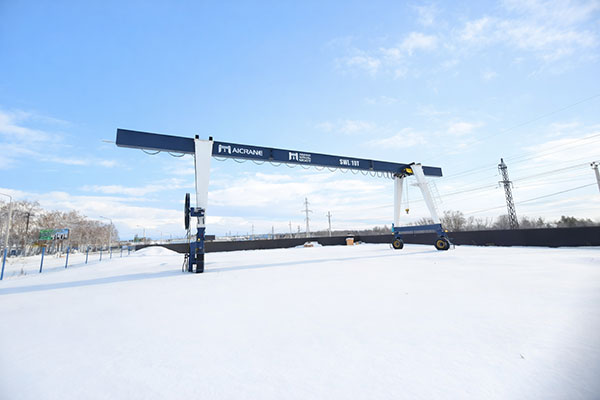
Outdoor gantry cranes are essential in industries such as shipping, construction, steel manufacturing, and logistics. Unlike indoor cranes, they are exposed to a wide range of environmental conditions, which directly affect their structural integrity, operational efficiency, safety, and lifespan. Designing outdoor gantry cranes requires careful attention to environmental factors to ensure reliability, minimize maintenance, and protect personnel and equipment. This article explores the key environmental considerations in outdoor gantry crane design, emphasizing structural design, material selection, corrosion prevention, climate adaptability, and operational strategies.
1. Understanding the Environmental Challenges
Outdoor gantry cranes operate in environments that can vary drastically depending on geographical location, climate, and industrial activity. Key environmental challenges include:
- Wind loads: Wind can exert lateral forces on the crane structure, affecting stability and increasing sway, especially for tall or long-span gantry cranes.
- Temperature variations: Extreme heat or cold can influence the mechanical properties of steel, lubricants, and electrical components.
- Rain, snow, and ice: Precipitation can increase the load on the crane, create slippery surfaces, and affect the performance of electrical systems.
- Corrosive environments: Coastal areas, chemical plants, and industrial zones can expose cranes to salt spray, chemical fumes, or acid rain, leading to corrosion.
- Dust and debris: Outdoor operations near construction sites or quarries can result in accumulation of dust, sand, or debris on moving parts, causing wear and operational issues.
Addressing these environmental factors in the design phase is critical for long-term performance and safety.
2. Structural Design Considerations
2.1 Wind Load Analysis
Wind is a major factor affecting outdoor gantry cranes. Designers must calculate wind loads according to local codes (e.g., ASCE 7 in the U.S., Eurocode in Europe) to ensure the crane can withstand high gusts without tipping or excessive sway. Key strategies include:
- Aerodynamic structure: Using streamlined shapes to reduce wind resistance.
- Reinforced frameworks: Strengthening critical components such as the main girders, legs, and cross bracings.
- Anchoring and foundation: Ensuring the crane’s base and foundation can resist overturning moments caused by lateral wind forces.
2.2 Snow and Ice Load Design
In regions with snowfall, snow accumulation can add substantial weight to the crane, especially on long spans. Ice formation on structural members can increase load and create hazardous conditions. Structural design must consider:
- Maximum snow load on beams and crane roof (if applicable).
- Ice formation on trolley and gantry wheels.
- Inclusion of anti-icing coatings or heated elements where necessary.
2.3 Seismic Considerations
For cranes located in seismically active areas, earthquake loads must be incorporated into the design. This includes analyzing potential lateral displacement, base shear, and dynamic forces. Flexible yet robust connections, base isolation techniques, and proper bracing can enhance seismic resilience.
3. Material Selection and Corrosion Protection
Outdoor gantry cranes are highly susceptible to corrosion due to moisture, salt, and industrial pollutants. Choosing the right materials and protective measures is critical.
3.1 Steel Quality
High-quality structural steel with adequate yield strength and toughness is essential. In corrosive environments, weathering steel (e.g., Corten steel) can offer better resistance to rust while maintaining structural integrity. Low-temperature steel may be required in extremely cold regions to prevent brittle fracture.
3.2 Surface Treatments
Protective coatings significantly extend the lifespan of outdoor gantry cranes:
- Hot-dip galvanization: Provides a thick zinc layer that protects steel from rust, commonly used in coastal or high-humidity areas.
- Epoxy or polyurethane paints: Offer additional barrier protection and aesthetic appeal.
- Powder coating: Ensures uniform protection on smaller components and can withstand UV exposure.
3.3 Stainless Steel and Non-metal Components
Critical components exposed to moisture, such as electrical enclosures, fasteners, and trolley parts, may use stainless steel or corrosion-resistant alloys. Composite or polymer materials can also be used for insulation, covers, or cable protection.
4. Electrical and Mechanical System Adaptation
Outdoor conditions affect both electrical and mechanical systems, requiring thoughtful design.
4.1 Electrical Systems
- Weatherproof enclosures: Electrical panels and controls must have appropriate IP ratings (e.g., IP65 or higher) to prevent water and dust ingress.
- Cable management: Use of UV-resistant, abrasion-resistant cables, and consideration for cable sag due to temperature changes.
- Lightning protection: Outdoor cranes are vulnerable to lightning strikes; grounding systems and surge protection devices are essential.
4.2 Mechanical Systems
- Lubrication: Cold temperatures can thicken lubricants, while heat can degrade them. Selecting lubricants suitable for the operating temperature range ensures smooth operation.
- Bearings and gears: Sealed or pre-lubricated bearings help reduce maintenance and prevent contamination from dust or moisture.
- Anti-sway systems: Environmental wind or load shifts can cause sway, necessitating mechanical or electronic anti-sway control.
5. Climate-Specific Design Features
5.1 Coastal Environments
Cranes in coastal areas face high salt concentrations and humidity. Key considerations include:
- Extra corrosion-resistant coatings.
- Use of stainless steel components where possible.
- Regular inspection and maintenance routines for early detection of rust or pitting.
5.2 Hot and Arid Environments
High temperatures and strong sunlight can affect metal expansion, electrical insulation, and operator comfort:
- UV-resistant paints and components.
- Heat-tolerant electrical systems.
- Provision for operator cabins with climate control, if applicable.
5.3 Cold and Snowy Regions
Freezing conditions require:
- Low-temperature steel and lubricants.
- Ice-prevention on moving parts.
- Heaters for electrical enclosures and motor compartments.
6. Environmental Impact and Sustainability
Modern gantry crane design also considers ecological impact:
- Energy efficiency: Regenerative drives, energy-saving motors, and variable frequency drives reduce energy consumption.
- Noise reduction: Anti-vibration mounts and quiet hoist systems minimize noise pollution in urban or sensitive areas.
- Recyclable materials: Selecting recyclable or environmentally friendly coatings reduces environmental footprint at the end of the crane’s lifecycle.
7. Maintenance and Inspection Strategies
Environmental exposure increases the importance of regular maintenance:
- Routine inspections: Check for corrosion, structural deformation, electrical integrity, and wear on mechanical components.
- Scheduled lubrication and cleaning: Prevent accumulation of debris and maintain smooth operation.
- Monitoring systems: Sensors for wind speed, temperature, and load conditions help prevent accidents and optimize crane operation.
8. Conclusion
Environmental considerations are integral to the design of outdoor gantry cranes. Wind, precipitation, temperature extremes, corrosion, dust, and seismic activity all influence the selection of materials, structural design, electrical systems, and maintenance strategies. By incorporating robust engineering principles, weather-resistant materials, and climate-specific adaptations, manufacturers can ensure that outdoor gantry cranes operate safely, efficiently, and sustainably for decades. A thoughtful approach to environmental factors not only extends crane lifespan but also improves safety, reduces maintenance costs, and enhances operational reliability in diverse outdoor conditions.
In an era where industrial efficiency and environmental responsibility are increasingly intertwined, considering environmental factors in gantry crane design is not just a technical necessity—it is a strategic advantage.