

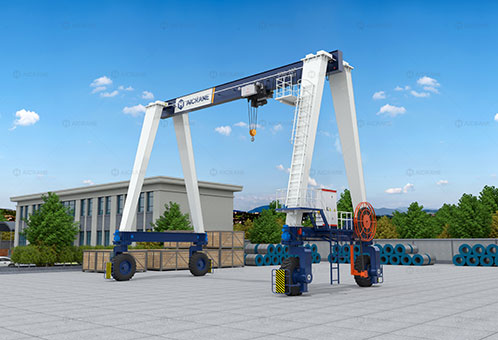
As global container throughput continues to rise, port operators face increasing pressure to improve efficiency while reducing operating costs and environmental impact. Rubber Tyred Gantry (RTG) cranes are among the most important pieces of equipment in container yards, handling thousands of container movements every day. However, these cranes are also significant consumers of energy, particularly in large terminals operating multiple units around the clock.
In response to growing sustainability requirements and rising energy costs, modern RTG crane manufacturers are incorporating a wide range of energy-saving technologies into their designs. These innovations help terminals reduce fuel consumption, lower carbon emissions, decrease operating expenses, and enhance overall crane performance.
Today’s high-performance RTG cranes are no longer judged solely by lifting capacity and productivity. Energy efficiency has become a key factor in equipment selection, lifecycle cost analysis, and terminal modernization strategies.
This article explores the most effective energy-saving technologies used in modern RTG cranes and how they contribute to safer, greener, and more economical container handling operations.
RTG cranes typically operate continuously throughout the day, performing repetitive lifting, lowering, trolley travel, and gantry travel movements. These operations require substantial electrical or diesel-generated power.
High energy consumption can lead to:
As governments implement stricter environmental regulations and ports pursue carbon-neutral development goals, energy-efficient RTG technologies have become essential investments rather than optional upgrades.
The benefits of reducing energy consumption include:
One of the most effective energy-saving technologies in modern RTG cranes is regenerative energy recovery.
During container lowering operations, the load generates kinetic and gravitational energy. In traditional mobile gantry crane systems, this energy is often dissipated as heat through braking resistors.
Regenerative systems capture this energy and convert it into usable electrical power.
The recovered energy can be:
Advantages include:
In high-cycle container handling operations, regenerative technology can significantly reduce annual energy costs.
Variable Frequency Drives are a fundamental component of energy-efficient RTG cranes.
VFDs regulate motor speed according to operational demand rather than allowing motors to run continuously at full power.
They are commonly used for:
By matching motor output to actual workload requirements, VFDs provide:
Additionally, controlled motor operation improves positioning accuracy and operator comfort.
Many ports are transitioning from diesel-powered RTGs to electric RTG systems.
Fully electric RTGs receive power from:
Unlike diesel-electric cranes, these systems eliminate onboard diesel generators.
Electric RTGs typically achieve:
For terminals with stable power infrastructure, electrification can provide substantial long-term savings.
Hybrid RTG cranes combine diesel generators with advanced energy storage technologies.
Typical hybrid configurations include:
Hybrid systems allow cranes to:
Many terminals report fuel savings of 30% or more after upgrading to hybrid RTG technology.
Modern RTG cranes increasingly incorporate intelligent control systems that continuously optimize energy usage.
Energy management platforms collect data from:
The system analyzes operating conditions and automatically adjusts power distribution.
These systems can:
By providing detailed operational insights, terminals can identify additional opportunities for energy savings.
Crane structural design has a direct impact on energy consumption.
Modern RTG manufacturers use advanced engineering techniques such as:
These methods reduce overall crane weight while maintaining structural integrity.
A lighter crane requires less energy for:
Reduced structural weight also decreases tire wear and mechanical stress.
Motor technology plays a crucial role in overall energy performance.
High-performance RTG cranes utilize premium-efficiency motors that offer:
Compared with older motor designs, high-efficiency motors provide:
Over the crane’s operational lifespan, these savings can be substantial.
Although lighting consumes a smaller portion of total crane energy, modern lighting systems contribute to overall efficiency improvements.
LED lighting systems offer:
Advanced systems automatically adjust lighting levels based on:
This minimizes unnecessary energy use during low-demand periods.
Energy consumption is not limited to lifting operations. RTG travel systems also influence overall efficiency.
Modern tire technology helps reduce rolling resistance during crane travel.
Benefits include:
Advanced control software can determine the most efficient travel routes within the container yard.
This reduces:
Combined with automated positioning systems, travel optimization can significantly improve terminal productivity.
Container sway creates inefficiencies during lifting operations.
Without anti-sway technology, operators often need to:
Modern anti-sway systems use sensors and automated controls to minimize load oscillation.
Benefits include:
The result is improved productivity alongside reduced power consumption.
Battery technology is becoming increasingly important in modern RTG cranes.
Battery systems can store:
Stored energy can later be used to support crane operations during periods of high demand.
Benefits include:
As battery costs continue to decline, adoption is expected to increase rapidly.
Digital technologies are enabling new approaches to energy management.
Sensors continuously monitor:
Advanced analytics software identifies:
By making data-driven decisions, terminal operators can continuously improve energy performance.
The next generation of RTG cranes will incorporate even more advanced energy-saving technologies.
Emerging developments include:
These innovations will further reduce operating costs while supporting global sustainability objectives.
Energy efficiency has become a critical factor in the design and operation of modern RTG cranes. Through technologies such as regenerative energy recovery, variable frequency drives, hybrid power systems, electrification, intelligent energy management, high-efficiency motors, and advanced automation, terminals can significantly reduce energy consumption while maintaining high productivity levels.
For port operators seeking to improve competitiveness and meet environmental targets, investing in energy-saving RTG technologies offers substantial long-term benefits. Lower operating costs, reduced emissions, improved equipment reliability, and enhanced sustainability make energy-efficient RTG cranes a key component of the future smart port ecosystem.
As container terminals continue to evolve toward greener and more automated operations, energy-saving technologies will remain at the center of high-performance RTG crane development.

© 2025 Crivva - Hosted by Airy Hosting Managed Website Hosting.