

When people talk about energy-efficient buildings, the conversation almost always starts with systems—HVAC efficiency, lighting controls, automation, sensors. All important, no doubt. But here’s the part that often gets overlooked: energy efficiency doesn’t begin with equipment. It begins with the building envelope.
The facade is the first line of defence between a building and the external environment. Long before air-conditioning systems switch on or thermostats respond, the facade is already dealing with heat, sunlight, wind, and moisture. Decisions made at this stage quietly shape energy bills, indoor comfort, and long-term building performance.
For architects, consultants, and developers working on modern projects, especially commercial or institutional ones, this shift in thinking is becoming essential—not optional.
Once a building is operational, changing mechanical systems is relatively easy. Facade decisions? Not so much. Wall assemblies, insulation strategies, and exterior finishes stay with a building for decades.
If the facade allows excessive heat gain, no amount of high-efficiency HVAC can fully compensate. Systems will run longer, consume more power, and wear out faster. Occupants experience uneven temperatures, and operating costs quietly climb year after year.
This is why envelope design has moved from being an aesthetic afterthought to a core performance strategy. A well-designed facade reduces heat transfer, stabilizes indoor temperatures, and allows internal systems to work efficiently rather than aggressively.
In climates like India’s, heat gain through external walls is a major contributor to cooling load. Direct sunlight, ambient heat, and thermal radiation all push energy into the building. Without proper insulation, walls act as conduits rather than barriers.
What does this look like in practice?
Office floors near external walls feel warmer
HVAC systems run longer to compensate
Energy bills spike during peak summer months
Occupants complain about discomfort despite “working” systems
The issue isn’t the equipment—it’s the envelope letting too much heat in.
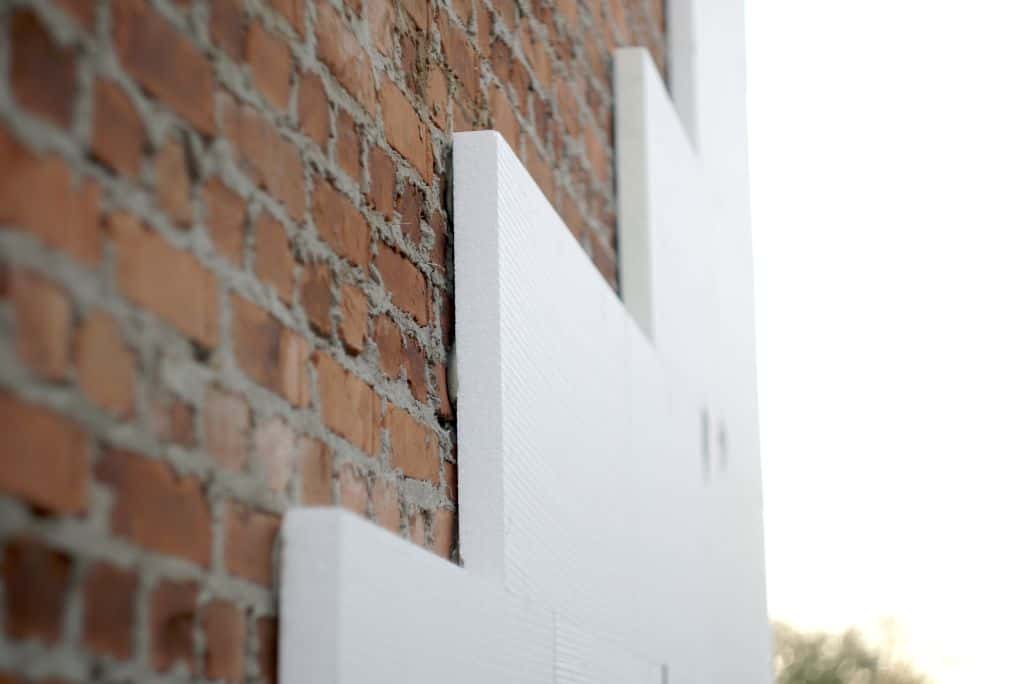
This is where energy saving EPS render plays a crucial role. Instead of treating insulation and finishing as separate layers, EPS rendering integrates them into a single, continuous system applied to the exterior of the building.
The result is a thermal buffer that reduces heat transfer before it ever reaches the interior spaces.
By placing insulation on the outside, EPS rendering helps:
Reduce external heat gain
Minimize thermal bridging
Maintain more stable indoor temperatures
Lower the overall HVAC demand
This approach is especially effective for commercial offices, hotels, hospitals, and institutional buildings where large wall surfaces are exposed to sun for long hours.
Energy efficiency is often discussed in percentages and calculations—and rightly so. But there’s also a practical, lived-in side to it.
Buildings with effective external insulation tend to feel more comfortable throughout the day. Temperature variations near walls are reduced. Spaces cool faster and retain that comfort for longer periods. HVAC systems cycle less aggressively, creating a quieter and more consistent indoor environment.
For occupants, this translates into:
Fewer hot spots
Better thermal comfort
Improved productivity in workspaces
More pleasant living and working conditions
And for developers and owners, it means lower operating costs without relying entirely on mechanical upgrades.
Architects often face a familiar challenge: how to improve building performance without compromising design intent.
Facade insulation solutions sometimes come with constraints—thick wall sections, visible joints, or limited finish options. EPS rendering, when designed correctly, avoids these issues. It supports performance goals while allowing flexibility in form, texture, and detailing.
Clean planes, contemporary finishes, and even architectural mouldings can be achieved without sacrificing thermal efficiency. That’s why EPS-based facades are increasingly used in projects where both aesthetics and sustainability matter.
It’s not about choosing between design and performance anymore. With the right system, both can coexist.
From a developer’s standpoint, energy efficiency is no longer just a compliance requirement—it’s a value proposition.
Buildings that consume less energy are cheaper to operate, easier to market, and more attractive to long-term occupants. Over time, these factors influence rental yields, resale value, and overall asset performance.
An efficient facade contributes to:
Lower operational expenses
Reduced strain on mechanical systems
Longer service life of equipment
Better building reputation in the market
When facade decisions support energy efficiency from day one, the benefits compound over the building’s lifecycle.
Green building targets often sound intimidating on paper. Points, credits, documentation, simulations—it can feel overwhelming.
What makes facade-based solutions practical is that they address performance at a fundamental level. Improving the envelope reduces energy demand before systems are sized or optimized. This aligns naturally with sustainability goals without adding operational complexity.
That’s one reason the EPS rendering system India is being adopted across a wide range of projects—from private commercial developments to public and institutional buildings. It supports energy efficiency objectives while remaining straightforward to execute and maintain.
One of the most interesting things about EPS-based facade systems is how quietly they work. There’s no dashboard showing daily performance. No alert when heat gain is reduced.
And yet, the impact is felt every single day.
Rooms stay cooler for longer
HVAC systems work less aggressively
Energy bills reflect consistent savings
Occupants experience better comfort
It’s the kind of improvement that doesn’t demand attention—but earns appreciation over time.
Once construction is underway, options narrow quickly. Retrofitting insulation or altering facade systems later is costly and disruptive.
That’s why energy efficiency strategies are most effective when addressed early—during conceptual and schematic design. This is when facade systems can be integrated holistically, rather than added as corrective measures.
Architects, consultants, and PMC firms who prioritize envelope performance early often find that:
Mechanical systems can be optimized more efficiently
Sustainability targets are easier to achieve
Design coordination becomes smoother
Long-term performance risks are reduced
Facade decisions made early pay dividends long after handover.
As energy costs rise and sustainability expectations tighten, buildings will increasingly be judged by how intelligently they manage energy—not just how they look.
The future of energy-efficient construction isn’t about adding more systems. It’s about designing buildings that need less energy to begin with. And that journey starts at the facade.
By focusing on envelope performance, projects can achieve meaningful energy savings, improved comfort, and long-term value—all without compromising design intent.
Improve energy performance from the outside in with Skyrotek.

© 2025 Crivva - Hosted by Airy Hosting Managed Website Hosting.